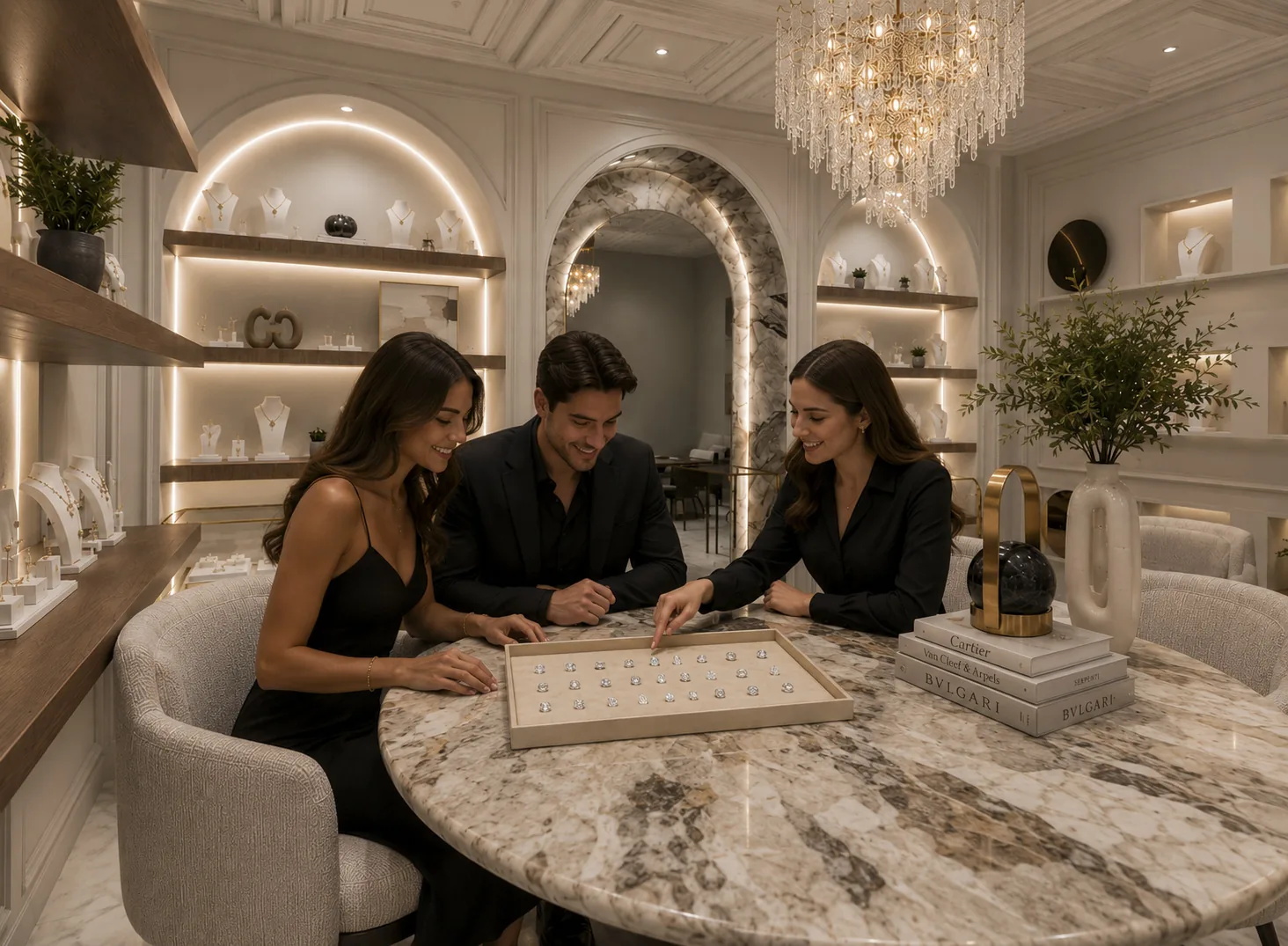
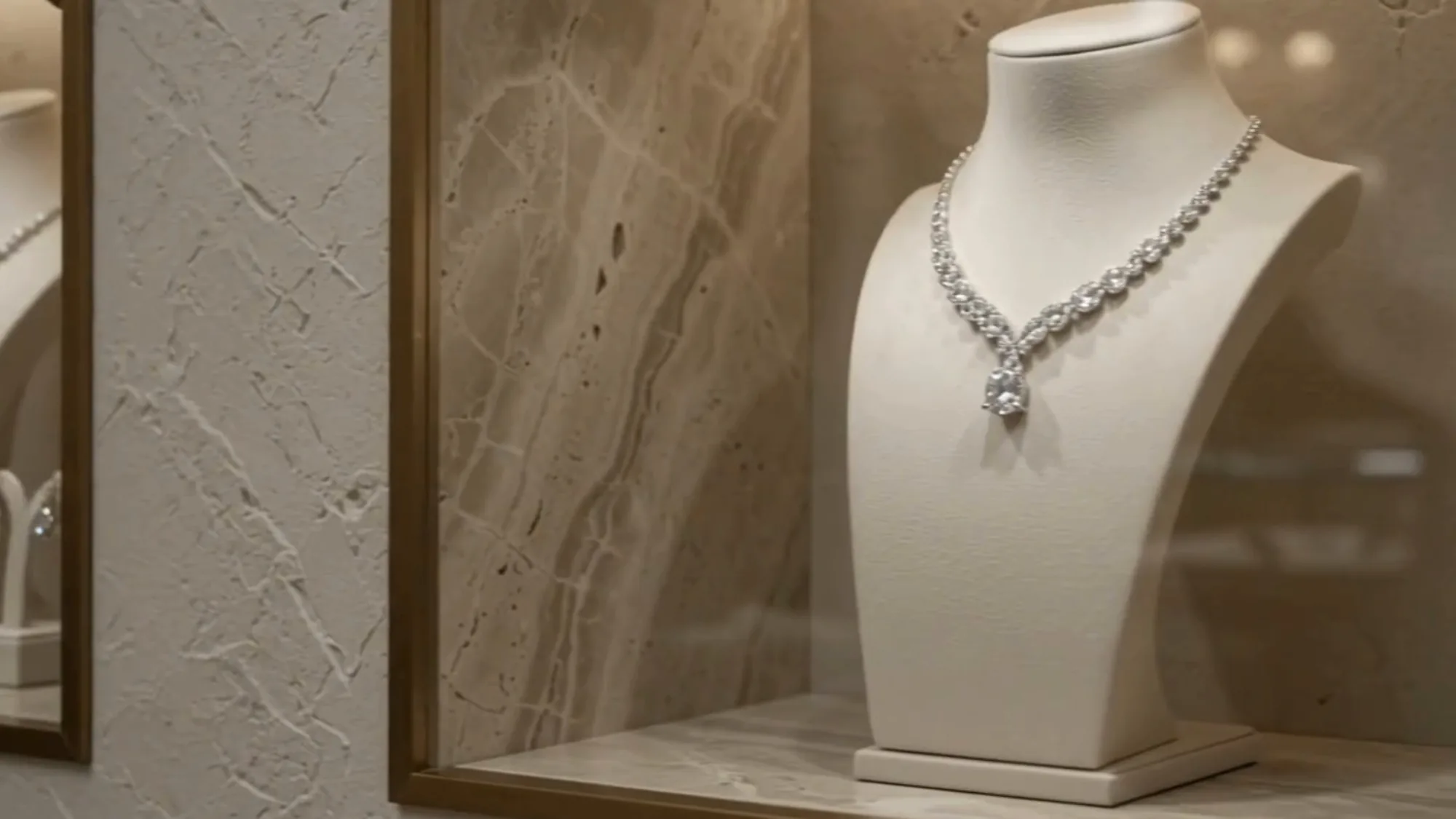
Compare lab-grown and natural diamonds side by side in a private consultation, with clear guidance on cut, certification, appearance, price and the tradeoffs behind each option.
Reserve a Private ConsultationLab-grown diamonds have the same fundamental crystal material and optical characteristics as mined diamonds, but they are created in controlled growth environments rather than extracted from the earth. That difference in origin creates a very different supply and price structure.
For Nichols Hills shoppers, the useful question is not simply whether a diamond is lab-grown. It is whether the individual diamond is well cut, attractive in person, appropriately graded and priced in a way that makes sense for the ring and budget.
At Diamond Consulate, lab-grown diamonds can be compared with one another and with natural diamonds at the Diamond Table. You can see the stones, evaluate them under magnification and understand what the grading report does — and does not — tell you.
View natural and lab-grown diamonds side by side before deciding which origin fits your priorities.
Learn more →Pair the center stone with a custom engagement ring designed around its exact proportions.
Learn more →Learn how cut, color, clarity, shape and proportions affect appearance beyond the headline grade.
Learn more →Start with appearance, not carat weight alone. Cut quality and proportions have a major effect on brightness and visual character. Shape influences how large a diamond appears, while color and clarity should be evaluated in context rather than treated as isolated numbers.
Certification provides important documentation, but two diamonds with comparable grades can still look different. That is why side-by-side comparison is one of the most useful parts of an in-person consultation.

“We had time to compare the details that mattered to us and never felt pushed toward a particular choice.”
— Client perspective placeholder; to be replaced with a verified Google review after opening.
CVD and HPHT are two methods used to grow gem-quality diamonds. The growth method is part of a lab-grown diamond’s history, but it is not a substitute for evaluating the individual stone’s cut, transparency, color, inclusions and overall appearance.
Rather than choosing a diamond because one acronym sounds better, we focus on the quality and value of the actual diamond in front of you.
Natural diamonds are geologically formed and limited by mining supply. Lab-grown diamonds can be produced in manufacturing environments, so supply can expand much more readily. That difference is a major reason the two categories have different pricing and long-term value considerations.
For many clients, lab-grown diamonds make it possible to prioritize size, cut or design while staying within a preferred budget. Other clients prefer the rarity and origin story of a natural diamond. The consultation is designed to make both choices understandable rather than push one category.

A lab-grown center stone can change the budget available for the rest of the ring. Some clients choose a larger diamond. Others choose a more detailed custom setting, platinum, additional side stones or simply spend less overall.
The right allocation depends on what the wearer will actually notice and value. We can compare those tradeoffs while the diamond and setting decisions are still open.
Nichols Hills clients can reserve a private Diamond Consulate consultation in Oklahoma City now for appointments beginning after our November 2026 opening.
Reserve your consultationYes. Lab-grown diamonds are diamonds with the same fundamental carbon crystal structure as natural diamonds. The primary difference is origin: they are grown in controlled environments rather than formed geologically and mined.
Diamond Consulate serves Nichols Hills clients at our private Oklahoma City studio, where lab-grown and natural diamonds can be compared side by side during a reserved consultation.
Many lab-grown diamonds are accompanied by independent grading reports. We review the report together with the actual stone because appearance and cut performance should not be judged from paperwork alone.
CVD and HPHT are different diamond-growth methods. Either method can produce attractive diamonds, so the individual stone should still be evaluated for cut, color, clarity, transparency, proportions and value.
Lab-grown diamonds generally have a different and often lower price structure than comparable natural diamonds because their supply can be expanded through production. Exact pricing depends on the individual diamond and current market conditions.
Yes. A lab-grown center stone can be incorporated into a fully custom engagement ring, including a design developed through Live Collaborative CAD Design.
Yes. The point of the Diamond Table is to compare relevant stones side by side so differences in shape, cut, size, color, clarity and price are easier to understand.
Yes. Diamond Consulate works with both natural and lab-grown diamonds and can discuss the advantages and tradeoffs of each without requiring you to choose an origin before the consultation.