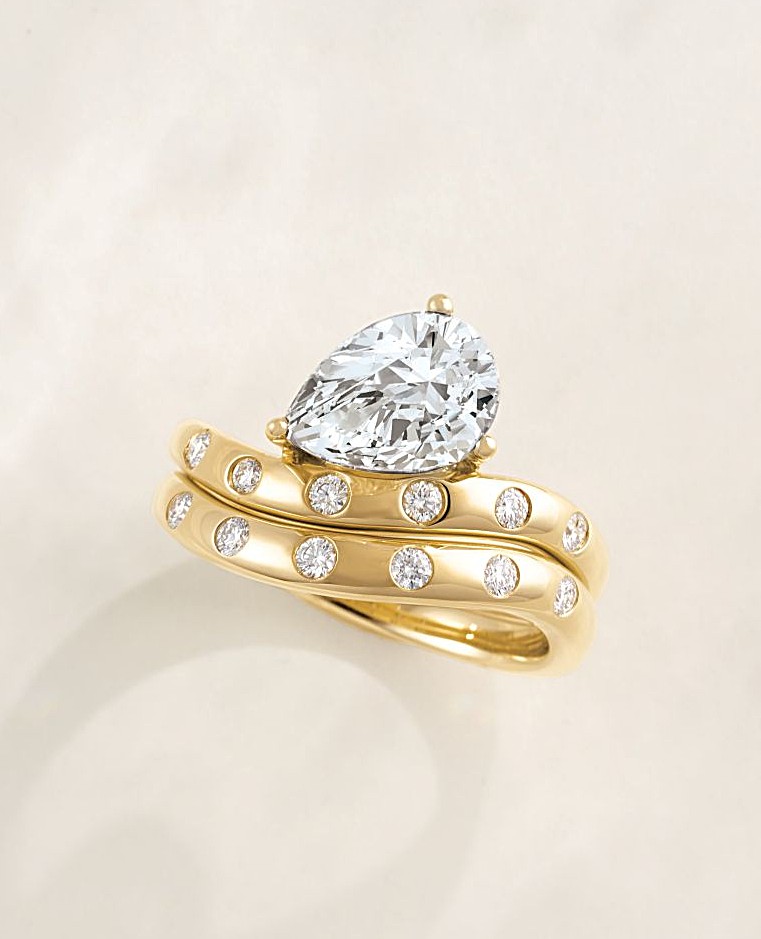
Custom wedding bands, fitted contours, eternity rings, men’s wedding rings, engraving, and designs made to work with the engagement ring you already own.
The engagement ring gets the photographs. The wedding band gets the next forty years.
It goes to work. It washes dishes. It survives airports, anniversaries, home projects, children, grandchildren, and the occasional decision to move furniture without removing any jewelry first.
Yet wedding rings are often chosen last, quickly, and under the charming pressure of realizing the ceremony is six weeks away.
A good wedding band should fit the engagement ring, the hand, the lifestyle, and the way it will actually be worn. That deserves more than pointing to a tray and saying, “Probably that one.”
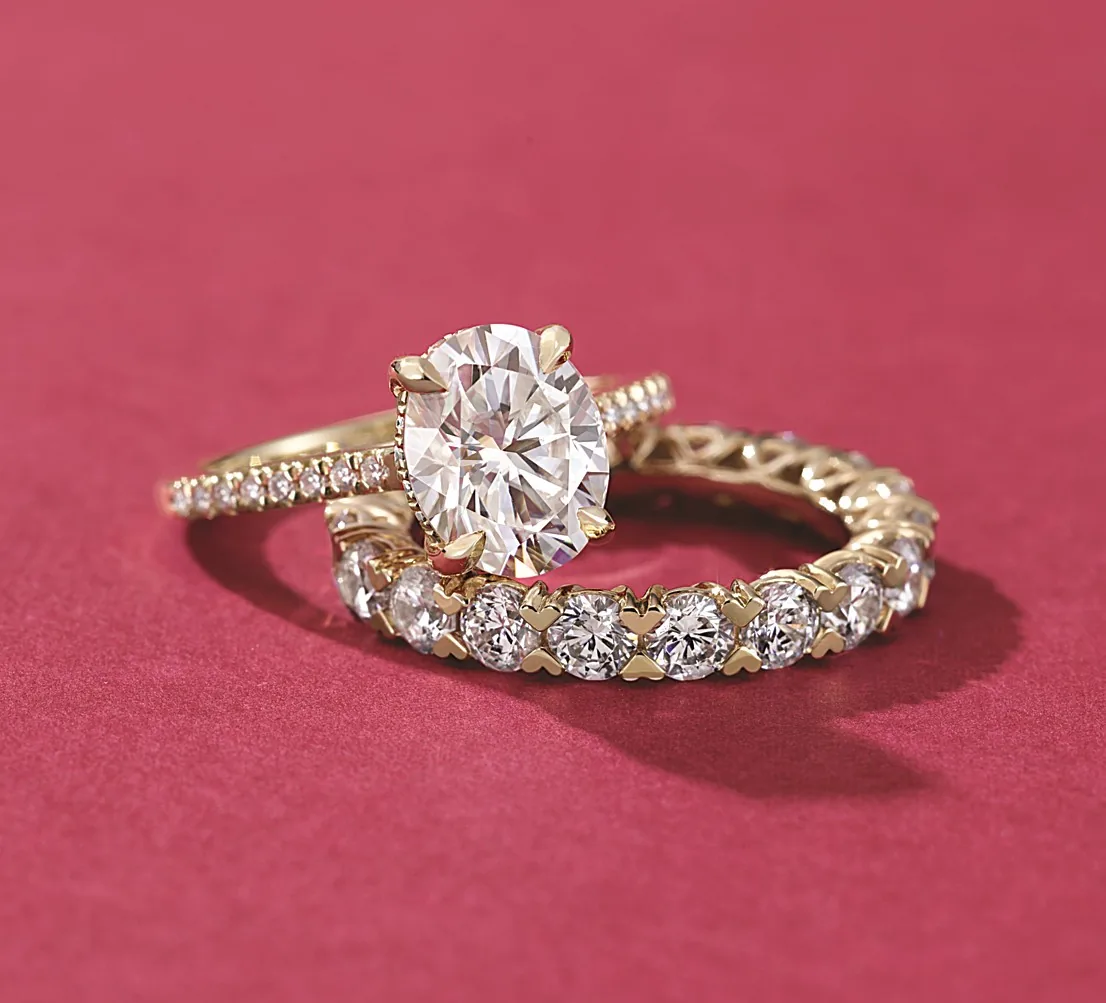
If the wedding band is meant to sit beside an engagement ring, bring the engagement ring to the consultation. It does not need to have come from us.
We evaluate the actual profile, setting height, gallery, prongs, halo, shoulders, and the space where the two rings will meet. Then we model the wedding ring around the piece that already exists.
A photograph can suggest the shape. It cannot tell us exactly where the metal touches, whether the prongs will rub, or why a straight band leaves a gap that looked much smaller online.
Close is useful in horseshoes. It is less impressive when two rings grind against each other for twenty years.
Reserve a Wedding Band Consultation
The fit of a wedding band is easier to understand when you can see it instead of being asked to imagine it.
Think the contour curves too dramatically? Watch it soften on the screen.
Want the band to sit closer to the engagement ring? We adjust the profile while you watch.
Wonder whether the wedding ring will look finished when worn alone? We can show that too, because there will be days when the engagement ring stays home.
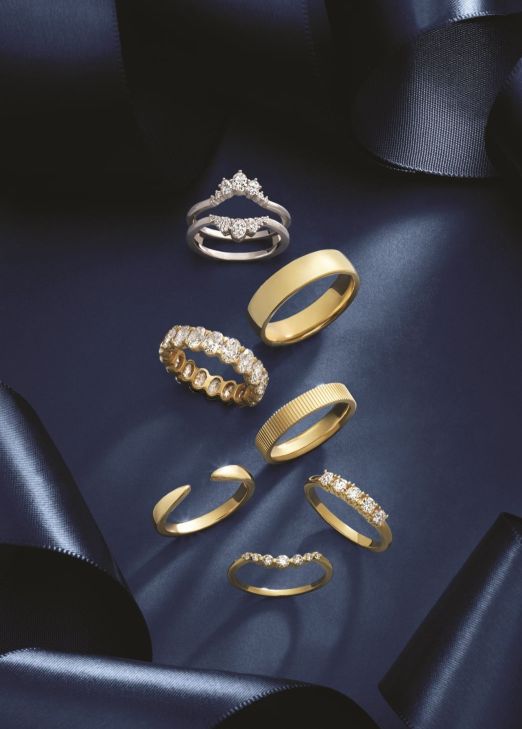
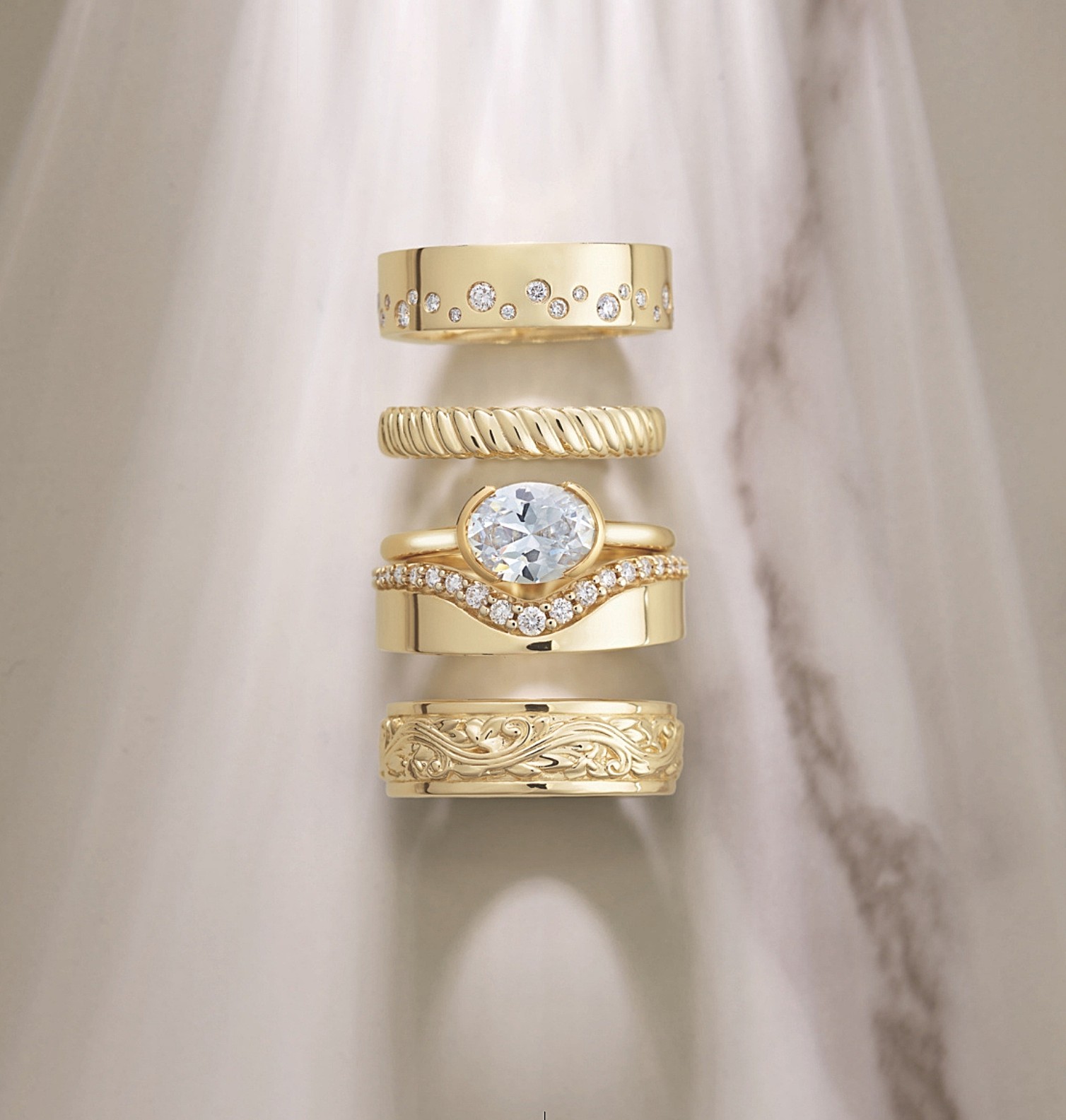
We can also evaluate shared-prong, pavé, channel-set, bezel-set, engraved, straight, curved, pointed, open and wrap-style wedding bands before anything moves into production.
The goal is not simply to make two rings touch. It is to make them look intentional together and complete apart.
Explore Live CAD DesignThe wedding is one day. The wedding rings have a considerably longer assignment.
Reserve a band consultationWedding bands and wedding rings are simple only from a distance. The details decide how they look, feel, wear, and age.
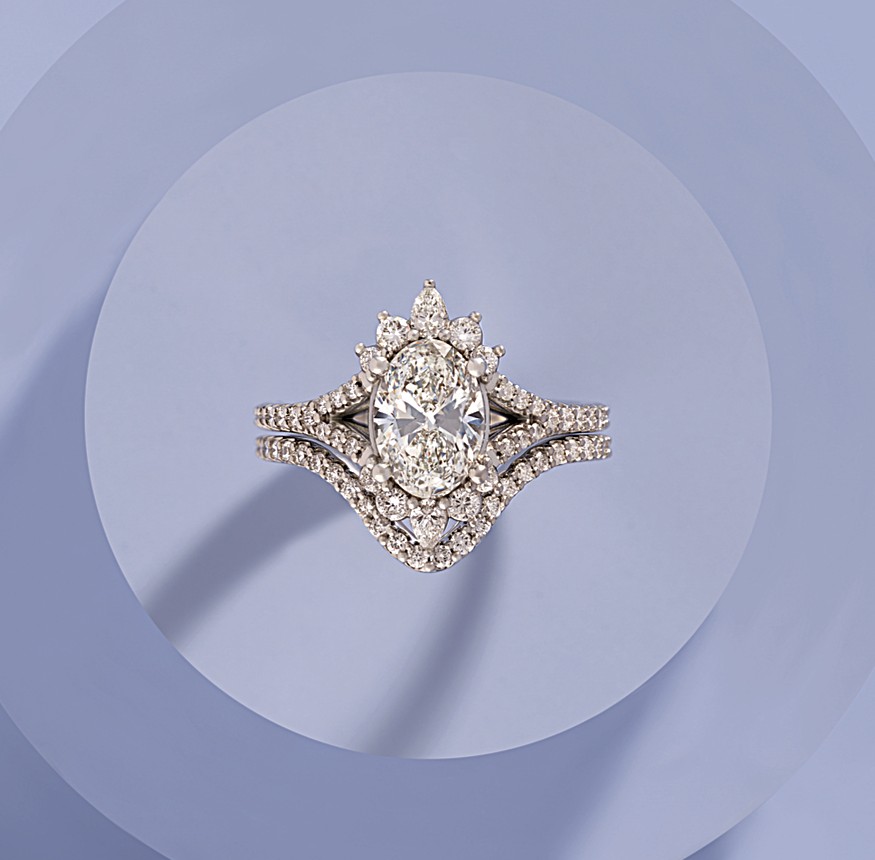
Shaped around the engagement ring so the two nest together. Useful when a low basket, halo, three-stone setting, elongated center or unusual gallery prevents a straight band from sitting flush.
Clean, versatile and easy to wear alone. A straight band works beautifully when the engagement-ring profile leaves enough room—or when a visible space between the rings is intentional.
Diamonds across the visible top portion with plain metal below. You get the appearance of a diamond band while preserving more flexibility for future sizing.
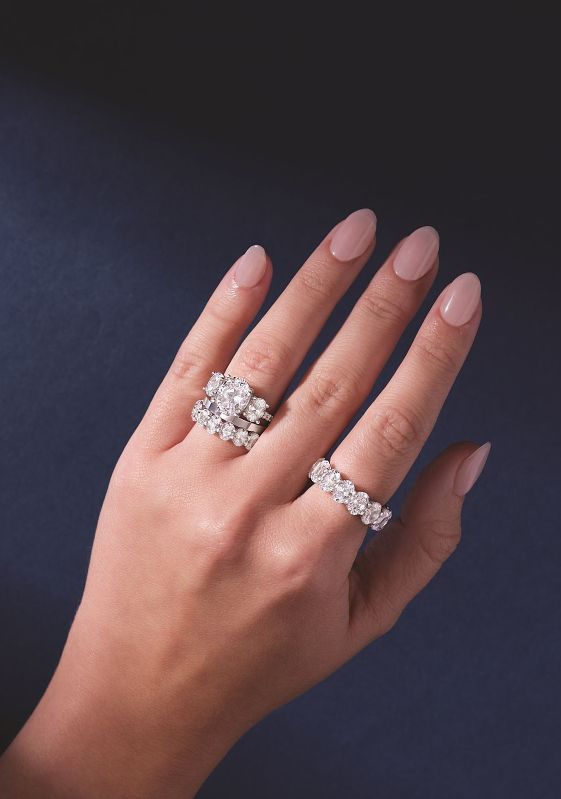
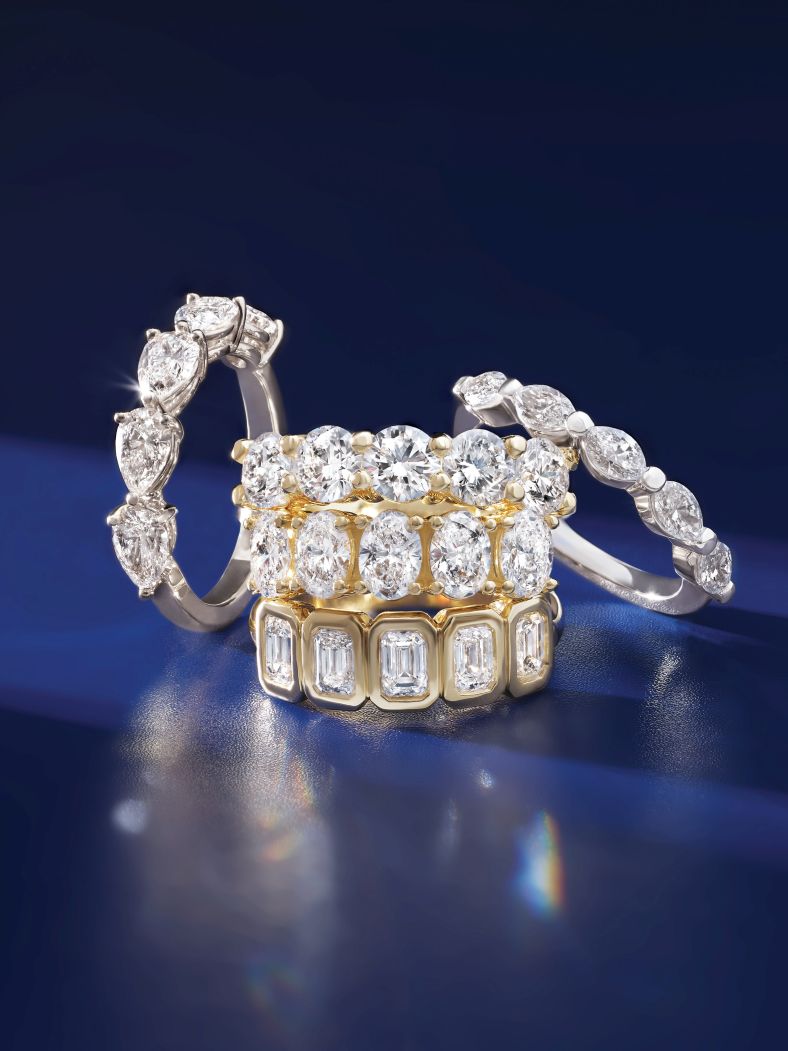
Diamonds continue around the entire ring. Beautiful from every angle and considerably less cooperative when a finger size changes later. Romance has consequences.
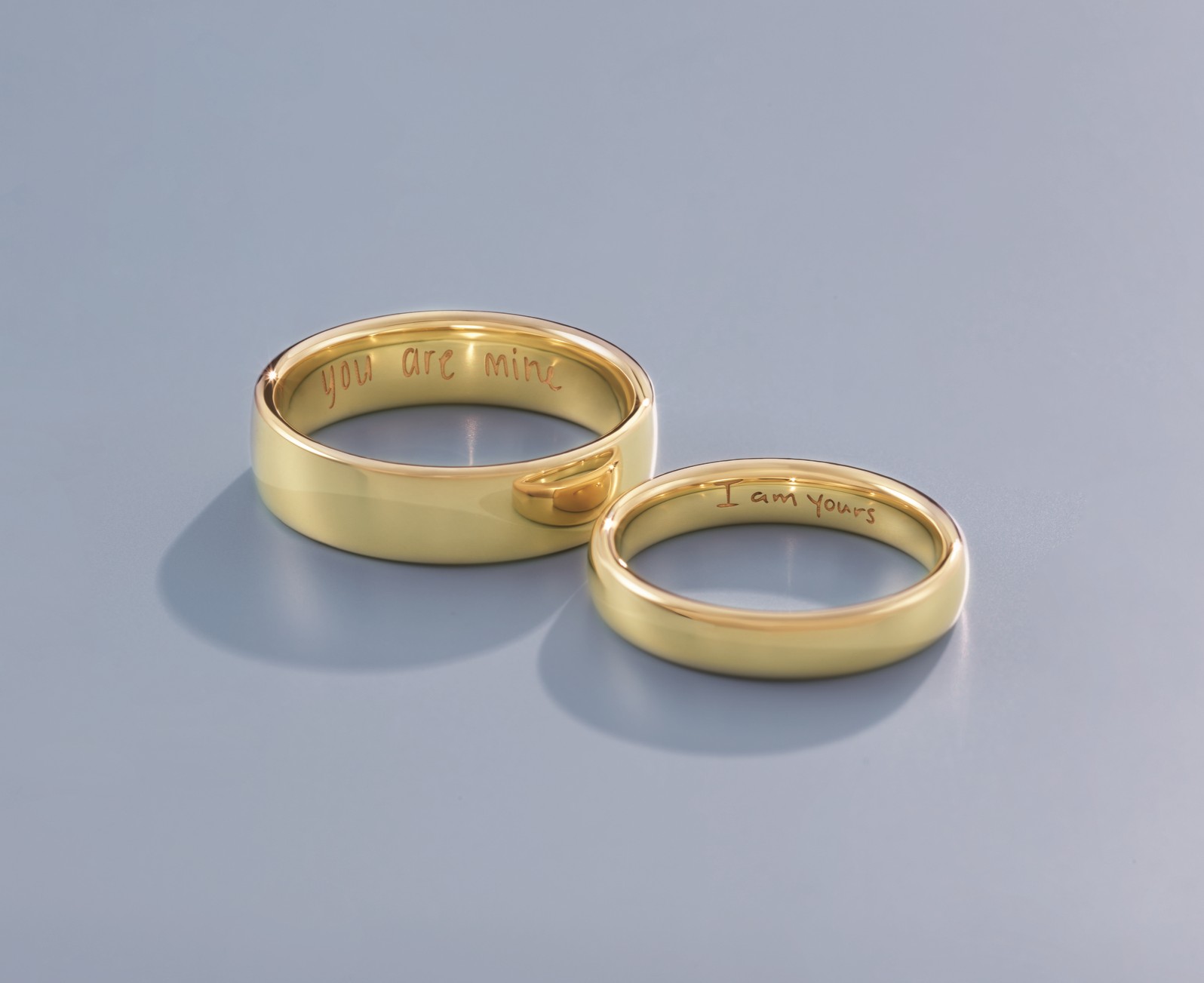
Hand engraving, milgrain, floral patterns, geometric details, dates, initials and references drawn from family or period jewelry.
Designed to relate through metal, proportion, finish or engraving without becoming identical. Matching is optional. Looking intentional is not.
Some clients want the engagement ring and wedding band to sit perfectly flush. Others prefer a visible space because it lets each ring keep its own outline. Both can look beautiful.
The problem begins when the gap is accidental or when the rings make contact in the wrong places.
Prongs rubbing against diamond girdles, hard edges contacting softer surfaces, or two pavé rings grinding together can create wear over time. A fitted design can reduce unwanted contact, but the exact solution depends on the engagement-ring construction.
This is why we examine the actual ring rather than diagnosing a lifelong relationship between two pieces of jewelry from a phone photo.
| If the engagement ring has | The wedding band often needs |
|---|---|
| A raised solitaire basket | A straight wedding band may sit flush if the gallery leaves enough clearance. |
| A low-set center stone | A contoured or open band may be needed to clear the basket. |
| Cathedral shoulders | Either a straight or lightly contoured band, depending on where the cathedral meets the shank. |
| A hidden halo | Often a straight band, although the basket and lower halo should be checked for contact. |
| A traditional halo | A contoured wedding ring shaped around the wider outline. |
| A three-stone design | A fitted contour, open band or pointed silhouette depending on the side stones. |
| An elongated oval, radiant or cushion | A straight band when the basket is raised; a contour when the center sits low or extends into the band line. |
| A bezel setting | Often a straight band, but low bezels may still need a small contour. |
| A plan to wear the band alone | A design with enough presence and balance to look complete without the engagement ring. |
This table is a useful starting point. The actual ring gets the final vote.
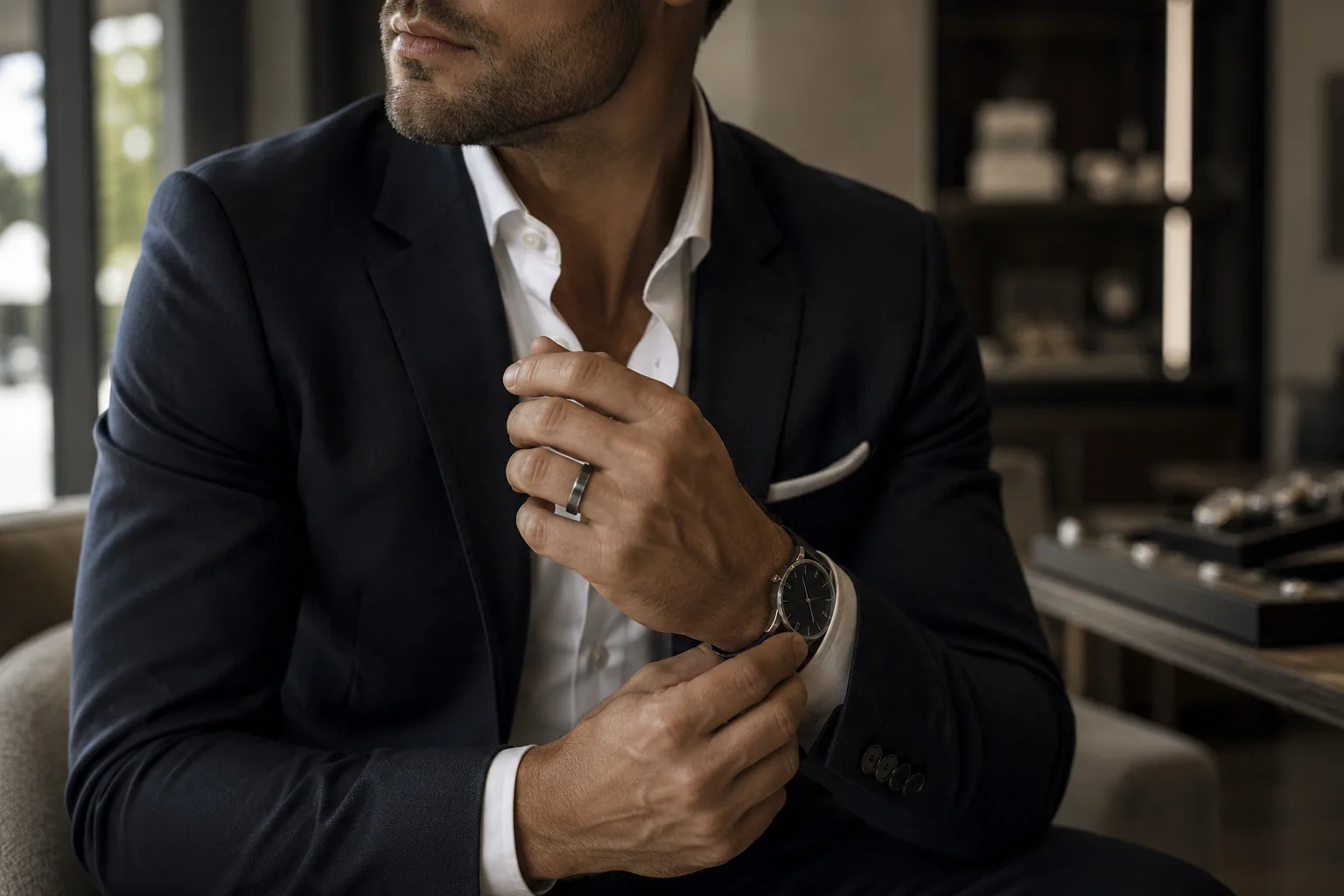
Men’s wedding bands are often described as though the only available design direction is “metal circle.” There is more room than that.
Width changes the entire look. So does thickness, edge profile, comfort fit, finish, color, engraving and whether the ring is meant to feel polished, architectural, rugged or nearly invisible.
Gold and platinum can generally be resized, repaired and refinished. Alternative metals offer different advantages, but sizing and repair options vary significantly by material and construction.
Try different widths before deciding. A millimeter sounds insignificant until it is wrapped around a finger for the next several decades.
Explore Men’s Wedding Bands
Platinum. Naturally white, dense and durable. It develops a patina rather than losing metal in exactly the same way gold alloys can. It is heavier on the hand and typically costs more.
Yellow gold. Warm, traditional and available in different karats. It pairs especially well with vintage details, hand engraving and mixed-metal sets.
White gold. Bright and familiar, generally finished with rhodium plating to achieve its crisp white appearance. It may need periodic replating depending on wear and preference.
Rose gold. Warm with a pink tone created by the alloy. It can be subtle or pronounced depending on karat and composition.
Mixed metals. Entirely possible. The design should account for color, wear and where the rings make contact rather than assuming everything must match because a bridal magazine said so in 2007.
A full-eternity wedding ring places diamonds around the entire circumference. The look is continuous, balanced and beautiful from every angle.
It is also difficult—and sometimes impossible—to resize without rebuilding part or all of the ring. The exact options depend on the setting style and how much the finger size changes.
A half-eternity or three-quarter-eternity band keeps diamonds across the visible portion while leaving plain metal below. That provides more room for sizing and can be more comfortable for clients who feel side stones between the fingers.
Full eternity is not better. Half eternity is not less luxurious. One prioritizes uninterrupted diamonds. The other admits that hands occasionally change.
Wedding band pricing depends on metal, width, weight, diamond count, stone quality, engraving, contour complexity and whether the ring is made as a one-off design.
These are planning ranges. You receive a firm quote before production begins.
| Wedding band style | Typical planning range |
|---|---|
| Plain gold wedding band | $700–$2,000 depending on width, karat and weight |
| Plain platinum wedding band | $1,200–$3,000 depending on width and weight |
| Custom contoured band | $1,200–$3,500 before significant diamond work |
| Half-eternity or pavé band | $1,800–$5,000 depending on diamond size, quality and setting style |
| Full-eternity wedding ring | $3,000–$10,000+ depending on ring size and diamond specifications |
| Hand engraving or specialty detail | Add approximately $500–$2,500+ depending on complexity |
A larger finger size requires more metal and, in an eternity ring, often more diamonds. The ring is not charging you personally. Geometry is.
Most couples spend more time choosing dinner after the appointment than they do deciding whether the bands should be identical.
Design the wedding rings togetherYes. The terms wedding band and wedding ring are commonly used interchangeably. Some people use wedding band for a simpler design and wedding ring for any ring exchanged at the ceremony, but there is no required technical distinction.
No. They should work together physically and visually, but they do not have to use the same metal, diamond pattern or design era. A wedding band can complement the engagement ring without impersonating it.
A contoured wedding band is shaped to follow the outline of an engagement ring. It is often used when a low center setting, halo, three-stone design or unusual gallery prevents a straight wedding ring from sitting close beside it.
Only if that is the look you prefer. Some clients want the rings to sit flush; others like a visible gap. The important issue is avoiding unwanted contact that can create wear on prongs, galleries or diamond edges.
Yes. Bring the engagement ring to the consultation so the actual profile can be measured and the fitted wedding band can be modeled against the real piece.
Six to eight weeks is a comfortable minimum for many custom wedding bands. Complex engraving, eternity designs, unusual materials or sizing adjustments may require more time. Share the wedding date at the first consultation.
A full-eternity ring has diamonds around the entire circumference. A half-eternity ring has diamonds across the visible top portion with plain metal below. Half-eternity bands are generally easier to resize and may feel smoother between the fingers.
Yes. Many people wear the wedding band alone for work, travel, exercise or everyday convenience. Mention this during the consultation so the band can be designed to look complete by itself as well as beside the engagement ring.
It is often the simplest choice for color and wear compatibility, but mixed metals can work beautifully. The design should account for hardness, surface contact, maintenance and how the colors relate.
Yes. Wedding rings can coordinate through metal, width, finish, engraving or a shared detail without being identical. Designing both during one consultation makes those relationships easier to see.
Plain gold wedding bands may begin around $700, while custom contoured, diamond-set, engraved and eternity wedding rings can range from approximately $1,200 to well above $10,000 depending on metal, weight, diamond specifications and complexity.
Yes. Options can include dates, initials, short messages, symbols, patterns and hand-cut decorative engraving. The available space depends on the width and interior profile of the ring.
Sometimes only slightly, and some designs cannot be resized without substantial rebuilding. If future sizing flexibility matters, a half-eternity or three-quarter-eternity design is usually more practical.
Common widths range from roughly 4mm to 8mm, but hand size, finger length, ring thickness and personal preference matter more than a standard number. Trying several widths in person is the best way to decide.
You discuss style, metal, width, finish, engraving, budget and wedding date. If a band must fit an engagement ring, the actual ring is evaluated and the wedding band can be developed through Live Collaborative CAD Design.
If you want something unique, high quality, custom and uniquely yours, come to Diamond Consulate, located at 5701 N Western Ave Ste B, OKC, OK 73118.
We will handle the contour, the widths, the metals, the engraving, and the question of whether the two wedding rings need to match.
They probably do not.
Reserve a Wedding Band ConsultationOpening November 2026 · Reservations available now · (405) 805-1050