Home  /  Diamonds
Natural & Lab-Grown Diamonds

Lab-grown and natural,
side by side.

We sell both. We show both under the same light. And we explain the part everyone eventually asks about: what each may be worth later.

The Short Answer

A laboratory-grown diamond is a real diamond with essentially the same chemical, physical and optical properties as a natural diamond. It usually costs substantially less. Its market price has also faced far more downward pressure.

All three statements can be true at once.

That is where most explanations become strangely selective. A seller heavily invested in lab-grown may tell you future value is irrelevant. A seller committed to natural may talk as though laboratory-grown diamonds are glorified costume jewelry. Neither position is especially useful.

Most conversations about lab-grown diamonds begin with someone trying to sell you something. Ours begin with two diamonds on a table.

The Diamond Table

Look first.
Decide second.

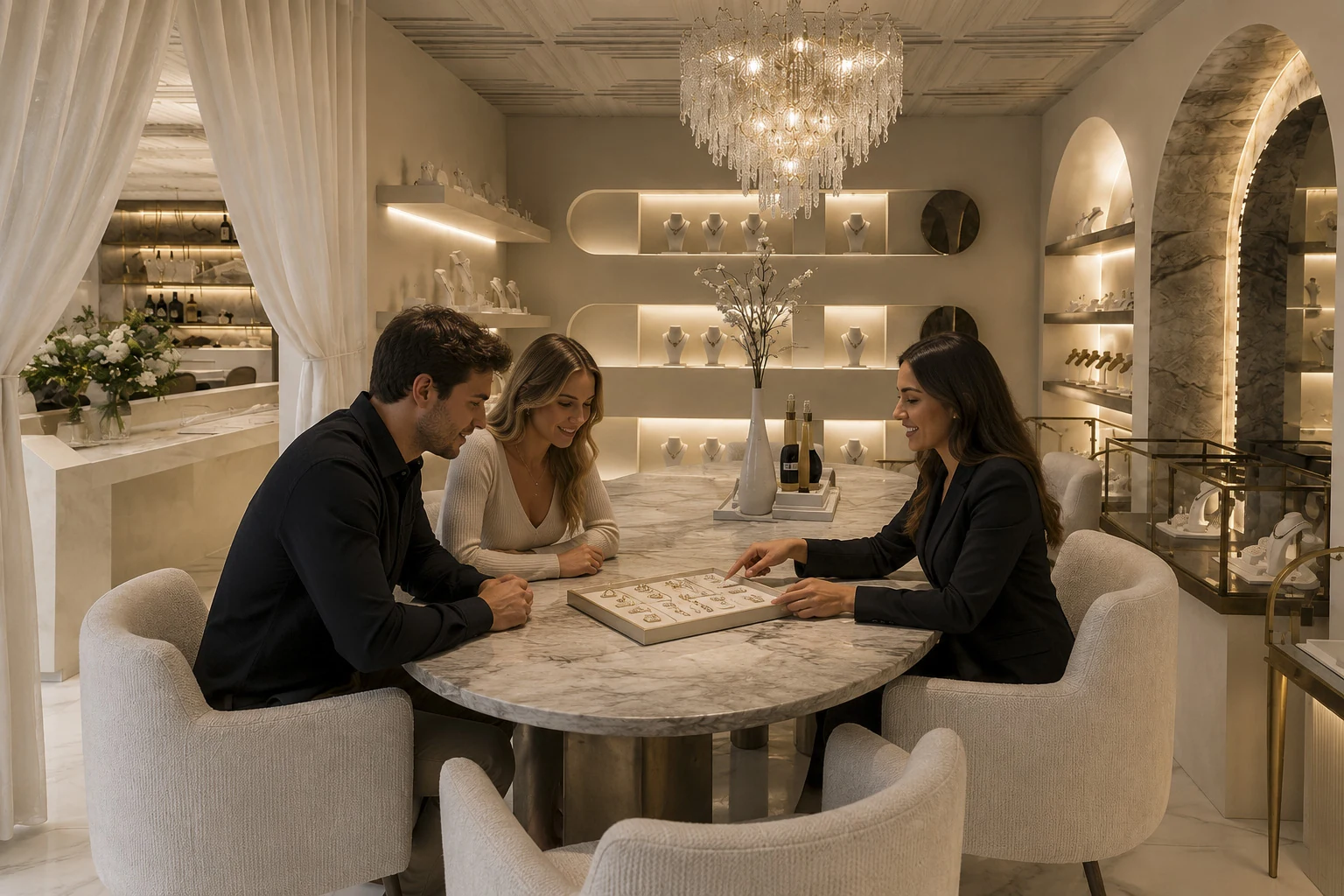
Loose natural and laboratory-grown diamonds are placed in front of you side by side. Same room. Same lighting. Same conversation.

You can compare shapes, carat weights, cut quality, color, clarity and price. View them with your eyes, then under magnification. Turn them in the light. Watch the difference between a stone that merely has a good report and one that actually performs beautifully.

You may notice brightness, fire and scintillation. You may notice the bow tie in an oval. You may discover that the emerald cut you loved online feels too quiet in person—or exactly right.

This is not a test. Nobody is grading your answer. The purpose is simply to make the differences visible enough that the choice becomes yours.

Reserve a Diamond Consultation
Loose natural and laboratory-grown diamonds compared side by side at the Diamond Table
Comparison

The honest version.

Natural diamond Laboratory-grown diamond
Material Crystalline carbon Crystalline carbon with essentially the same chemical, physical and optical properties
Hardness 10 on the Mohs scale 10 on the Mohs scale
Appearance Often indistinguishable by unaided observation; reliable origin identification requires appropriate laboratory testing or specialized screening equipment
Origin Formed deep within the earth over geological time Produced above ground by HPHT or CVD growth
Independent report Commonly evaluated by laboratories such as GIA or IGI using established diamond quality information Evaluated and clearly disclosed as laboratory-grown; report format and terminology vary by laboratory
Purchase price Usually substantially higher for comparable apparent size and quality Usually substantially lower, allowing more size or higher apparent specifications within the same budget
Market behavior Prices fluctuate, but a long-established natural-diamond market exists Prices have experienced much stronger downward pressure as production and supply expanded
Resale An established secondary market exists, although resale is commonly below original retail price The secondary market is limited; plan conservatively and assume very little recoverable value
Rarity Geological scarcity is part of the appeal and pricing Manufacturing capacity can expand, so rarity works differently
Best fit Rarity, geological origin, heirloom intent or stronger future-value potential matters Maximum visible size, color and clarity for the current budget matters most

Diamond pricing changes. Sometimes quickly. Ask for current comparisons during your consultation rather than treating a percentage from an old article as sacred scripture.

Ten minutes with both types of diamonds on the table settles this faster than a month of reading.

See them side by side
Future Value

The part people avoid.

Do you expect the center diamond to retain meaningful value later?

If future value matters, natural is generally the more defensible choice. Natural diamonds have an established secondary market, geological scarcity and a longer history of market demand. That does not make a natural diamond a guaranteed investment. Jewelry-store retail price and future resale price are not the same thing. They have never been the same thing.

Laboratory-grown diamonds solve a different problem. They can provide substantially more visible size, color and clarity for the same engagement-ring budget. But production can increase, technology can improve and replacement prices can continue to fall. For planning purposes, we recommend treating future resale value as minimal.

That does not make buying laboratory-grown a mistake. It means you are buying it primarily to wear and enjoy, not because you expect the loose stone to preserve wealth.

Neither answer is morally superior. They are simply solving different problems.

Why Choose Lab-Grown

More diamond.
More room in the budget.

A laboratory-grown center diamond can make sense when your priority is the finished engagement ring rather than the future resale of the loose stone.

Maybe you want the elongated oval you have saved for two years. Maybe you would rather keep money available for the wedding, the honeymoon, a house, student loans or the small matter of starting an entire life together.

Laboratory-grown can also make sense for anniversary rings, larger earrings, tennis bracelets and custom jewelry where using natural diamonds of the same size would change the project dramatically.

It is not a lesser diamond. It is a different purchasing decision with different economics.

Laboratory-grown diamond viewed during a private diamond consultation
Natural diamond selected for a custom engagement ring consultation
Why Choose Natural

Rarity has value.
So does meaning.

A natural diamond can make sense when geological origin is part of what you want to own. It formed deep within the earth over an almost incomprehensible span of time, and that rarity is not a marketing invention.

Natural may also be the better fit when the engagement-ring diamond is intended to become an heirloom, when future marketability matters, or when the symbolism of a naturally formed stone matters to the wearer.

Our usual advice is not to chase carat weight at the expense of beauty. A smaller natural diamond with excellent light performance can be far more compelling than a larger stone selected mainly because the number sounded impressive.

The certificate does not sparkle. The diamond does.

How We Advise

Start with what
you are optimizing for.

If maximum visible size for the engagement-ring budget is the goal, laboratory-grown is often the straightforward answer.

If rarity, geological origin, heirloom intent or stronger future-value potential matters, natural is often the better fit.

Then we look at the actual diamond. Cut quality. Proportions. Brightness. Fire. Scintillation. Whether an elongated shape has a distracting bow tie. Whether the clarity grade is buying beauty or merely buying a more impressive line on a report.

What we will not do is answer the question for you before you have seen both.

How They Are Made

Technology,
or geology.

Natural diamonds formed deep within the earth under extreme heat and pressure and were later carried toward the surface by geological processes. Most are more than a billion years old. That ancient origin is the foundation of their rarity.

Laboratory-grown diamonds reach essentially the same crystal structure through one of two production methods:

HPHT means high pressure, high temperature. A diamond seed is placed in an environment that uses extreme pressure and heat to grow additional diamond material.

CVD means chemical vapor deposition. A diamond seed is placed in a chamber with carbon-containing gas. Activated carbon species deposit onto the seed and build diamond material layer by layer.

After growth, the rough diamond is cut and polished using the same fundamental lapidary skills used for natural diamond rough. Some laboratory-grown diamonds may also receive post-growth treatment to improve color.

The result is not cubic zirconia. It is not moissanite. It is laboratory-grown diamond, and it should always be clearly disclosed as such.

What Actually Makes a Diamond Beautiful

Origin is only
one part of the decision.

Natural or laboratory-grown, a diamond can still be beautifully cut, poorly cut or somewhere in the very large middle.

Cut determines how the facets interact with light. Brightness is the white light returned to your eye. Fire is the color you see as light disperses. Scintillation is the pattern of sparkle and contrast as the diamond, the light or the viewer moves.

Fancy shapes add their own considerations. An oval, pear or marquise may show a bow tie. An emerald cut reveals clarity characteristics more readily. Radiants and cushions can vary dramatically in facet pattern even when the reports appear similar.

This is why the Diamond Table matters. Two diamonds can look remarkably similar on paper and completely different beside each other.

Diamond Questions
Are laboratory-grown diamonds real diamonds?

Yes. Laboratory-grown diamonds have essentially the same chemical composition, crystal structure, optical properties and physical properties as natural diamonds. They are not simulants such as cubic zirconia or moissanite. Their origin must still be clearly disclosed.

Can you tell a laboratory-grown diamond from a natural diamond by looking?

Reliable origin identification generally requires appropriate laboratory testing or specialized screening equipment. Laboratory-grown diamonds have growth features and trace characteristics that trained laboratories can detect, even when the stones appear the same in ordinary viewing.

Do laboratory-grown diamonds hold their value?

Plan conservatively. Laboratory-grown diamond prices have experienced substantial downward pressure as production expanded, and the secondary market remains limited. A stone purchased today may cost considerably less to replace later. We generally recommend assuming very little recoverable value.

Do natural diamonds hold their value?

Natural diamonds have a more established secondary market and generally stronger future-value potential than laboratory-grown diamonds, but they should not automatically be treated as investments. Resale value is often below original retail price and depends on quality, desirability, documentation and market conditions.

Which is better for an engagement ring?

Neither is universally better. Laboratory-grown is often better when visible size and specifications within a fixed engagement-ring budget matter most. Natural is often better when rarity, geological origin, heirloom intent or stronger future-value potential matters more.

What is the Diamond Table?

The Diamond Table is the part of the private consultation where loose natural and laboratory-grown diamonds are placed side by side so you can compare shapes, cut quality, proportions, appearance and price in person and under magnification.

Are laboratory-grown diamonds graded?

Yes. Independent laboratories evaluate laboratory-grown diamonds and clearly identify their origin. Report formats and terminology vary by laboratory, and those standards can change over time, so we explain the specific report accompanying each diamond rather than pretending every document is identical.

How are laboratory-grown diamonds made?

They are produced primarily through HPHT, high pressure and high temperature, or CVD, chemical vapor deposition. Both methods grow diamond material around a seed in controlled conditions.

Do laboratory-grown diamonds become cloudy or change over time?

No. Normal aging does not cause a laboratory-grown diamond to become cloudy or lose its fundamental diamond properties. As with natural diamonds, surface oils, lotion and everyday wear can make the stone appear dull until it is cleaned.

Are laboratory-grown diamonds more ethical or sustainable?

They avoid some concerns associated with mining, which matters to many clients. Their production also requires energy, and environmental impact varies according to the energy source and manufacturing process. Natural-diamond supply chains also vary. Broad claims that either category is automatically impact-free deserve careful scrutiny.

Can I insure a laboratory-grown diamond?

Yes. Laboratory-grown diamond jewelry can generally be insured. Because replacement prices may change, ask your insurer how the policy determines replacement value and how often the appraisal should be updated.

Do you keep both natural and laboratory-grown diamonds available?

We maintain a working selection and source diamonds specifically for each consultation. Sharing your budget, preferred shape and approximate size beforehand allows the Diamond Table to be prepared with options that are actually relevant to you.

The Next Step

Stop reading.
Come see them.

You can spend another month reading arguments written by people who already decided what they want to sell you.

Or you can spend fifteen minutes with natural and laboratory-grown diamonds on the same table.

Most people know surprisingly quickly once they are looking at the real thing.

Reserve a Diamond Consultation

Opening November 2026  ·  Reservations available now  ·  (405) 805-1050