
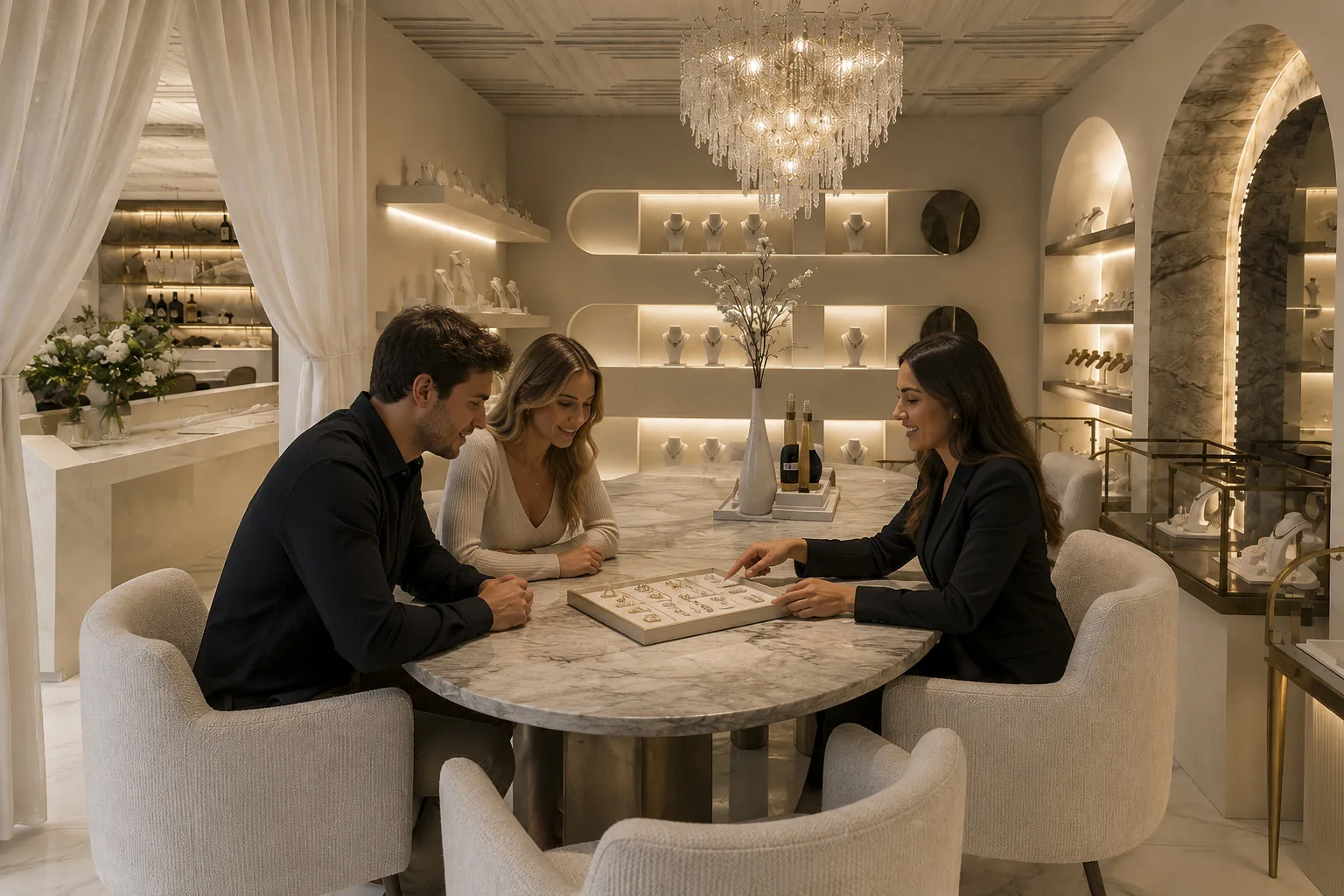
What is The Diamond Table?
The Diamond Table is the side-by-side comparison process used during engagement ring and diamond consultations at Diamond Consulate. Relevant loose diamonds are prepared before the appointment and viewed under the same light and under magnification.
The comparison may include natural and laboratory-grown diamonds, different shapes, different carat weights, different proportions and different price points. The purpose is not to make the table crowded. It is to make the decision visible.
What a grading report explains
A report can document carat weight, color, clarity, measurements, proportions and identifying characteristics. It provides essential information and allows buyers to compare objective features.
Those facts matter. They simply do not describe the complete visual personality of a diamond.
What the report cannot settle
Two diamonds with similar reports may look noticeably different. One oval may show a distracting bow tie while another has more balanced brightness. One radiant may display a lively, organized facet pattern while another looks less coherent. A diamond with a slightly lower paper grade may appear larger, brighter or more attractive to a particular viewer.
Reports also cannot decide whether the visual difference between two grades is meaningful enough to justify the price difference for you.
Natural and laboratory-grown side by side
Natural and laboratory-grown diamonds share the same essential physical and optical properties, but their origin, rarity and pricing differ. Seeing them side by side allows the discussion to move beyond slogans.
Some clients prioritize natural origin and long-term rarity. Others prefer the size or design flexibility available through laboratory-grown pricing. The right choice depends on the values attached to the purchase, not on pressure from either side of the debate.
Face-up size matters
Carat is weight, not visible diameter. Two diamonds of the same carat weight can face up differently because of shape and proportions. Comparing them physically reveals whether weight is distributed in a way that benefits the appearance of the stone.
The best diamond is not always the highest grade
Buying the highest color and clarity grade available can be an expensive way to purchase differences that are difficult to see. A thoughtful comparison identifies where quality is visible and where a report may be charging for rarity rather than beauty.
The purpose of The Diamond Table is not to minimize quality. It is to direct the budget toward the qualities that matter most in the finished ring.