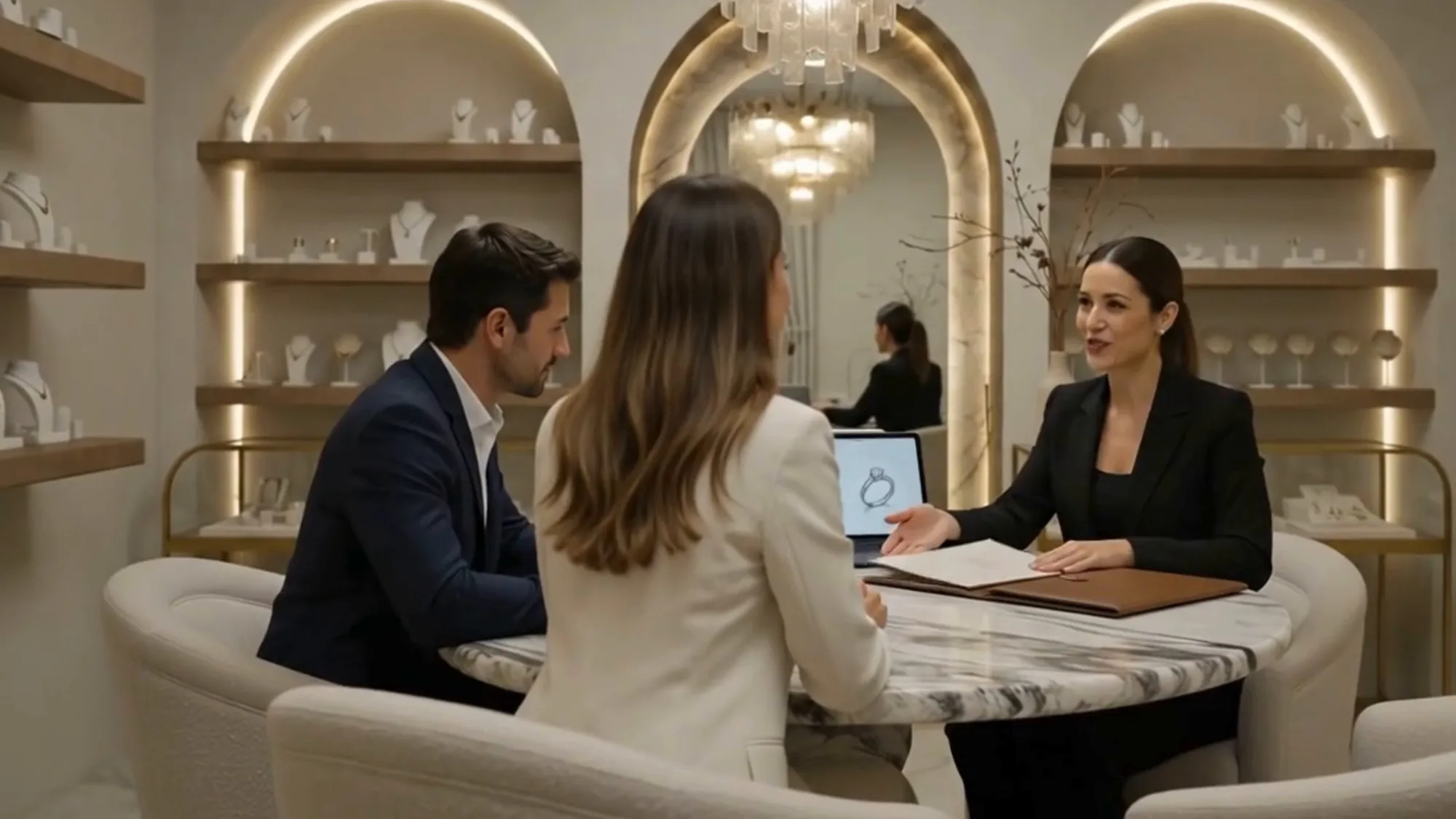
The best proposal plan treats the engagement ring as part of a larger timeline rather than a last-minute purchase. Start with the intended proposal date, work backward through diamond selection, design, production, sizing and quality control, and build in enough margin for changes. Protect every communication channel, decide how the ring will be transported and presented, and create a backup plan for weather, travel, photography and timing. A proposal can still feel spontaneous even when the logistics are carefully prepared.
- The fast answer
- How far in advance to begin
- Custom engagement-ring timeline
- Ready-made and semi-custom options
- Budget and payment planning
- Protecting the surprise
- Estimating ring size
- Learning the preferred style
- Choosing the ring together
- Travel and destination proposals
- Working with a photographer
- The final handoff
- Backup plans
- What happens after the proposal
- Frequently asked questions
How should you plan a proposal around an engagement ring?
Choose the proposal date or date range first, then plan the engagement ring backward from it. Allow time for selecting the diamond, confirming the design, producing the ring, checking the size, completing final quality control and collecting it before travel or venue commitments become fixed. Use only private communication channels, tell the jeweler exactly which phone number and email address are safe, and avoid shipping the ring to a shared home unless that has been carefully arranged.
For a custom engagement ring, beginning several months in advance provides the most flexibility. A simpler ready-made or semi-custom ring may require less time, but every project should include a cushion for sizing, setting and final inspection. The exact timeline depends on the design, diamond availability, production method and proposal date.
Do not make the proposal date depend on the most optimistic completion estimate. Build the plan around a date by which the ring can be finished, inspected and safely in your possession.
How far in advance should you start shopping for an engagement ring?
For most proposals, starting three to six months in advance creates a comfortable planning window. That does not mean every ring takes that long to make. It means the process has room for thoughtful diamond comparison, design changes, family schedules, travel arrangements and unexpected delays without turning the final weeks into an emergency.
A longer lead time is especially valuable when the ring will be custom designed, the center diamond has unusual specifications, an heirloom stone must be evaluated, or the proposal will happen during a holiday, vacation or other date that cannot easily move. Beginning early also allows the buyer to make decisions in stages rather than selecting the diamond, setting, metal and final details in a single rushed appointment.
A shorter timeline may still be possible. The design may be simplified, an available setting may be adapted, or the proposal may use a temporary presentation solution while the final ring is completed afterward. The important step is to share the actual proposal date. A jeweler can only give useful options when the deadline is known.
| Time before proposal | Best use of the time | Risk level |
|---|---|---|
| Six months or more | Full flexibility for research, custom design, unusual diamonds, heirloom work and schedule changes. | Low, assuming decisions continue moving. |
| Three to five months | Comfortable for many custom projects, diamond comparison and normal revisions. | Usually manageable. |
| Six to ten weeks | Possible for many designs if the diamond and direction are selected efficiently. | Requires timely approvals and realistic choices. |
| Two to five weeks | Best suited to available settings, simpler customization or a planned temporary solution. | Higher; sizing and design changes may be limited. |
| Less than two weeks | Focus on secure, finished inventory or a deliberate proposal placeholder. | Very high for custom work. |
What is a realistic timeline for a custom engagement ring?
A custom ring is a sequence of decisions and production stages. The center diamond may be selected first, followed by design development, CAD modeling, review, revisions, manufacturing, stone setting, finishing and final quality control. Each stage affects the next. A delayed approval or a major design change can move the completion date even when production itself is proceeding normally.
The design process should begin with the wearer rather than the rendering. Lifestyle, finger proportions, setting height, desired wedding-band fit and maintenance expectations all influence the architecture. A design that looks beautiful from above may still need changes to the gallery, bridge, prongs or band width before it is ready to produce.
Once a CAD model is approved, production begins. Depending on the method, the ring may be cast, fabricated, assembled, hand-finished and prepared for stone setting. The center diamond and accent stones must be checked, the setting work completed and the finished ring inspected from multiple angles. Polishing is not the final step if the prongs, symmetry, stone security or finish still need attention.
At Diamond Consulate, Live Collaborative CAD Design allows the client to participate in the design rather than waiting for a static interpretation. Seeing proportions and profile changes in real time can reduce misunderstandings and make approval more meaningful. It does not eliminate production time, but it improves the quality of the decisions made before production begins.
Build a deadline hierarchy
Separate the dates into three levels:
- Proposal date: the date the moment is intended to occur.
- Ring-in-hand date: the latest date the finished ring should safely be collected.
- Internal completion target: an earlier goal that leaves room for final checks, pickup and unexpected adjustments.
The ring-in-hand date should normally precede travel by several days. For a local proposal, even a short buffer is better than collecting the ring on the way to the venue.
What if the proposal is too soon for a fully custom ring?
A short timeline does not require a careless choice. It requires a narrower set of realistic options. An available finished ring may be selected and sized if the design permits. A semi-custom setting may use an existing design with changes to the center stone, metal or selected details. A simple solitaire can sometimes be completed faster than an intricate halo, hand engraving or a ring with many custom-cut accent stones.
Another option is to propose with a temporary presentation ring, a loose diamond in secure presentation packaging, or a simple setting that will later be redesigned. This works especially well when the wearer wants to participate in the final design but the proposal date itself should remain a surprise.
The temporary solution should be intentional and clearly explained. It should not create the impression that the proposal ring is unfinished because the buyer forgot to plan. A thoughtful note, private explanation or scheduled design appointment can make the shared design process part of the experience.
Plan the financial timeline as carefully as the production timeline
The engagement-ring budget affects more than the final total. It influences when a center diamond can be secured, whether payments must clear before production, and how much flexibility remains for design changes. Discuss the complete project range early, including the center stone, setting, custom labor, accent stones, engraving, taxes and any later wedding-band considerations.
It is usually more useful to set a comfortable range than to chase a traditional rule based on income. The ring should fit the couple's real financial priorities. A proposal is not improved by beginning the engagement with avoidable financial stress.
Natural and laboratory-grown diamonds can both be considered. The right choice depends on the couple's preferences, value priorities and comfort with the category. The proposal plan should not depend on keeping the diamond origin secret from the future wearer. A clear decision made with shared values is more durable than a category chosen only to maximize visible size.
Ask when deposits, approvals and final payment are due. A project may not enter production until the design is approved and the required payment is received. Waiting to resolve those details can create a delay that has nothing to do with craftsmanship.
How do you protect the surprise while shopping for an engagement ring?
Discretion works best when it is specific. Tell the jewelry studio which phone number is safe, whether text messages are acceptable, which email address should be used and whether voicemail may mention the engagement ring. Do not assume that a standard confirmation message is harmless. A calendar notification, email subject line or preview on a shared device can reveal the plan.
Use a private email account that the future wearer cannot access. Turn off lock-screen previews if needed. Consider how appointment reminders appear on shared calendars, vehicle displays, tablets and smart watches. Save the jeweler's contact under a neutral name only if doing so will not create confusion later.
Shipping requires particular care. Do not send a ring to a shared residence, front desk or office unless the recipient and delivery method are fully controlled. Packages can be photographed by doorbell cameras, displayed in carrier apps or opened by someone trying to be helpful.
Questions to answer before the studio contacts you
- May the studio leave a voicemail?
- May messages contain the words “engagement ring” or “proposal”?
- Is email safer than text?
- Does anyone else have access to the email account?
- Is the billing address shared?
- May a receipt be mailed?
- Who is authorized to collect the ring?
- Should a friend or family member be included in updates?
Search history, saved inspiration images, browser tabs, map history and shared photo albums can reveal a proposal as easily as a voicemail. Use private browsing where appropriate, but do not lose important links or project information.
How can you estimate ring size without asking directly?
A borrowed ring can provide a useful estimate, but only when it is worn on the correct finger and preferably the correct hand. A ring from the right-hand ring finger may not match the left-hand ring finger. Rings worn on the middle finger are often substantially larger. Photographing a ring beside a ruler is less reliable than having the actual ring measured.
A close friend or family member may know the size, but treat secondhand information as an estimate unless it was recently measured. Finger size changes with temperature, swelling, weight change, pregnancy, medication and time. Even a previously correct size may not be perfect today.
The width of the engagement ring also matters. A wider band generally fits more tightly than a narrow band at the same measured size. A future stacked wedding band can change how the rings feel together. Some fingers have a pronounced knuckle and narrower base, which may require a different fit strategy.
When an exact size is unavailable, the goal is usually a proposal fit that is safe enough for the moment and adjustable afterward. It is better for the ring to be slightly large and temporarily secured than so tight that it cannot be placed on the finger. However, an overly loose ring can fall off immediately, particularly during an outdoor proposal.
Designs that require more sizing caution
- Full eternity bands with stones around the entire ring
- Highly detailed engraving extending around the shank
- Alternative metals that cannot be conventionally resized
- Complex pavé extending far down the band
- Wide multi-row designs
- Rings with unusual structural transitions or hidden elements
Discuss sizing flexibility before approving the design. The best time to consider a future adjustment is before the ring is made.
How do you learn the preferred engagement-ring style discreetly?
Look for patterns rather than one saved image. The future wearer may consistently prefer yellow gold, elongated diamonds, low settings, antique details, plain bands or bold modern forms. A single social-media image may have been saved for the proposal story, photography or overall mood rather than the ring itself.
Friends and relatives can help, but too many participants increase the risk of exposure and conflicting opinions. Choose one person who understands the wearer and can keep the plan private. Ask for observations, not permission to redesign the ring around someone else's taste.
Pay attention to existing jewelry. Does the wearer choose warm or white metal? Delicate or substantial pieces? Symmetrical designs or organic forms? Minimal styling or ornament? Daily jewelry offers evidence about comfort and identity, although an engagement ring may still be intentionally different.
Try to separate shape preference from setting preference. Someone may love oval diamonds but dislike halos, or prefer an emerald cut only in a bezel. The center diamond, band, gallery, prongs and wedding-band relationship form one design system.
Useful information to bring to a consultation
- Three to ten inspiration images
- Examples of designs the wearer dislikes
- Typical daily activities and work environment
- Metal colors normally worn
- Approximate ring size
- Desired proposal date
- Comfortable project range
- Any family or heirloom stones being considered
Is choosing the engagement ring together still romantic?
Yes. Many couples select the diamond or design together and preserve the surprise in the proposal date, setting, words, family involvement or celebration afterward. The ring can be collaborative while the moment remains personal.
Choosing together is particularly useful when the wearer has specific preferences about diamond origin, center shape, setting height, metal, lifestyle durability or wedding-band fit. It can also reduce anxiety for the person proposing, allowing the proposal to focus on the relationship rather than whether the ring was guessed correctly.
Some couples divide the process. They attend an initial appointment together, narrow the options and establish a design direction. One partner then completes the final details privately. The wearer knows the ring will feel right but does not see the final version before the proposal.
There is no requirement that a meaningful proposal depend on one person making every jewelry decision alone. Surprise and secrecy are not the same thing. A proposal can be surprising even when the engagement itself has been discussed openly.
How should you travel with an engagement ring?
Keep the ring with you rather than in checked luggage. A carry-on bag can still be separated at a gate, so the safest place is usually a secure interior pocket or personal item that will remain under your control. Avoid repeatedly opening the ring box during travel.
A traditional large ring box may be difficult to conceal in clothing. Ask whether a slim proposal box or secure travel case is available. The ring should not be carried loose in a pocket, wallet or toiletry bag.
For international travel, review insurance coverage and documentation before departure. Customs and tax questions can arise when high-value jewelry crosses borders, especially if purchased abroad. Keep purchase documentation accessible but separate from the ring.
At a hotel, use the in-room safe only after considering who can access it and whether the proposal plan requires staff involvement. Do not leave the ring unattended in luggage, a vehicle or an unsecured room. If a photographer or planner will handle the ring, define exactly when custody changes and when it returns.
Destination proposal checklist
- Collect the ring several days before departure.
- Confirm the stone and prongs were inspected.
- Photograph the ring and documentation for your records.
- Confirm insurance is active.
- Use secure carry-on storage.
- Pack a slim presentation box if needed.
- Identify a backup location for weather or closures.
- Confirm the photographer's meeting point without exposing the plan.
- Decide who carries the ring immediately before the proposal.
How do you coordinate a proposal photographer?
Choose the location and general timing before finalizing the photographer. The photographer needs to understand the approach path, where each person will stand, the expected lighting and what visual cue signals that the proposal is beginning. A vague plan often leads to blocked views, excessive distance or the photographer being noticed too early.
Share reference photographs of the exact location if possible. Identify landmarks and specify the direction the couple will face. For a public venue, confirm whether photography requires permission. Some parks, rooftops, museums, gardens and private properties have rules that may affect equipment, access or timing.
The ring box can influence the photographs. Practice removing it smoothly and opening it in the correct direction. Decide whether to kneel before or after taking out the box. Keep the ring secure until the moment it is presented.
Allow the photographer to capture the reaction before immediately turning the moment into a posed session. The most meaningful photographs often happen in the first few seconds. Afterward, take a moment to check that the ring is secure on the finger before walking, hugging guests or moving to another location.
Plan the final ring handoff carefully
The pickup appointment is not a routine errand. It is the point when responsibility for the ring transfers to the buyer. Inspect the finished ring in normal light, confirm the center stone, review any engraving and ask how to open or use the presentation packaging. Make sure the ring size and design match the final approval.
Collect all relevant documentation, including the receipt, diamond grading report when applicable, appraisal or insurance information, care guidance and any warranty details. Keep the documentation separate from the proposal box so it does not reveal the surprise or become lost during the moment.
Ask whether the ring should receive a final cleaning shortly before the proposal if there will be a delay. Store it in a dry, secure location away from household cleaners, loose objects and curious family members. Avoid placing the ring in an inventive hiding spot that could be discarded, donated, packed or discovered.
For complicated plans, one person should remain responsible for the ring. Passing it among friends, planners, venue staff and photographers creates unnecessary opportunities for confusion. The safest chain of custody is usually the shortest one.
Build a backup plan before you need one
A backup plan protects the proposal from becoming dependent on one fragile detail. Outdoor proposals need a weather alternative. Travel proposals need a response to delayed flights or lost luggage. Restaurant proposals need a plan if the table, timing or crowd is not what was expected. Private venues need a contact who can resolve access problems quickly.
The backup should preserve the emotional purpose of the proposal, not reproduce every visual detail. A quieter nearby location may be better than forcing the original plan through heavy rain, crowds or stress. The proposal is the commitment; the setting supports it.
| Potential problem | Primary prevention | Backup response |
|---|---|---|
| Ring not completed | Start early and set an internal completion target. | Use a deliberate temporary presentation option and design together afterward. |
| Incorrect ring size | Use a measured ring or professional estimate. | Use a temporary sizing aid and schedule professional adjustment. |
| Bad weather | Monitor the forecast and secure flexible reservations. | Move to a covered or indoor location with similar meaning. |
| Photographer delayed | Confirm arrival and communication shortly beforehand. | Proceed with a trusted friend recording discreetly or preserve the private moment without photographs. |
| Travel disruption | Keep the ring with you and avoid a first-night-only plan. | Move the proposal within the trip rather than risking the ring or forcing the schedule. |
| Location too crowded | Visit at the same day and time beforehand. | Use a preselected nearby alternative. |
Practice only the parts that can fail
The proposal does not need to feel rehearsed, but a few physical details are worth practicing. Open the box without turning it backward. Know which pocket will hold it. Make sure the clothing selected for the proposal can conceal the box securely. Test the route to the location and identify where the photographer will stand.
Think about what you want to say, but do not depend on memorizing a long speech word for word. A few clear thoughts are easier to deliver honestly when emotions take over. The proposal should sound like the relationship, not a performance written for an audience.
Confirm the future wearer would be comfortable with the degree of publicity involved. A crowded restaurant, sports arena or large family gathering can feel romantic to one person and deeply uncomfortable to another. The best proposal reflects the recipient, not the pressure to create a spectacle.
What should happen immediately after the proposal?
Check that the ring fits safely before continuing the celebration. When it is loose, use a temporary sizing aid or keep it in the box until it can be adjusted. Do not rely on tape, thread or improvised materials that can damage the ring or trap moisture.
Schedule a professional sizing check rather than guessing from the first few minutes. Finger size changes with temperature, travel, excitement and swelling. The ring may feel different the next morning.
Arrange insurance promptly. A ring may be covered under an existing homeowners or renters policy only in limited circumstances, and high-value jewelry often requires scheduled coverage or a specialized policy. Coverage details vary, so review the terms rather than assuming the purchase is automatically protected.
Keep the diamond grading report, receipt and appraisal in a secure location. Do not store the only copies with the ring. Photograph the finished ring for your records and save the jeweler's care and inspection recommendations.
When the engagement ring was intentionally temporary, schedule the design appointment while the proposal experience is still fresh. The couple can discuss what worked about the presentation ring, what should change and how the future wedding band will fit.
A complete engagement-ring proposal checklist
- Choose the proposal date or realistic date range.
- Set a comfortable total project budget.
- Decide whether the ring will be custom, semi-custom, ready-made or temporary.
- Identify safe communication channels.
- Collect style references and lifestyle information.
- Estimate ring size and understand resizing limits.
- Select and secure the center diamond.
- Approve the ring design promptly.
- Create an internal completion date before the proposal.
- Arrange insurance and collect documentation.
- Plan secure storage and transportation.
- Confirm the proposal location, permissions and backup location.
- Coordinate photography and identify the exact signal.
- Practice handling the ring box.
- Collect the ring with enough time for final inspection.
- Keep one person responsible for the ring.
- Check the fit immediately after the proposal.
- Schedule resizing or design follow-up when needed.
Frequently asked questions about proposal planning and engagement rings
How early should I buy an engagement ring before proposing?
Three to six months is a comfortable planning window for many couples, especially when the ring will be custom designed. Simpler or available designs may require less time, but it is wise to leave a cushion for sizing, production and final quality control.
Can a custom engagement ring be made in six weeks?
Some custom rings can be completed within six weeks, but the answer depends on the design, diamond availability, revisions and production schedule. Share the real proposal date immediately so the jeweler can explain which options are realistic.
What should I do when the proposal is only a few weeks away?
Focus on available finished rings, semi-custom designs, simple solitaires or a deliberate temporary presentation option. Avoid approving an intricate design based on an unrealistic promise.
How can I keep engagement-ring communication private?
Use a private email address, identify a safe phone number, control lock-screen previews and tell the jeweler whether voicemail or text may mention the ring. Avoid shipping to a shared address without a specific plan.
How do I find her ring size secretly?
Borrow a ring worn on the correct finger and hand, or ask one trusted person who may know. Treat the result as an estimate unless the finger was professionally measured recently.
Is it better for an engagement ring to be slightly large or slightly small?
For the proposal moment, slightly large is usually safer than too tight, but the ring must not be loose enough to fall off. A temporary sizing aid can help until a professional adjustment is completed.
Can every engagement ring be resized?
No. Full eternity designs, alternative metals, wide bands, extensive pavé and certain complex structures may have limited resizing options. Discuss future sizing before approving the ring.
Should I choose the engagement ring alone?
Not necessarily. Many couples select the diamond or design together and keep the proposal timing and location private. Collaboration often improves confidence in a piece that will be worn for decades.
How can I learn what engagement-ring style she likes?
Look for repeated preferences in saved images and existing jewelry. Ask one trusted friend for observations and bring both liked and disliked examples to the consultation.
Can I propose with a loose diamond?
Yes, when the diamond is presented securely and the couple plans to design the setting together afterward. The presentation should be intentional and the stone should remain protected.
Can I propose without the final ring?
Yes. A temporary ring, family ring, design rendering or other meaningful placeholder can preserve the proposal date while allowing the final ring to be chosen or created together.
Should I insure the ring before the proposal?
Coverage should be arranged as soon as practical, ideally before travel or the proposal. Review the actual policy terms because homeowners, renters and specialized jewelry policies differ.
Can I put an engagement ring in checked luggage?
It is safer to keep the ring with you in a secure personal item. Checked luggage can be delayed, lost or accessed outside your control.
How do I hide a ring box while traveling?
Use a slim, secure presentation box or travel case and keep it in a controlled interior pocket or personal bag. Do not carry the ring loose.
Should the photographer hold the engagement ring?
Usually the safest plan is for the person proposing to keep the ring. When another person must handle it, define exactly when custody changes and when the ring is returned.
How early should I pick up the ring before a destination proposal?
Collect it several days before departure whenever possible. That allows time to inspect the ring, organize documentation and address any issue before travel.
What if bad weather ruins the proposal location?
Choose a backup location before the day arrives. The alternative should preserve the meaning and privacy of the moment rather than duplicate every visual detail.
Should I propose in public?
Only when the future wearer would genuinely enjoy public attention. The right level of privacy should reflect the recipient's personality rather than outside expectations.
What documents should come with an engagement ring?
Keep the purchase receipt, applicable diamond grading report, appraisal or insurance documentation, and care or warranty information. Store them separately from the ring.
What should we do if the ring does not fit after the proposal?
Stop wearing it when it may fall off or feels dangerously tight. Use a temporary professional sizing aid if appropriate and schedule a proper measurement and adjustment.