Designing together
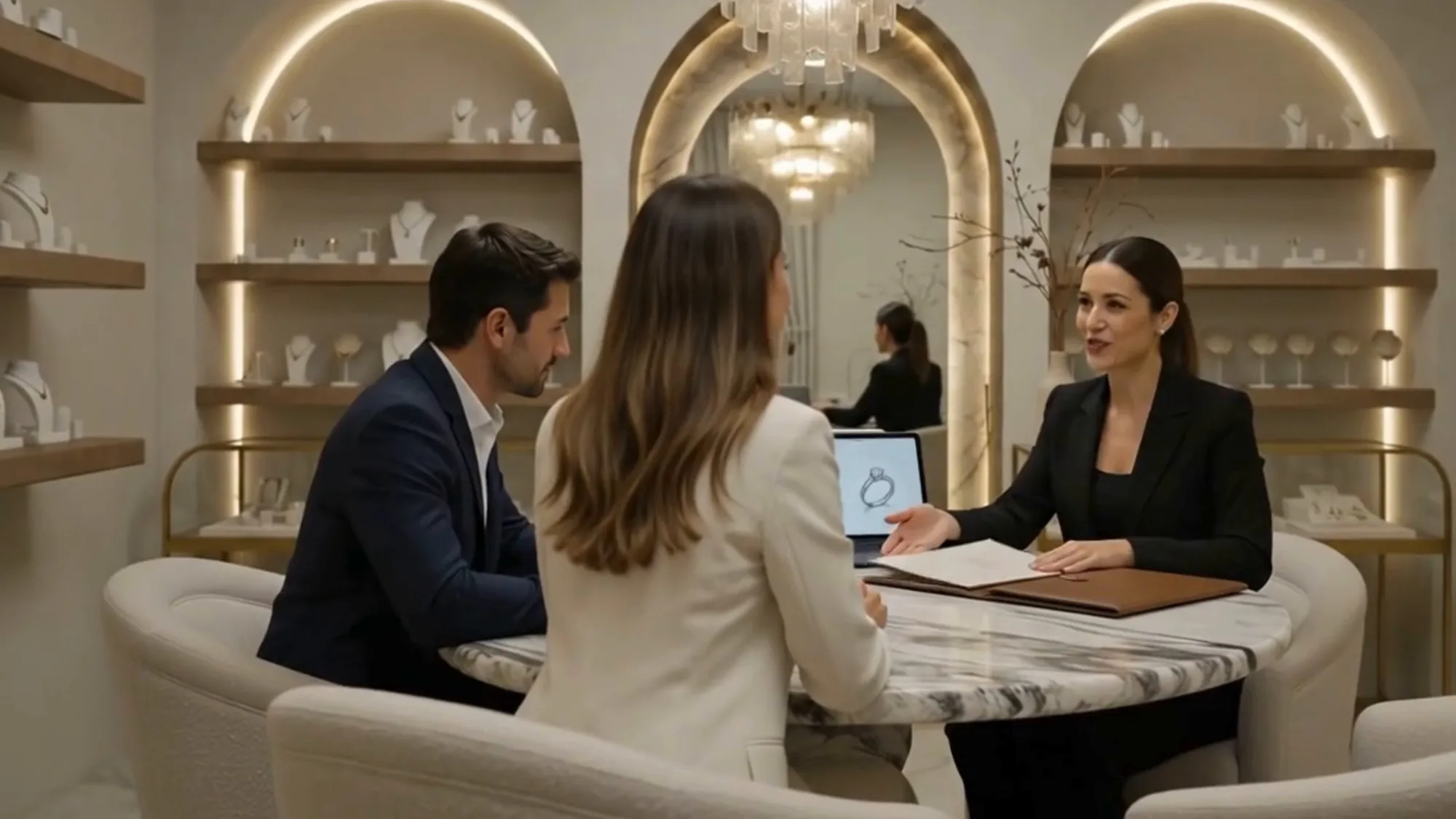
Couples who design together can compare diamonds, refine the setting and discuss budget openly. This reduces uncertainty and often creates a ring that fits the wearer’s style and daily life more precisely.
The proposal can remain a surprise even when the ring is not. Timing, location and the actual moment still belong to the person proposing.
Designing privately
A private process works well when the wearer has shared clear preferences or a trusted friend has reliable information. Screenshots, saved boards and an existing ring from the correct finger can provide a useful starting point.
Read how to find her ring size without making the operation unnecessarily suspicious.
The hybrid approach
One of the strongest options is to shop or consult together, then allow one person to complete the final details privately. The couple may choose the shape and general style together while the final design, engraving or proposal timing remains undisclosed.
Use a temporary proposal ring?
Some people propose with a simple band, family ring or placeholder and design the permanent engagement ring together afterward. This works especially well when the proposal moment matters more than presenting the final ring immediately.
Protecting confidentiality
Appointment confirmations should go only to the contact information provided. Shared addresses and devices require care. Read our engagement-ring proposal planning guide for practical logistics.
Romance is not measured by guesswork
The best approach fits the couple. Collaboration does not make a proposal less meaningful, and privacy does not require ignoring everything the wearer has said. The goal is a ring and a moment that both feel intentional.
See it before it is made
During a private Diamond Consulate consultation, the selected center stone and design priorities can be translated into a live CAD model. That makes proportion, profile and future wedding-band fit visible before production begins.