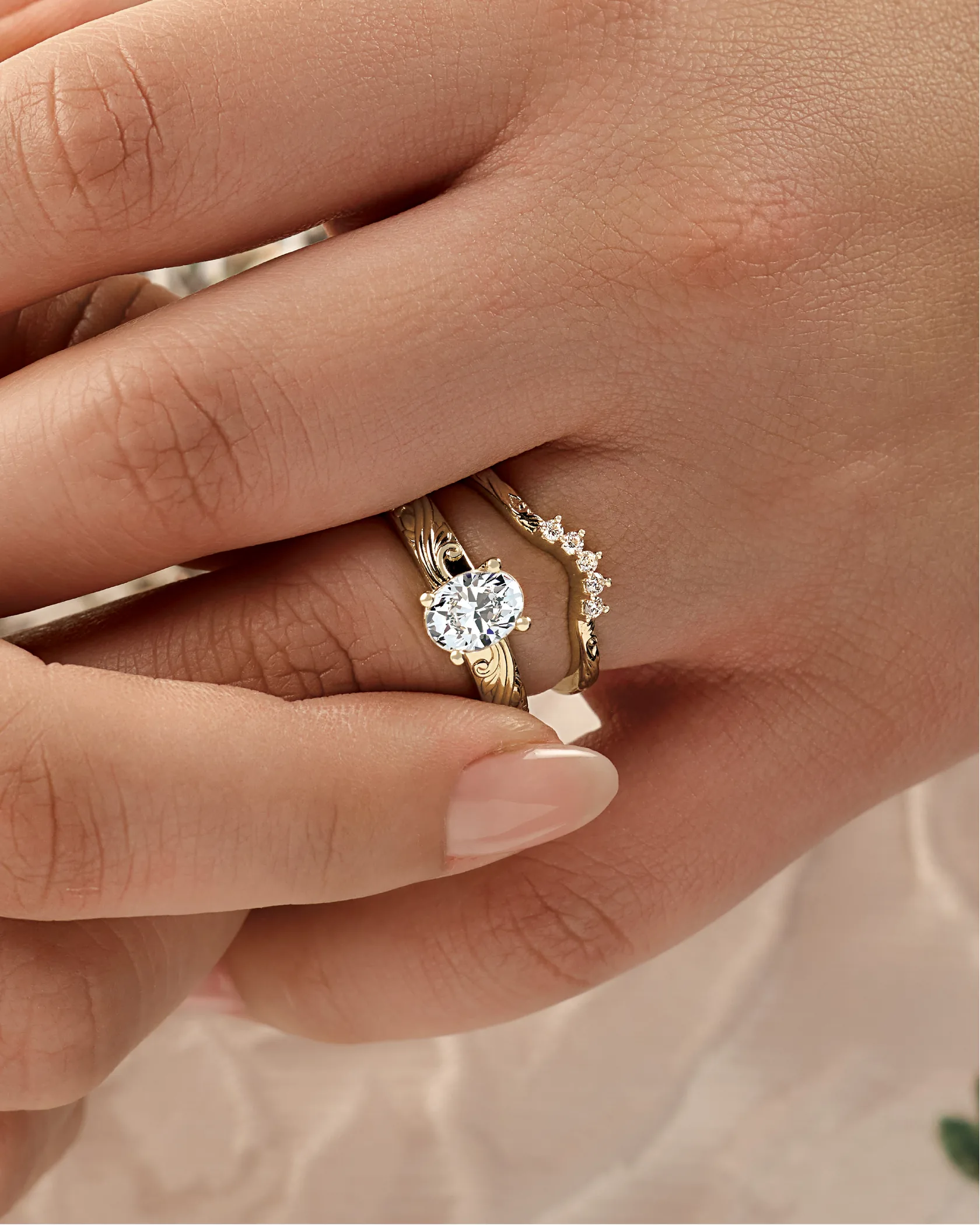

What flush fit means
A flush-fitting wedding band sits directly beside the engagement ring without a visible gap. To allow that, the engagement ring usually needs enough clearance beneath the center setting for a straight band to pass beside it.
Why some rings create a gap
Low baskets, halos, side stones and decorative galleries may extend beyond the engagement-ring band. A straight wedding band reaches that structure before it reaches the shank, creating space between the rings.
The gap is not inherently wrong. Some clients like the definition it creates. The problem is discovering it after assuming the rings would sit together.
What a contoured band does
A contoured band curves around the engagement-ring setting. It can be subtle or dramatic and may be designed to follow a halo, elongated center stone or unusual gallery. When created intentionally, the pair can appear as one complete composition.
The tradeoff of a contour
A shaped band may look less balanced when worn alone. Clients who expect to wear the wedding band without the engagement ring should consider that before choosing a deep contour.
Design both rings early
Live CAD makes it possible to place the future band beside the engagement ring before either is made. The band width, height, gap and shared outline can be evaluated in the same model.
Explore our wedding-band consultations and Live Collaborative CAD Design.
There is no universal correct fit
The correct answer depends on how the rings will be worn. Flush fit is clean and practical. A contour can preserve a lower profile or a more distinctive engagement-ring design. Intentional beats accidental.
See it before it is made
During a private Diamond Consulate consultation, the selected center stone and design priorities can be translated into a live CAD model. That makes proportion, profile and future wedding-band fit visible before production begins.