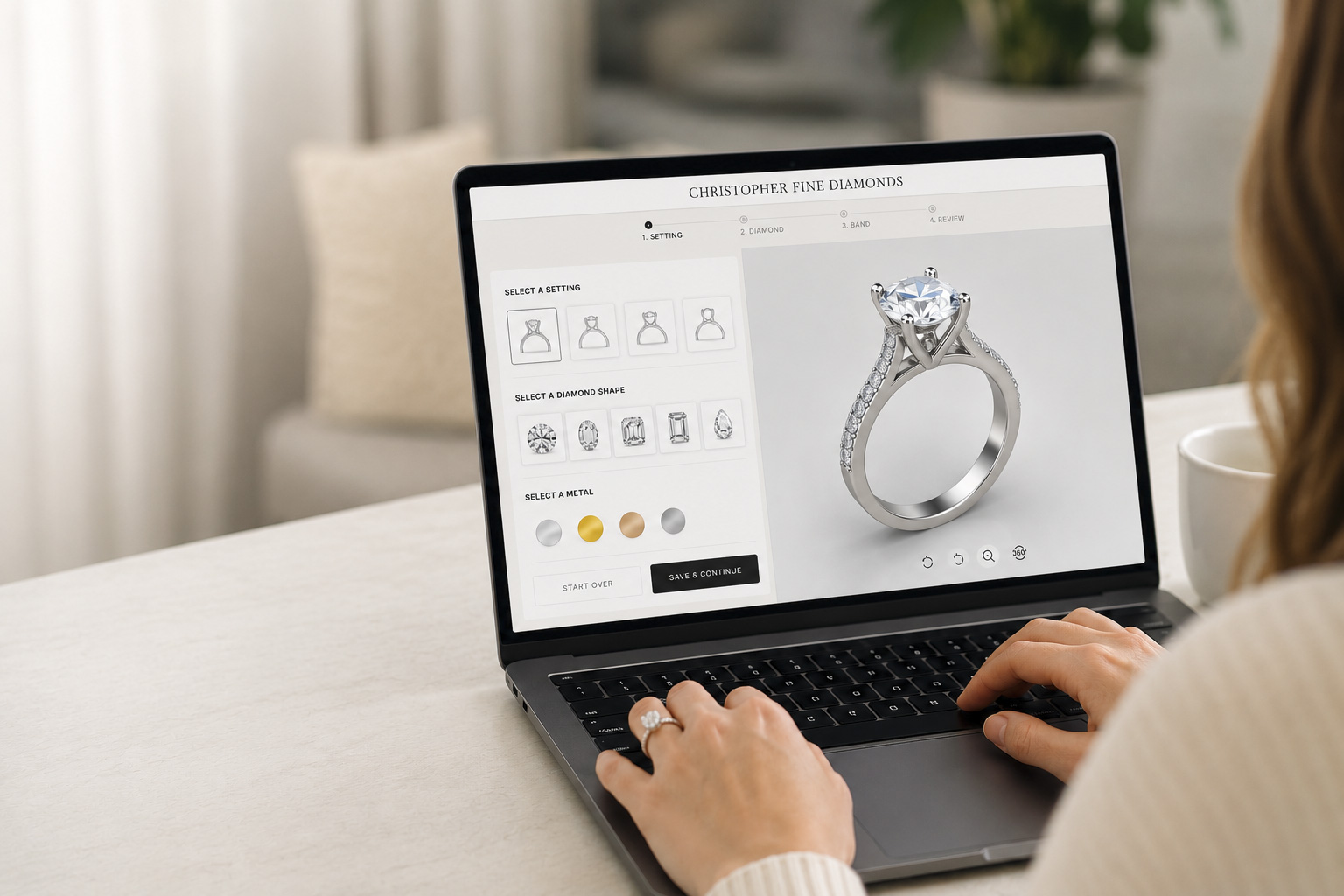

Choose the metal with the whole ring in mind: color, structure, wear, maintenance, weight, budget and the future wedding band.
The 30-second answer
Choose platinum if you want a naturally white, dense metal with a substantial feel and a patina that develops over time. Choose 14K gold for practical durability, lower cost and broader color options. Choose 18K gold for richer color, higher gold content and a more luxurious feel. Choose white gold if you want a bright white look at a lower initial cost than platinum and are comfortable with periodic rhodium maintenance.
There is no universally “best” engagement ring metal. The right choice depends on the design, center stone, setting style, lifestyle, comfort preferences, sensitivity, maintenance expectations and budget. A metal that is ideal for a low-profile bezel may not be the best fit for a delicate cathedral solitaire or a wide pavé band.
If you only remember ten things
- Platinum is naturally white; white gold is typically rhodium plated.
- 14K gold usually costs less and is often harder than comparable 18K alloys.
- 18K yellow gold usually has a richer gold color than 14K yellow gold.
- Platinum is denser and usually feels heavier on the hand.
- No engagement ring metal is scratch-proof.
- Platinum tends to develop patina; gold tends to show scratches and may lose small amounts of metal through repeated wear and polishing.
- White gold may require replating to maintain a bright white appearance.
- Prong security depends on design, workmanship, maintenance and metal choice—not one factor alone.
- Nickel sensitivity matters when evaluating white-gold alloys.
- The wedding band should be considered before the engagement-ring metal is finalized.
Platinum explained
Platinum is a naturally white precious metal known for density, weight and long-term wear characteristics. In jewelry, it is usually used in high-purity alloys. Its naturally white color means it does not require rhodium plating to appear white.
One of platinum’s defining characteristics is the way it wears. Surface contact tends to move or displace metal, creating a soft patina, rather than removing material in exactly the same way repeated scratching and polishing can affect gold. Some clients love this lived-in appearance; others prefer a brighter polished finish and choose periodic refinishing.
Advantages of platinum
- Naturally white color
- Dense, substantial feel
- Well suited to many prong and setting applications
- Often chosen by clients who want high-purity precious metal
- No rhodium plating required
- Develops a distinctive patina
Limitations of platinum
- Usually heavier than gold
- Can cost more depending on design and market conditions
- Patina may not appeal to clients who want a consistently bright polish
- Requires jewelers experienced with platinum fabrication and repair
- Can feel too substantial for those who prefer lightweight jewelry
14K gold explained
14K gold contains 58.5 percent gold, with the remaining portion made from alloy metals that influence color, hardness and workability. It is one of the most common engagement-ring metals because it offers a practical balance of price, strength and traditional repairability.
Compared with 18K, 14K usually has a slightly less saturated yellow tone and may feel a little lighter. Its higher alloy content often makes it harder than a comparable 18K alloy, though exact performance depends on the formula and design.
Advantages of 14K gold
- Lower initial cost than 18K or platinum in many designs
- Practical everyday-wear option
- Available in yellow, white and rose colors
- Often easier to size and repair than alternative metals
- Good balance for clients who want precious metal without maximizing purity
Limitations of 14K gold
- Less rich yellow color than 18K yellow gold
- White-gold versions may require rhodium plating
- May contain nickel depending on alloy
- Shows normal scratches and wear
- Lower gold content than 18K
18K gold explained
18K gold contains 75 percent gold. It is selected for higher purity, richer color and a luxurious feel. The visual difference is especially noticeable in yellow gold, where 18K generally appears warmer and more saturated than 14K.
Many 18K alloys are softer than comparable 14K alloys, but that does not make them automatically unsuitable for engagement rings. Proper proportions, setting construction and maintenance remain critical.
Advantages of 18K gold
- Higher gold content
- Richer yellow color
- Luxury appearance and feel
- Available in yellow, white and rose tones
- Strong choice for clients who value color and purity
Limitations of 18K gold
- Higher cost than 14K in comparable designs
- Often softer than comparable 14K alloys
- White-gold versions may still require rhodium plating
- May show surface wear differently
- Not always the best value for clients who cannot see or appreciate the color difference
Yellow gold
Yellow gold offers the most traditional gold appearance and creates a warm contrast with colorless diamonds. It can also complement diamonds with slight warmth by making the color relationship feel intentional.
14K yellow gold tends to be a little lighter and less saturated, while 18K yellow gold usually appears richer. The choice should be made by viewing both on the actual hand and beside the intended center stone.
White gold
White gold is a gold alloy blended with white metals. It is usually rhodium plated to create a bright, cool-white surface. Over time, that plating wears, especially on the underside and high-contact areas, revealing the warmer tone of the underlying alloy.
White gold is often selected because it provides a platinum-like visual direction at a lower initial cost. It is available in 14K and 18K, though the underlying color and maintenance can vary by alloy.
Rose gold
Rose gold gets its color primarily from copper in the alloy. It can appear romantic, antique, fashion-forward or modern depending on the design. The exact shade varies with karat and formula.
Rose gold creates a strong visual contrast with colorless diamonds and can be especially effective in vintage-inspired, floral or geometric settings. Clients with sensitivity to copper should discuss alloy composition.
Platinum vs. 14K gold
| Factor | Platinum | 14K gold |
|---|---|---|
| Color | Naturally white | Yellow, white or rose |
| Weight | Heavier | Lighter |
| Maintenance | No rhodium; patina develops | White gold may need rhodium |
| Cost | Often higher | Often lower |
| Feel | Dense and substantial | Moderate and familiar |
| Best fit | Natural white color and heavy luxury feel | Practical value and color flexibility |
Platinum vs. 18K gold
| Factor | Platinum | 18K gold |
|---|---|---|
| Purity | Usually high-purity platinum alloy | 75% gold |
| Color | Naturally white | Yellow, white or rose |
| Weight | Heavier | Lighter than platinum |
| Wear appearance | Patina and metal displacement | Scratches and normal surface wear |
| Maintenance | No rhodium needed | 18K white gold may need rhodium |
| Best fit | Natural white color and dense feel | Richer gold color and higher gold content |
White gold vs. platinum
This is the most common comparison because both can appear white when new. The difference is that platinum is naturally white, while white gold is an alloy that is often finished with rhodium plating.
White gold usually starts at a lower price, feels lighter and can be familiar to wearers of traditional gold jewelry. Platinum feels denser, does not require rhodium and develops patina. Long-term maintenance costs can narrow the initial price gap depending on how often white gold is replated.
Hardness vs. toughness
Hardness describes resistance to scratching or indentation. Toughness describes resistance to breaking, cracking or deforming under impact. These qualities are not the same.
Clients often hear that one metal is “harder” and assume that means universally more durable. In jewelry, durability depends on the entire system: alloy, thickness, profile, prong geometry, stone size, setting type and wear habits.
Do platinum rings scratch?
Yes. Platinum scratches. No engagement-ring metal is scratch-proof. The difference is how the metal responds. Platinum tends to displace and develop patina, while gold tends to show individual scratches and can lose tiny amounts of material through wear and repeated polishing.
Whether one appearance is better is personal. Some clients love platinum’s patina because it looks soft and lived-in. Others prefer the brighter look of polished gold and choose regular refinishing.
Does gold wear away?
Gold can lose minute amounts of material through friction and repeated polishing over many years. This does not mean a properly built gold ring is fragile. It means that aggressive, frequent polishing should be avoided and thin areas should be monitored.
Which metal holds diamonds better?
No single metal automatically “holds diamonds better” in every design. Platinum is often favored for fine prongs because of its wear behavior and natural white color. Gold can also hold diamonds securely when the setting is properly engineered and maintained.
Prong security depends on thickness, shape, setting technique, stone size and inspection. A poorly made platinum head is not safer than a well-made gold head.
Which metal makes a diamond look whiter?
White metals reflect less warm color around the stone and can make a colorless diamond appear cooler. Yellow and rose gold introduce warmth around the setting, which can be either a contrast or an intentional design effect.
A common mixed-metal approach uses a yellow- or rose-gold shank with platinum or white-gold prongs. This keeps the band warm while visually quieting the metal immediately around the diamond.
Nickel sensitivity and allergies
Some white-gold alloys contain nickel. Clients with known nickel sensitivity should ask about the exact alloy. Platinum is often considered when sensitivity is a major concern, though individual reactions can vary and no metal recommendation should replace medical advice.
Rose gold contains more copper, which can also matter for some clients. The best approach is to discuss known sensitivities before production.
Weight and comfort
Platinum is significantly denser than gold, so a platinum ring often feels heavier even when the design looks identical. Some clients associate this with luxury and security. Others prefer the lighter feel of gold.
Weight also depends on width, thickness and setting structure. A substantial 18K ring can feel heavier than a delicate platinum ring. Try comparable samples whenever possible.
Cost and long-term maintenance
| Cost factor | Platinum | Gold |
|---|---|---|
| Initial metal cost | Often higher | 14K usually lower; 18K higher than 14K |
| Rhodium plating | Not needed | Common for white gold |
| Polishing | Optional refinishing of patina | Optional polishing; avoid over-polishing |
| Repair | Requires platinum-capable jeweler | Widely serviceable by experienced jewelers |
| Long-term appearance | Natural white with patina | Depends on color and finish |
Resizing considerations
Platinum, 14K gold and 18K gold can often be resized, but the design matters more than the metal alone. Full-eternity stones, continuous engraving, unusual profiles and mixed-metal construction can limit alteration.
Ask how much the ring can realistically be changed and whether the design can be preserved. Future sizing should be considered before choosing a full-eternity or highly structured band.
Best metal by engagement-ring style
Solitaire
All three major options can work. Platinum offers a naturally white, substantial setting. Yellow or rose gold creates strong contrast. White gold provides a bright appearance at a lower initial cost.
Halo
White metal is often used around the center stone to minimize visual interruption. The shank can remain white or use yellow or rose gold for contrast.
Three-stone
Structure and prong layout matter greatly. Platinum can be useful for a refined white setting, while gold offers more color flexibility and can visually connect side stones to the shank.
Vintage-inspired
18K yellow gold, rose gold and platinum can all support vintage detailing. Milgrain, engraving and filigree should be evaluated with the metal’s wear characteristics.
Bezel
Bezel settings benefit from a metal that can be shaped precisely around the stone. Platinum and gold can both work; color and profile often drive the decision.
Hidden halo
Mixed-metal construction can be effective when the hidden halo should disappear visually around the diamond while the shank remains warm.
Cathedral
Because cathedral shoulders contribute to structure and visual height, metal choice should be evaluated with width, thickness and wedding-band fit.
Best metal by lifestyle
| Lifestyle | Priority | Possible direction |
|---|---|---|
| Office or professional | Comfort and appearance | Any precious metal can work |
| Healthcare | Gloves, sanitation and snagging | Smoother profile and secure setting |
| Hands-on trade | Impact and safety | Remove ring during hazardous work |
| Fitness | Pressure and deformation | Remove before lifting |
| Low-maintenance preference | Avoid replating | Platinum, yellow gold or rose gold |
| Lightweight preference | Lower weight | Gold over platinum |
Wedding-band compatibility
The engagement ring and wedding band do not have to use the same metal, but their interaction should be intentional. Different metals can wear against each other at different rates. Stone girdles and prongs can also contact neighboring metal.
During design, review whether the wedding band will sit flush, leave a gap, contour around the setting or require a spacer. This can affect the engagement-ring head, basket height and metal choice.
Mixed-metal engagement rings
Mixed-metal designs can combine the warmth of yellow or rose gold with the visual quiet of platinum or white-gold prongs. They can also coordinate with existing jewelry or future wedding bands.
The transition between metals should be structurally sound and visually deliberate. Repair and refinishing should be discussed because the metals may require different techniques.
Common myths
- Platinum never scratches
- 18K is too soft for engagement rings
- 14K is not real gold
- White gold is naturally bright white
- Platinum always holds stones better
- More expensive always means more durable
- All jewelry metals show wear
- Design and workmanship matter
- 14K is a real gold alloy
- White gold is usually rhodium plated
- Setting quality determines security
- Tradeoffs differ by alloy and design
A practical decision tree
Do you want naturally white metal? If yes, platinum is the clearest fit. If no, consider yellow or rose gold.
Do you want a bright white look at a lower initial cost? If yes, consider white gold and plan for rhodium maintenance.
Do you prefer a heavier ring? If yes, platinum may appeal. If no, gold may feel more comfortable.
Is rich yellow color important? If yes, compare 18K and 14K yellow gold in person.
Is low maintenance a priority? Avoid white gold if you do not want periodic replating.
Is nickel sensitivity a concern? Ask about alloy composition and consider platinum or a nickel-free option.
Is future resizing important? Focus on the design and stone coverage as much as the metal.
Will the ring be worn with a wedding band? Review fit and ring-to-ring contact before finalizing the metal.
Buyer checklist
- Compare platinum, 14K and 18K on the actual hand.
- View the center stone in both white and warm metals.
- Ask whether white gold is rhodium plated.
- Ask about nickel in the alloy.
- Compare weight using similar designs.
- Discuss patina, scratches and refinishing.
- Confirm setting and prong construction.
- Ask about resizing and repair limitations.
- Review long-term maintenance costs.
- Consider the future wedding band.
- Approve metal, karat and color in writing.
- Choose based on the whole ring—not a generic ranking.
If the ring were identical in every other way, which metal would you still choose after wearing both?
Frequently asked questions
Is platinum better than gold for an engagement ring?
Not universally. Platinum is naturally white and heavy, while gold offers more color choices and often lower cost. The better option depends on design, weight preference, maintenance and budget.
Is platinum more durable than gold?
Platinum and gold wear differently. Platinum tends to displace and develop patina, while gold tends to show scratches and can lose tiny amounts of material through wear and polishing. Design quality matters greatly.
Does platinum scratch?
Yes. Platinum scratches and develops patina. It is not scratch-proof.
Does white gold need replating?
Usually yes. Rhodium plating wears over time and may need to be renewed to maintain a bright white appearance.
Is 14K or 18K better for an engagement ring?
14K often offers practical hardness and lower cost. 18K offers richer color and higher gold content. Both can work well when the ring is properly designed.
Which metal makes a diamond look whiter?
Platinum and white gold create a cooler visual environment around the diamond. Yellow and rose gold introduce warmth.
Which metal is heavier?
Platinum is significantly denser and usually feels heavier than gold in a comparable design.
Which metal is more expensive?
Platinum is often more expensive than 14K gold. 18K gold may approach or exceed platinum pricing depending on design and market conditions.
Is platinum hypoallergenic?
Platinum is often chosen by clients with sensitivity concerns, but individual reactions vary. Ask about alloy composition and consult a medical professional for known allergies.
Can platinum and gold be mixed?
Yes. Mixed-metal rings often use warm gold shanks with platinum or white-gold prongs.
Can platinum rings be resized?
Often yes, though the design, stone coverage and amount of change determine what is possible.
Can white gold turn yellow?
The underlying alloy can become visible as rhodium plating wears, making the ring appear warmer or yellowish.
Is 18K gold too soft for daily wear?
No. 18K can perform well in daily wear when the ring is properly proportioned and maintained.
Is 14K gold real gold?
Yes. 14K gold is a genuine gold alloy containing 58.5 percent gold.
Which metal is best for prongs?
Platinum is often favored for fine prongs, but gold can also be secure. Workmanship, thickness and maintenance are critical.
Which metal is best for a solitaire?
All can work. Platinum offers natural white color and weight, yellow or rose gold creates contrast, and white gold provides a bright look at lower initial cost.
Which metal is lowest maintenance?
Platinum, yellow gold and rose gold avoid rhodium replating. All metals still require cleaning and inspection.
Does rose gold cause allergies?
Rose gold contains copper, which can matter for some wearers. Ask about alloy composition if sensitivity is a concern.
Should the wedding band match the engagement ring metal?
It does not have to, but contact, wear and visual coordination should be considered together.
What should I choose if I dislike heavy rings?
Gold will usually feel lighter than platinum in a comparable design.
See the metals in the actual design
During a private Diamond Consulate consultation, the center stone, setting structure, proportions and future wedding-band fit can be evaluated together. Live Collaborative CAD Design makes it possible to compare profile, prong placement and metal distribution before production.