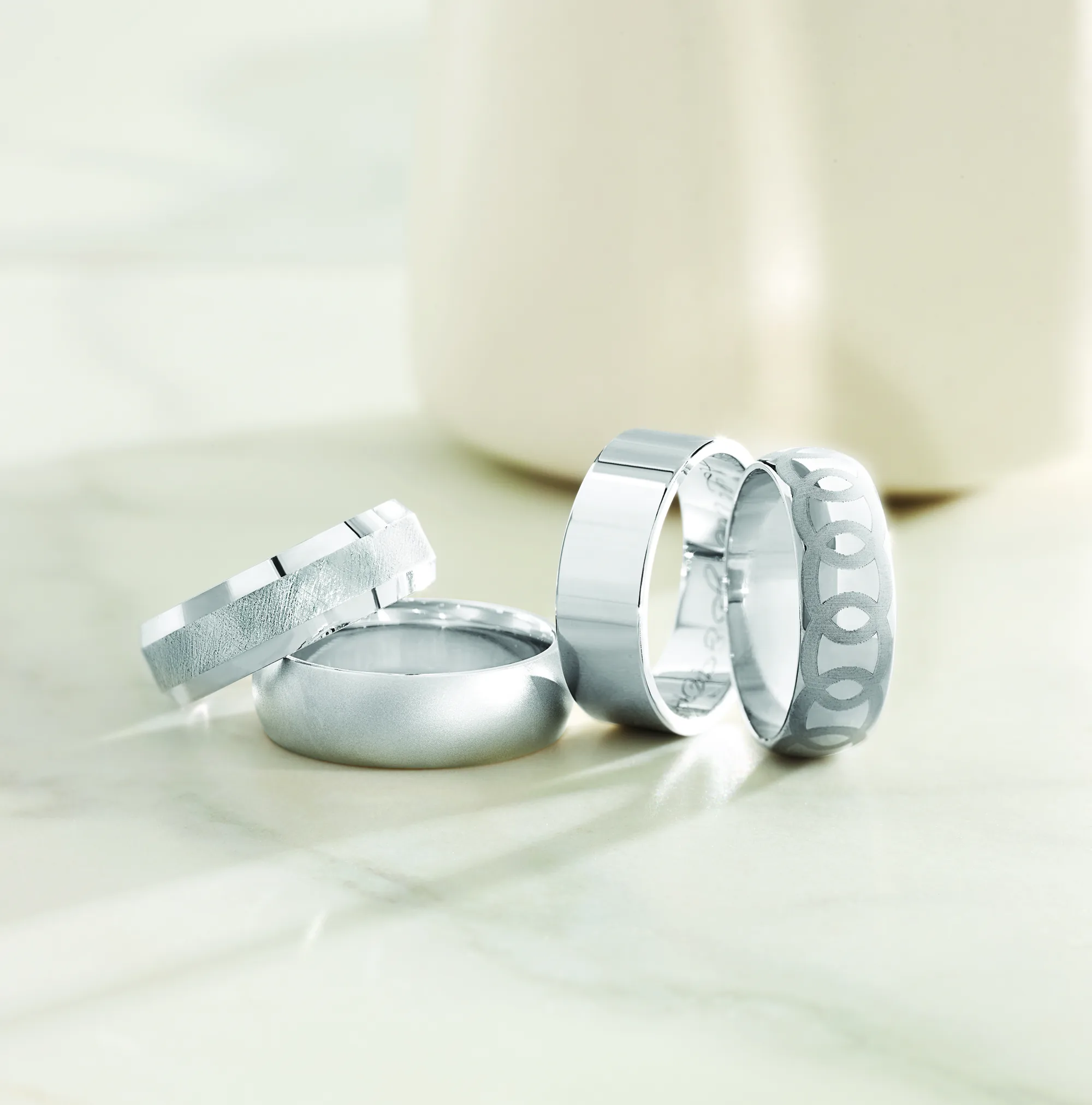
Choose the metal for how you want the ring to feel and age—not because one sounds more prestigious.
The short answer
Gold and platinum are both excellent wedding-band metals; the better choice depends on desired color, weight, wear pattern, maintenance and budget. That is the useful starting point, but it is not the entire decision. Two pieces can share the same headline specification and still look, wear, and perform very differently because jewelry is a system of proportions, materials, stones, setting style, craftsmanship and personal preference.
For people researching gold vs platinum wedding band, the most productive approach is to separate objective constraints from subjective preferences. Objective constraints include durability, dimensions, stone security, sizing limitations and production requirements. Subjective preferences include silhouette, sparkle pattern, metal color, visual weight and how noticeable or understated the finished piece feels.
A strong decision does not require memorizing every jewelry term. It requires understanding which variables materially affect the result and then comparing those variables in the right order. That is especially important online, where a photograph, grading line or product title can make two options appear more similar than they really are.
Think of specifications as filters rather than verdicts. They can narrow a field and identify obvious mismatches, but the final evaluation should connect those numbers or labels to something visible, wearable or serviceable. The best choice is the one whose tradeoffs make sense for the person who will own the jewelry.
What matters most when comparing your options
The first factor to evaluate is metal density. This is often where the practical boundaries of the decision become clear. Instead of asking whether one option is universally better, ask what changes visually, structurally and financially when this variable changes. That framing produces a more useful answer than relying on a generic rule.
The second factor is color. Small differences can have an outsized effect on appearance or usability, particularly when the piece is viewed from normal conversational distance rather than under magnification. A well-proportioned design should look intentional from the top, side and three-quarter views.
Next consider wear pattern and maintenance. These factors frequently interact. A decision that improves one characteristic can create a tradeoff somewhere else, such as more maintenance, more visible metal, less flexibility for future sizing, a different sparkle pattern or a higher material cost.
Finally, allergies and composition and budget help determine whether the choice remains satisfying after the initial purchase. Long-term ownership matters. Jewelry should be evaluated not only for how it photographs on day one, but also for how it will be worn, cleaned, inspected, serviced and potentially modified over time.
How to evaluate the difference in person
Whenever possible, compare real examples under more than one lighting condition. Jewelry-store spotlights are intentionally flattering, but normal life includes window light, office light, restaurants, shaded outdoor light and dim rooms. Moving a diamond or finished piece slowly through different lighting reveals contrast, brightness, fire, reflections and areas that stay dark.
View the piece at normal distance before examining it closely. Magnification is valuable for craftsmanship and condition, but most owners experience jewelry at arm’s length. Ask whether the overall shape reads cleanly, whether the proportions feel balanced and whether your eye is drawn to the feature you intended to emphasize.
For rings, place the design on the finger and move the hand naturally. Look straight down, from the side and while making a loose fist. Check whether the ring spins, catches between the fingers, sits too high, feels top-heavy or creates pressure points. A technically beautiful ring that is annoying to wear is not a successful design.
When comparing diamonds or gemstones, avoid making the decision from a report alone. Reports describe measurable characteristics; they do not fully communicate personality. Side-by-side viewing makes differences in outline, facet pattern, transparency, brightness and visual size much easier to understand.
Tradeoffs buyers often miss
One common mistake is treating every upgrade as equally valuable. Jewelry pricing can rise sharply at grade, weight or material thresholds even when the visible difference is modest. The goal is not to buy the highest specification available; it is to spend where the difference is meaningful to you and avoid paying for characteristics you cannot appreciate.
Another missed tradeoff is serviceability. Rings are worn in a demanding environment. They encounter desks, steering wheels, gym equipment, luggage, countertops, cleaning products and thousands of small impacts. Designs with very fine details or continuous stone coverage may require more inspection and maintenance than simpler designs.
Future flexibility also deserves attention. Finger size can change, tastes evolve, and anniversary upgrades happen. Some designs are easy to resize or modify; others are intentionally less flexible. Understanding that before production is more useful than discovering it years later.
Finally, visual trends should be separated from personal style. Social media can make a proportion or setting detail feel mandatory because it appears repeatedly in close-up photography. Ask whether you like the detail on your own hand and at real scale. Trends can be inspiration without becoming instructions.
Questions to ask before you approve a purchase or design
Ask how metal density changes the finished appearance and whether the difference will be obvious without magnification. A useful explanation should connect the technical term to something you can actually see or feel rather than simply repeating a grade, material name or sales claim.
Ask what compromises are created by color and wear pattern. If there is no tradeoff at all, the explanation is probably incomplete. Jewelry design is full of balanced decisions involving metal, dimensions, stones, height, coverage, security and cost.
Ask how maintenance affects everyday wear and what maintenance is recommended. Also ask whether allergies and composition creates any limitations for sizing, repair or future redesign. These questions matter more over ten years of ownership than they do during a ten-minute purchase decision.
Ask to compare an alternative that changes budget. Seeing a meaningful contrast is often more educational than looking at several nearly identical examples. The purpose of a consultation should be to make differences visible and understandable, not to overwhelm you with inventory.
How budget should influence the decision
Start with a comfortable total budget for the finished piece rather than allocating every dollar to a single component. A ring, for example, is a combination of center stone, accent stones, precious metal, design work, setting and finishing. Overspending on one specification can force compromises in the areas you notice more often.
Value is not the same as the lowest price. A lower-priced option can be excellent when it preserves the characteristics you care about, while an expensive option can be poor value if the premium buys an invisible grade difference or a feature that does not fit your lifestyle. The most useful comparison explains why the prices differ.
For diamonds, consider visual size, cut behavior and overall appearance alongside grading categories. For custom jewelry, consider how design complexity and metal weight affect labor and material cost. For wedding bands, consider the long ownership horizon and the likelihood of future sizing or service.
A private consultation can be useful because the budget conversation can happen before choices are narrowed. That makes it possible to model alternatives deliberately: change the metal, adjust dimensions, compare stone sizes or modify setting details while preserving the design intent.
What craftsmanship changes
Craftsmanship is easiest to notice when you know where to look. Examine whether prongs are even and appropriately sized, whether pavé rows are consistent, whether edges feel smooth, whether the underside is finished cleanly and whether the piece looks balanced from multiple angles. Fine finishing should support the design rather than call attention to itself.
Durability is not the same as heaviness. A thoughtful design places enough material where stress occurs while keeping visual areas refined. Extremely thin shanks, delicate connection points and poorly supported stones can create avoidable service problems even when the ring looks attractive in a close-up photograph.
For custom work, CAD is valuable because dimensions can be reviewed before production. Width, thickness, stone spacing, gallery height and prong placement can be discussed as one system. The model should be treated as a technical design tool, not merely as a pretty rendering.
Stone setting is another major variable. The setter must secure the stone while preserving its outline and allowing the intended amount of light and visibility. Good setting work is both aesthetic and structural, and those goals sometimes require more metal than an edited social-media image suggests.
Maintenance and long-term ownership
Fine jewelry is wearable luxury, which means normal wear is expected. Polished surfaces develop fine scratches, prongs can gradually wear, and lotions or soap can reduce apparent sparkle. Periodic cleaning and inspection are part of ownership, especially for rings worn every day.
Ask how often the piece should be inspected based on its construction and your habits. Someone who works with their hands, lifts weights frequently or wears a ring during household projects may need more frequent checks than someone who removes jewelry for those activities.
Cleaning methods should match the materials and stones. Diamonds and many durable gemstones tolerate routine professional cleaning well, while some colored gemstones and antique pieces require more cautious treatment. When in doubt, avoid aggressive at-home methods until the materials are confirmed.
Keep grading reports, appraisals, receipts, CAD approvals and any documentation about heirloom stones. Good records help with insurance, future service and redesign. They also preserve information that may be difficult to reconstruct years after the original project.
A practical decision framework
First, define the non-negotiables: deadline, budget range, metal color, sentimental materials, center-stone preference and any lifestyle constraints. Second, identify two or three preferences that can remain flexible. This prevents every design variable from becoming equally important.
Third, compare meaningful alternatives. Change one major variable at a time so you can see what it actually does. Fourth, evaluate the option at real scale and in normal light. Fifth, ask about maintenance, sizing and service before approval.
Finally, give yourself permission to choose based on preference after the technical issues are understood. Jewelry is not a standardized test with one correct answer. Education should reduce uncertainty and make your preferences more confident, not replace them.
For gold vs platinum wedding band, that framework keeps the conversation centered on the finished experience rather than on isolated specifications. It also produces a decision that is easier to explain later because you know which tradeoffs you intentionally accepted.
Oklahoma City perspective and next steps
Diamond Consulate is an appointment-only jewelry studio on North Western Avenue in Oklahoma City, serving clients from Oklahoma City, Nichols Hills, Edmond and surrounding communities. The private format is built around comparison, design discussion and education rather than browsing a conventional sales floor.
For custom projects, a consultation can include live collaborative CAD so proportions and details can be discussed visually before production. For diamond decisions, the goal is to compare relevant stones and understand what the grading information does and does not tell you.
Local service also matters after the purchase. Fine jewelry benefits from periodic inspection and cleaning, particularly rings with prongs or small accent stones. Having the original design context available can make future maintenance, sizing and redesign conversations more straightforward.
If you are still early in the research process, bring screenshots, inspiration images and questions. You do not need to know the correct terminology. A productive consultation translates what you like into dimensions, materials and design choices that can actually be built.
Deep dive: the six variables that shape gold vs platinum wedding band
Metal Density
Metal Density deserves separate attention because it can change both the visual result and the ownership experience. Evaluate it in relation to the entire piece rather than as an isolated checkbox. Ask what you gain, what you give up, and whether the difference remains noticeable at normal viewing distance. When a choice is primarily aesthetic, preference should lead. When it affects structure, stone security, sizing or service, the technical implications should be understood before approval.
In practice, the best way to understand metal density is through a direct comparison. Keep the other major variables as consistent as possible and change this one. That makes the effect easier to see and prevents several differences from being mistakenly attributed to a single cause. This comparison-first approach is particularly useful for online research because it turns a broad question into a specific, observable decision.
Color
Color deserves separate attention because it can change both the visual result and the ownership experience. Evaluate it in relation to the entire piece rather than as an isolated checkbox. Ask what you gain, what you give up, and whether the difference remains noticeable at normal viewing distance. When a choice is primarily aesthetic, preference should lead. When it affects structure, stone security, sizing or service, the technical implications should be understood before approval.
In practice, the best way to understand color is through a direct comparison. Keep the other major variables as consistent as possible and change this one. That makes the effect easier to see and prevents several differences from being mistakenly attributed to a single cause. This comparison-first approach is particularly useful for online research because it turns a broad question into a specific, observable decision.
Wear Pattern
Wear Pattern deserves separate attention because it can change both the visual result and the ownership experience. Evaluate it in relation to the entire piece rather than as an isolated checkbox. Ask what you gain, what you give up, and whether the difference remains noticeable at normal viewing distance. When a choice is primarily aesthetic, preference should lead. When it affects structure, stone security, sizing or service, the technical implications should be understood before approval.
In practice, the best way to understand wear pattern is through a direct comparison. Keep the other major variables as consistent as possible and change this one. That makes the effect easier to see and prevents several differences from being mistakenly attributed to a single cause. This comparison-first approach is particularly useful for online research because it turns a broad question into a specific, observable decision.
Maintenance
Maintenance deserves separate attention because it can change both the visual result and the ownership experience. Evaluate it in relation to the entire piece rather than as an isolated checkbox. Ask what you gain, what you give up, and whether the difference remains noticeable at normal viewing distance. When a choice is primarily aesthetic, preference should lead. When it affects structure, stone security, sizing or service, the technical implications should be understood before approval.
In practice, the best way to understand maintenance is through a direct comparison. Keep the other major variables as consistent as possible and change this one. That makes the effect easier to see and prevents several differences from being mistakenly attributed to a single cause. This comparison-first approach is particularly useful for online research because it turns a broad question into a specific, observable decision.
Allergies And Composition
Allergies And Composition deserves separate attention because it can change both the visual result and the ownership experience. Evaluate it in relation to the entire piece rather than as an isolated checkbox. Ask what you gain, what you give up, and whether the difference remains noticeable at normal viewing distance. When a choice is primarily aesthetic, preference should lead. When it affects structure, stone security, sizing or service, the technical implications should be understood before approval.
In practice, the best way to understand allergies and composition is through a direct comparison. Keep the other major variables as consistent as possible and change this one. That makes the effect easier to see and prevents several differences from being mistakenly attributed to a single cause. This comparison-first approach is particularly useful for online research because it turns a broad question into a specific, observable decision.
Budget
Budget deserves separate attention because it can change both the visual result and the ownership experience. Evaluate it in relation to the entire piece rather than as an isolated checkbox. Ask what you gain, what you give up, and whether the difference remains noticeable at normal viewing distance. When a choice is primarily aesthetic, preference should lead. When it affects structure, stone security, sizing or service, the technical implications should be understood before approval.
In practice, the best way to understand budget is through a direct comparison. Keep the other major variables as consistent as possible and change this one. That makes the effect easier to see and prevents several differences from being mistakenly attributed to a single cause. This comparison-first approach is particularly useful for online research because it turns a broad question into a specific, observable decision.
Continue your research
Related resources: Diamond Education · Engagement Ring Education · Custom Jewelry Education · Wedding Band Education · Reserve a Private Consultation
| Factor | Platinum | Gold |
|---|---|---|
| Color | Naturally white | Yellow, white or rose depending on alloy |
| Weight | Heavy and dense | Lighter |
| Surface over time | Develops patina | Shows scratches and may gradually lose small amounts of metal |
| Purity | Commonly used at high purity | Commonly 14K or 18K alloys |
| Maintenance | Can be refinished; patina is optional | Can be refinished; white gold may need rhodium replating |
| Typical cost | Usually higher | Usually lower, depending on karat and weight |
Platinum is not scratch-proof
Platinum scratches. Its surface tends to displace rather than wear away in exactly the same manner as gold alloys. Over time, many wearers appreciate the soft gray patina; others prefer periodic refinishing.
Gold is not one material
14K yellow gold, 18K white gold and 14K rose gold behave differently because alloy content changes color, hardness and maintenance.
- Clients who like a substantial feel
- Natural white color
- Frequent refinishing or repair needs
- Designs that benefit from dense metal
- Clients who prefer lighter weight
- Yellow, white or rose color
- More budget flexibility
- Traditional wedding-band styling
Both metals will show life. The question is which kind of wear you prefer.
Gold and platinum are both excellent wedding-band metals, but they age and feel different. Gold offers yellow, white and rose colors and generally lower weight; platinum is naturally white, dense and develops a characteristic patina.
How they change with wear
Gold alloys collect scratches and can be refinished. White gold is often rhodium plated and may need periodic replating for a bright white look. Platinum does not require rhodium plating, but its surface develops a softer patina that can also be polished.
Choose metal with the design
Width, thickness, stone setting, engraving and finish affect durability and feel. The best comparison is not metal in isolation but how the intended band will be engineered in that metal.
For an Oklahoma City client, these decisions can be compared during a private consultation rather than made from specifications alone. Reserve a consultation or explore the related Diamond Consulate education library.
Is platinum better than gold for wedding bands?
Not universally. Platinum is naturally white, dense and highly workable for repair. Gold offers more color options, lower weight and generally lower cost.
Which is more durable?
Both are durable for daily wear. Platinum tends to displace and develop patina, while gold alloys can lose small amounts of metal through long-term wear.
Which is heavier?
Platinum is noticeably denser and heavier than gold.
Which is easier to resize?
Many platinum and gold bands can be resized, depending on design, gemstones and construction.
Which costs more?
Platinum usually costs more because of density, purity and labor, though current metal prices and design weight matter.
What should I compare before making a final decision?
Compare appearance, proportions, durability, maintenance, budget and how the choice fits the way the jewelry will actually be worn.
Can these details be customized?
Yes. Custom work allows dimensions, materials, finishes and design details to be adjusted together rather than chosen as isolated features.
Can I review options during a private consultation?
Yes. Diamond Consulate offers private, appointment-led consultations in Oklahoma City so relevant options can be compared side by side.