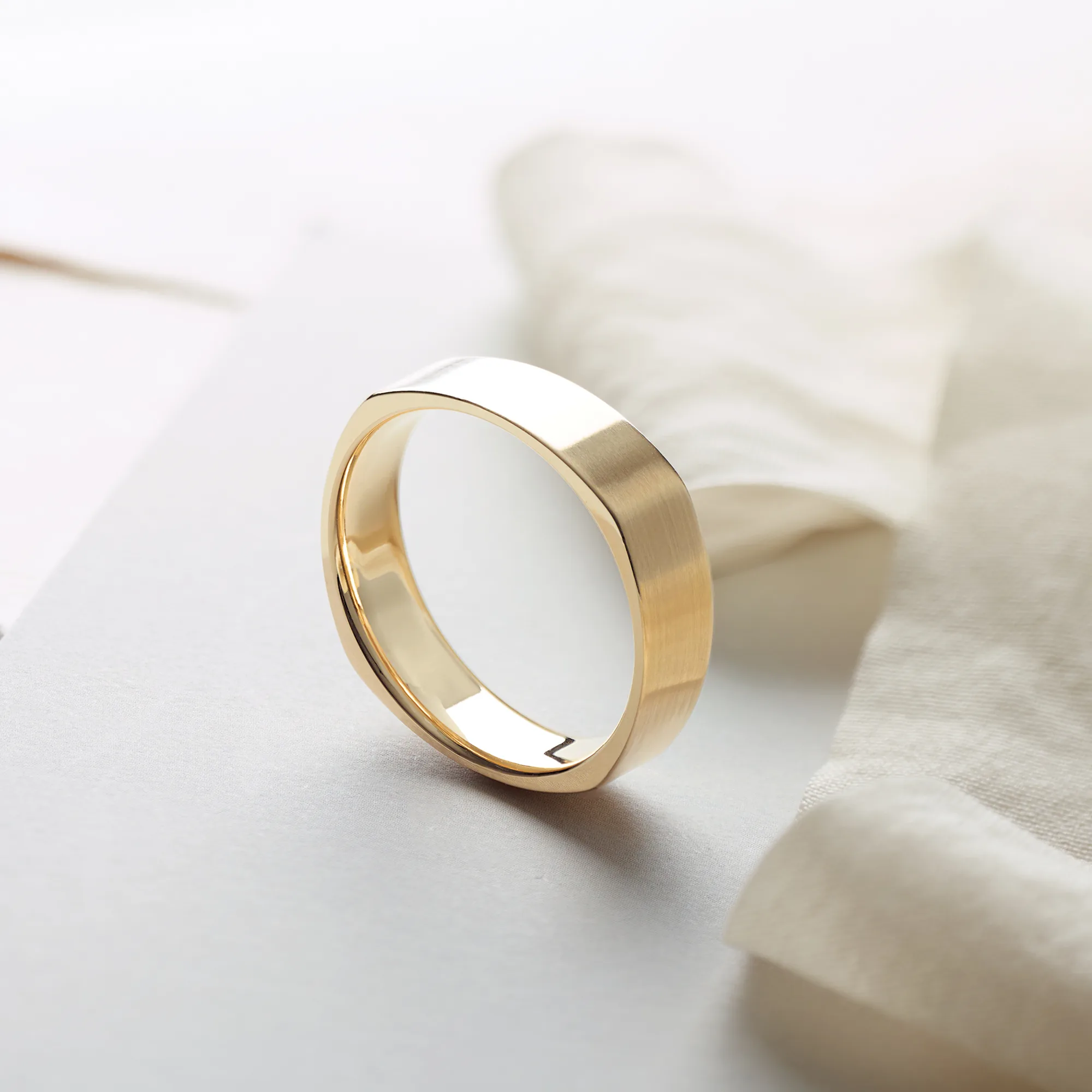
Comfort fit is not a softer metal. It is a different interior shape.
The difference is inside the ring
A standard-fit band has a flatter interior surface. A comfort-fit band is rounded inside, reducing the contact area and helping a wider ring move over the knuckle more easily.
| Factor | Comfort fit | Standard fit |
|---|---|---|
| Interior | Rounded | Flatter |
| Contact with finger | Reduced | Broader |
| Best use | Often preferred for wider or heavier bands | Works well for narrow, traditional profiles |
| Sizing | May require style-specific adjustment | More similar to conventional ring sizing |
| Visual difference | Mostly hidden | Mostly hidden |
| Price | May use slightly more material depending on construction | Often simpler to manufacture |
Why width changes the answer
The wider the band, the more finger surface it covers. That can increase pressure and make a comfort-fit interior more noticeable.
Why correct sizing still matters
Comfort fit does not rescue the wrong size. The ring should pass the knuckle with resistance and sit securely without constant pressure.
Try the actual profile
A thin, lightly rounded comfort fit can feel very different from a thick, heavily domed one. The label alone is not enough.
Choose comfort by feel, not by assuming the word “comfort” settled the matter.
Does comfort fit change sizing?
It can change how a given size feels. A rounded interior may move over the knuckle differently from a flat interior, while a wide ring creates more finger contact than a narrow sizing ring. Final sizing is best confirmed with a sample close to the intended width and profile.
Finger shape and security
Some fingers taper gradually while others have a prominent knuckle and narrower base. The band needs enough room to pass the knuckle while remaining secure once seated. Comfort fit should not mean loose fit; excessive spinning or easy slipping still deserves a sizing evaluation.
Try the actual profile
At Diamond Consulate in Oklahoma City, clients can compare widths and interior profiles during a private wedding-band consultation. Moving your hand and trying the band beside an engagement ring reveals far more than a numerical ring size alone.
Practical Details
Comfort fit changes the inside profile
A comfort-fit band has a rounded interior that reduces contact near the edges. Standard fit is flatter inside. On a narrow ring the difference can be subtle; on a wider or heavier band it can be immediately noticeable.
Width makes the distinction more important
As width increases, more skin is covered and the ring can feel tighter at the same measured size. A rounded interior can make a 6–8 mm band easier to put on, remove and wear through a full day.
Outside profile is a separate choice
Comfort fit describes the inside only. The exterior can still be flat, domed, beveled, hammered or satin. Compare our flat vs. domed guide separately from the fit decision.
Size using the intended width
A thin sizing ring may not predict how a substantially wider band feels. Whenever possible, evaluate a sample close to the final width and interior profile before ordering.
What is a comfort-fit wedding band?
A comfort-fit band has a rounded interior that reduces the amount of metal contacting the finger.
Is comfort fit always more comfortable?
Many people prefer it, especially in wider bands, but comfort depends on width, thickness, finger shape and correct sizing.
Does comfort fit change the ring size?
It can. Wider comfort-fit bands may be sized differently from narrow standard-fit rings, so the actual style should be tried on.
Is comfort fit available in all metals?
It is common in gold, platinum and many alternative metals, though profiles vary by manufacturer and design.
Which is better for a narrow band?
Either can work. The difference is often more noticeable as width and thickness increase.
Why discuss this during a private jewelry consultation?
Try the intended width with both interior profiles. Comfort fit becomes more noticeable as a band gets wider because more metal contacts the finger.