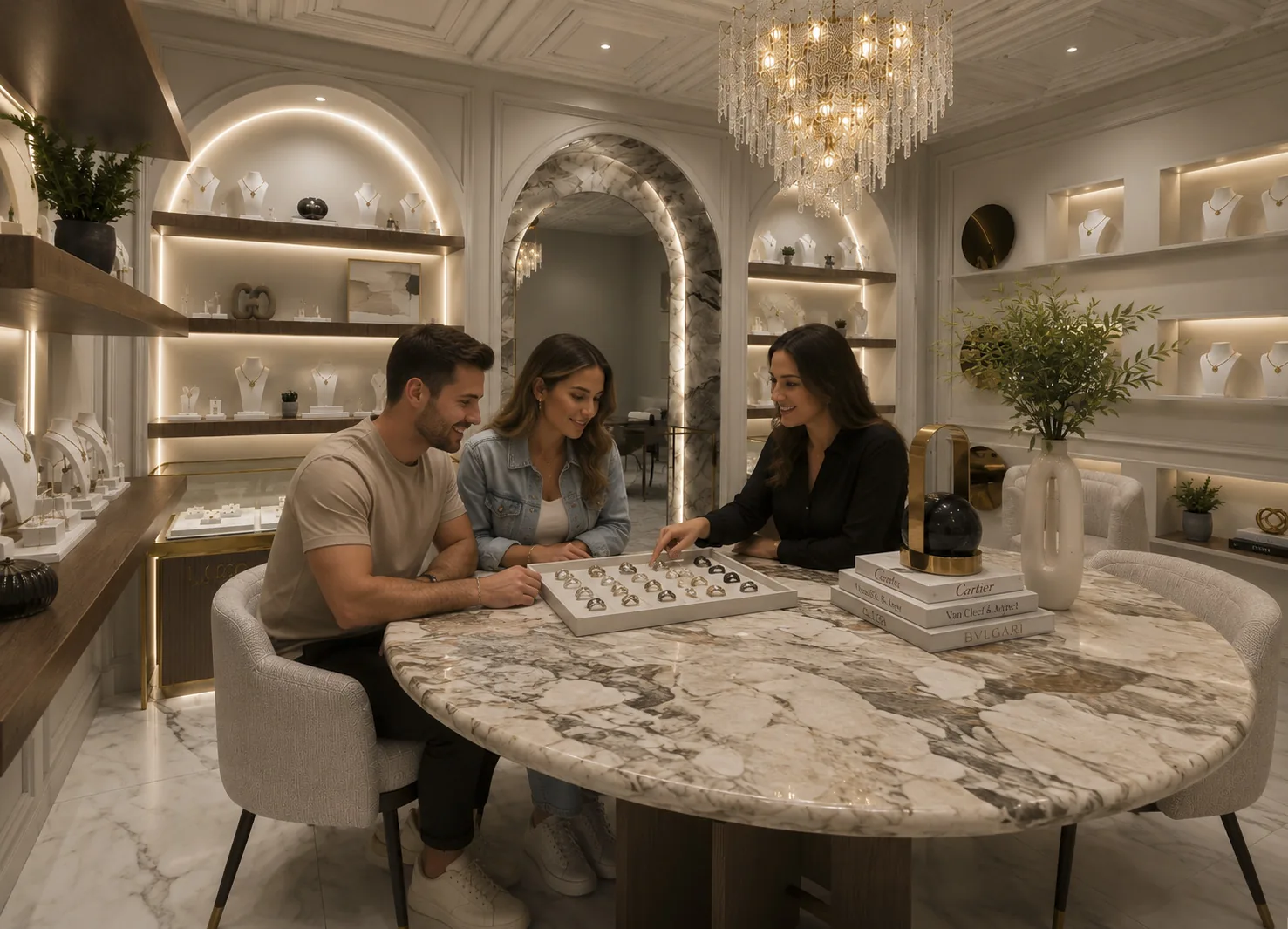
Matching is optional. Looking intentional is not.
The short answer
Wedding bands do not have to match each other. They also do not have to match the engagement ring exactly.
The better goal is coordination: two rings that feel connected without forcing two people into the same design.
| Approach | How it works | Best for |
|---|---|---|
| Identical | Same metal, width, profile and finish | Couples who want a strong visual pair |
| Same metal, different design | Shared color with different widths or finishes | Coordination without uniformity |
| Shared detail | Same engraving, edge, texture or hidden symbol | Subtle personal connection |
| Mixed metals | Different colors linked by finish or proportion | Individual style with intentional contrast |
| Completely individual | Each person chooses independently | Different lifestyles or aesthetic preferences |
Why identical bands can be the wrong answer
Different finger proportions, jobs, comfort preferences and maintenance tolerance can make the same ring feel right for one person and wrong for the other.
The easiest ways to coordinate
A shared interior engraving, matching satin finish, the same metal color or one repeated edge detail can create connection without making the rings twins.
- You both like the same profile
- You want a strong ceremonial pair
- Your lifestyles support the same material
- Your hands or work are very different
- One prefers diamonds and one does not
- You value individual style more than symmetry
The marriage should match. The rings may coordinate.
Wedding bands do not need to match each other—or the engagement ring—to be considered a coordinated set. Matching can mean identical metal and finish, a shared design detail, or simply two rings chosen independently because each suits the wearer.
Ways to coordinate without being identical
Couples can repeat a metal color, engraving, edge profile or finish while choosing different widths and shapes. An engagement-ring stack can also mix metals intentionally if the contrast is part of the design.
Prioritize fit and daily wear
The rings should work for each person’s lifestyle and, when worn beside an engagement ring, should sit comfortably together. Profile, width, height and stone placement matter more to long-term satisfaction than following a rule about matching.
These details can be compared during a private Oklahoma City consultation. Reserve a consultation or continue through the education library.
Do wedding bands have to match?
No. Couples can choose completely different rings or coordinate through one shared detail.
Should wedding bands be the same metal?
Not necessarily. Matching metals can simplify coordination, but mixed metals can be intentional and attractive.
How can wedding bands coordinate without matching?
Use a shared finish, engraving, edge detail, color, pattern or proportion.
Is it strange if one ring has diamonds and the other does not?
No. The rings should suit the wearers rather than conform to a rule.
Should couples shop together?
A shared consultation can help coordinate choices, but either partner can choose separately.
What should I compare before deciding?
Compare appearance, proportions, durability, maintenance, budget and how the jewelry will be worn in real life.
Can these details be customized?
Yes. Dimensions, materials, finishes and design details can often be adjusted together to suit the wearer.
Can I compare options in person?
Yes. Diamond Consulate offers private, appointment-led consultations in Oklahoma City for side-by-side comparison and design guidance.