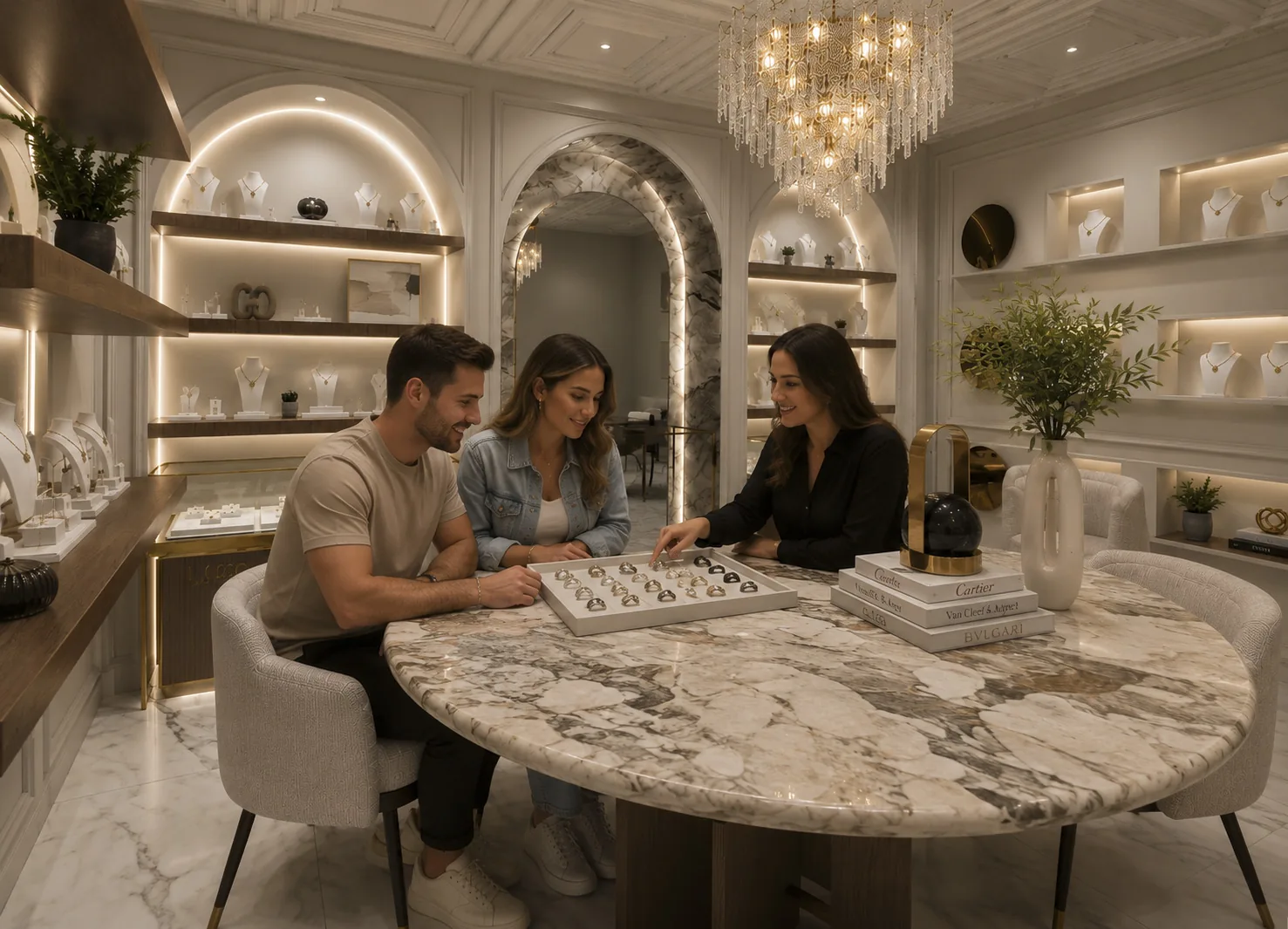
Custom should solve a real problem, or create a detail worth owning.
When custom makes sense
Custom is not required for every wedding band. It becomes valuable when standard dimensions, stock contours or ordinary finishes do not fit the ring, hand or story.
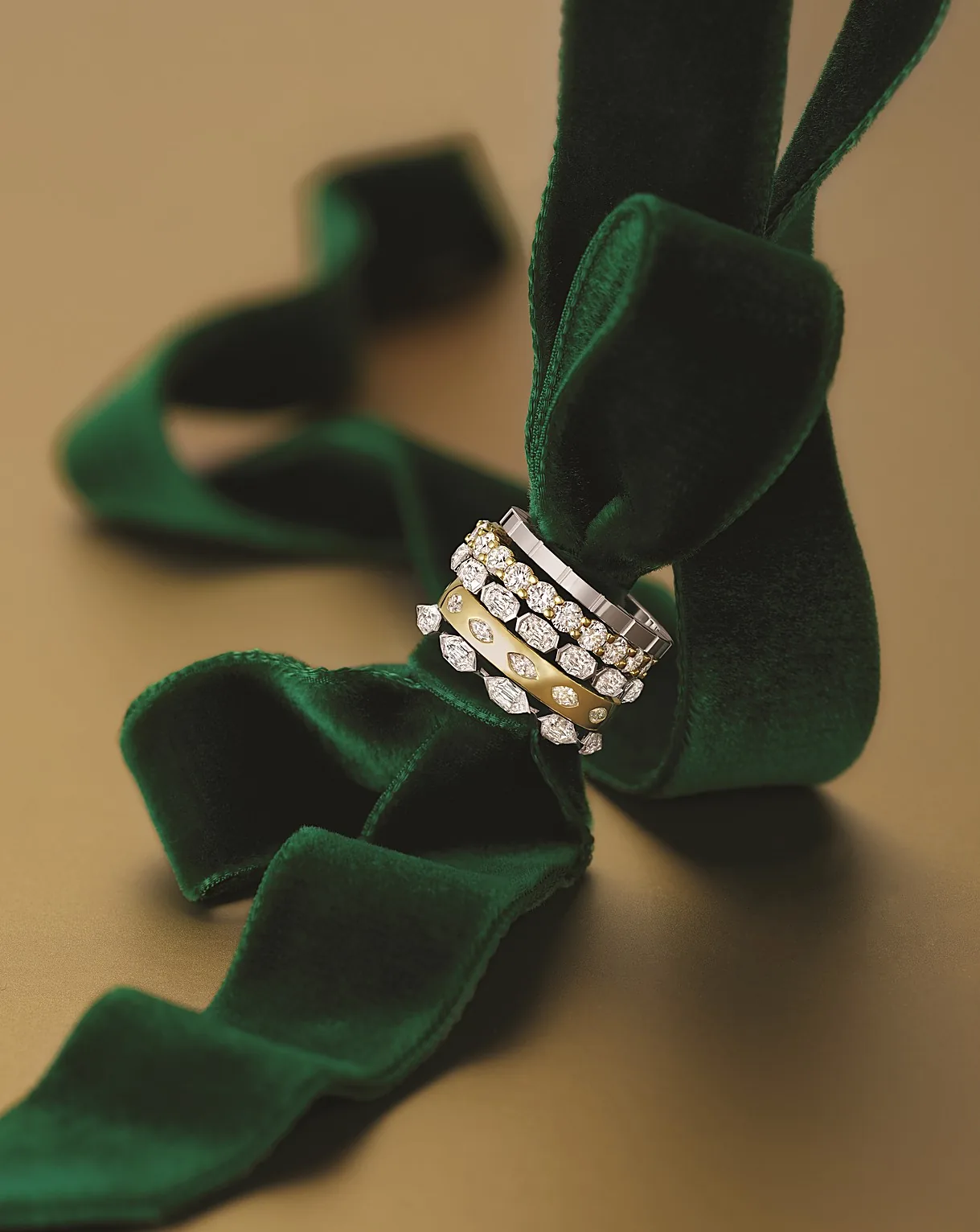
| Need | What custom can solve |
|---|---|
| Existing engagement ring | Precise contour, spacing and contact control |
| Unusual hand proportions | Adjusted width, thickness and edge profile |
| Personal style | Mixed metals, engraving, texture and hidden details |
| Coordinating bands | Shared elements without identical rings |
| Lifestyle | Lower profile, protective edges or simpler maintenance |
Custom fit should use the real engagement ring
Measurements, photographs and scans help, but the actual ring shows the way metal and stones meet. That is especially important for low settings, halos and three-stone designs.
Custom does not mean impractical
A thoughtful custom band can be easier to wear, easier to maintain and more future-friendly than an elaborate stock design chosen only for appearance.
Live CAD makes the tradeoffs visible
Contour, width, spacing and profile can be adjusted on screen before production begins.
- Fitted contours
- Specific widths and profiles
- Meaningful engraving
- Mixed-metal or textured designs
- A straight band already fits
- The desired style is simple
- Timing is extremely short
- The stock proportions feel right
Custom is not about making the ring complicated. It is about making the decisions intentional.
Practical Details
Custom matters when the band has a job to do
Custom design is most useful when a band must follow an engagement-ring contour, align with an unusual gallery, match an existing texture, use a specific stone layout or coordinate with a partner’s ring without becoming identical.
Start with the engagement ring
The engagement ring determines clearance, contact points and whether a contour is necessary. Millimeters matter. CAD can show the gap and combined width before production. Read flush fit vs. contoured bands.
Stone layout affects serviceability
Shared-prong, channel, bezel and pavé layouts create different visual rhythms and maintenance needs. Full-eternity coverage maximizes stones around the finger but reduces sizing flexibility; partial coverage can preserve a sizing area below.
Design the finish for how it will age
High polish develops fine wear marks; satin and brushed surfaces can burnish in high-contact areas; hammered high points soften gradually. A good custom band should still make visual sense after years of normal wear.
Decide whether the band should disappear into the set or have its own identity
A custom wedding band can be designed to look like the engagement ring was always meant to have a matching partner, or it can intentionally introduce contrast. Matching shank width, metal color and stone-setting style creates continuity. Changing one of those elements, such as using a plain polished band beside a pavé engagement ring, can give the set visual separation without making it feel accidental.
For a fitted band, the contour should follow only as much of the engagement ring as necessary. An exaggerated curve can look awkward when the band is worn alone, while too little contour can create a pressure point where the rings collide.
Stone coverage changes both appearance and future flexibility
Full-eternity stones create uninterrupted sparkle but leave little or no plain metal for conventional resizing. Half- and three-quarter-eternity layouts can preserve a sizing area while keeping stones visible from the top of the hand. The right choice depends on how important future size adjustment is, how much of the band is visible beside the engagement ring and whether the ring will be worn independently.
Small accent stones also need enough metal around them to remain secure. Extremely thin shared-prong or micro-pavé construction may look delicate in a rendering but can demand more maintenance over years of daily wear.
Plan for contact between the two rings
Rings worn together move against one another. A high diamond girdle, exposed pavé edge or sharp decorative detail can abrade the neighboring ring over time. During design, look at the set from the side and identify exactly where metal or stones will touch. A small change in height, contour or edge profile can prevent a long-term wear problem.
If the engagement ring has an unusual basket or low center setting, CAD can model the wedding band around that geometry. The goal is not automatically zero gap; a small intentional space can be more attractive and more serviceable than forcing two structures together.
Width, thickness and comfort should be judged as a system
A band that looks narrow from the top can still feel substantial if it is thick through the finger. Conversely, reducing thickness too aggressively can weaken a delicate contour. Comfort-fit interiors, softened edges and careful transitions around a curve can make a fitted band easier to wear without changing the visible design.
Before approval, confirm the intended ring size, metal, finished width, stone coverage, contour, engraving and whether future resizing is expected. Those decisions are easier to solve in the model than after stones are set and the ring is finished.
What makes a wedding band custom?
A custom wedding band is designed or modified around the wearer, engagement ring, preferred dimensions, materials or personal details rather than selected as a fixed stock design.
When is custom worth it?
Custom is especially useful for fitted contours, unusual profiles, mixed metals, personal engraving and coordinated but nonmatching bands.
How long does a custom wedding band take?
Many custom bands require several weeks. Complex engraving, specialty materials or fitted CAD work may take longer.
Can a custom band fit an engagement ring bought elsewhere?
Yes. Bring the actual engagement ring so the fit can be measured and modeled.
Can custom bands be resized later?
Often, depending on metal and design. Full-eternity and alternative-metal designs may have limits.