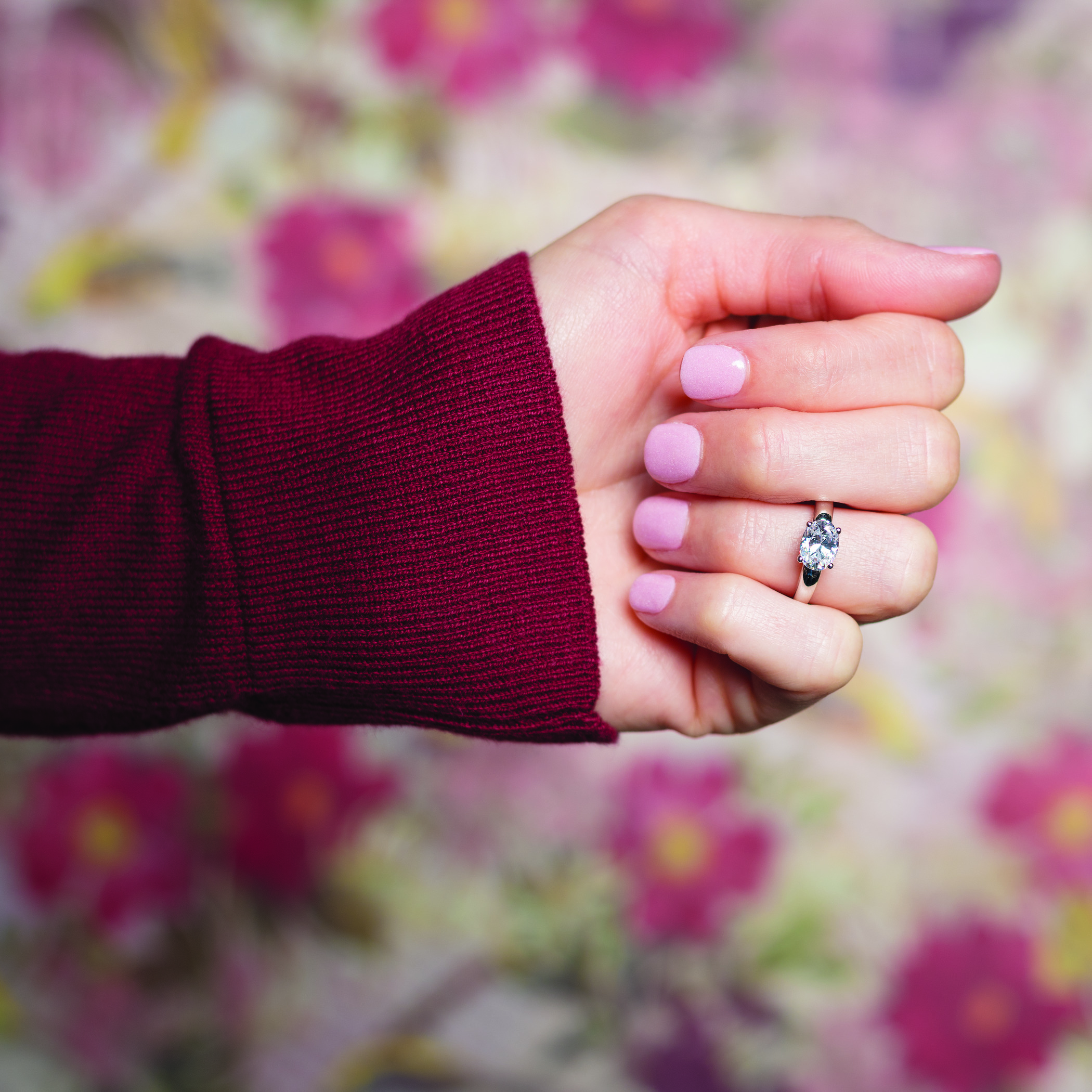
East-west settings change the proportions of familiar oval, emerald, radiant and marquise shapes. They can create strong finger coverage and a modern profile, but the setting must protect the stone and preserve comfortable band fit.
The name “East-west engagement rings” describes a category, not a single formula. Center-stone dimensions, band width, prong or bezel structure, gallery height and accent-stone scale determine whether the finished ring feels refined. A custom consultation is useful when several inspiration images share a mood but not the same construction.
“Seeing the proportions together made it much easier to understand which details we actually wanted in the finished ring.”
— Client perspective placeholder; to be replaced with a verified Google review after opening.
The setting style does not require one diamond origin. Natural and lab-grown diamonds can both be evaluated for cut, outline, proportions and how their dimensions interact with the design. Comparing stones in person is often more useful than choosing by carat weight alone.
CAD is especially valuable for style-led rings because small dimensional changes can alter the silhouette. The model can be used to refine profile, stone spacing and the relationship to a future wedding band before production.
Want to compare this style in a private engagement ring consultation?
Explore Engagement RingsEast-West Engagement Rings feature an elongated diamond rotated horizontally across the finger.
Yes. CAD design can refine proportions, stone placement, profile and structural details before production.
Yes. Natural or lab-grown diamonds can be considered based on the design and your preferences.
It depends on gallery height, center-stone setting and band profile. Wedding-band fit should be considered during design rather than after the engagement ring is finished.
Platinum and common fine-jewelry gold alloys can all work; the choice depends on design, color preference, wear and structural needs.