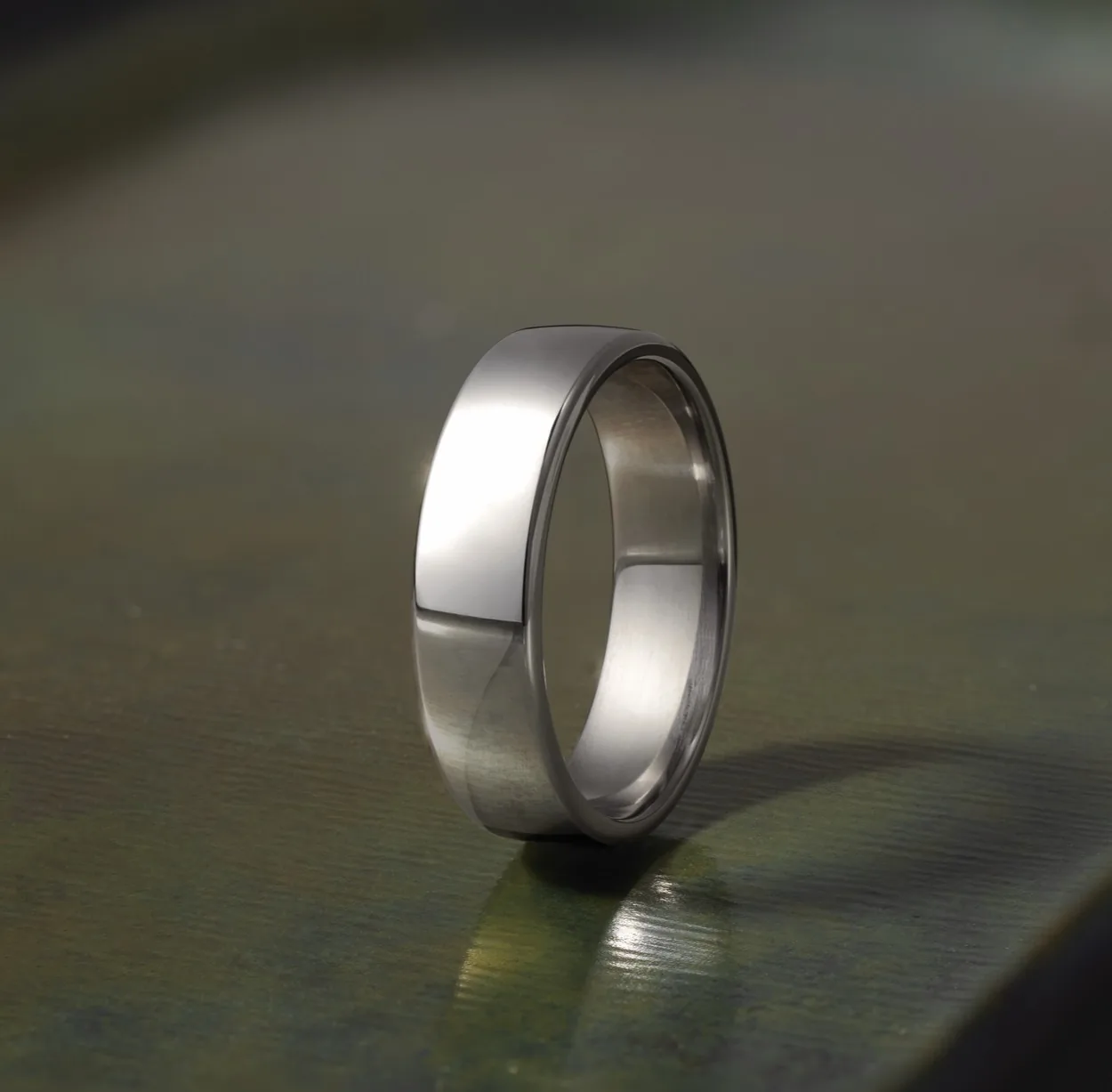
No finish remains untouched. The choice is how you want wear to appear.
The fast answer
Choose high polish for brightness and reflection. Choose satin for a quieter, softer surface that often feels more understated.
| Factor | High polish | Satin finish |
|---|---|---|
| Appearance | Mirror-like and reflective | Soft and low-reflection |
| Fine scratches | More visible | Often less obvious at first |
| Wear pattern | Develops surface marks and softening | Can become burnished or unevenly polished |
| Maintenance | Can be repolished | Can be resatinized |
| Design mood | Formal, bright, classic | Modern, quiet, understated |
The finish will evolve
Polished surfaces collect visible fine scratches. Satin surfaces develop shiny contact points. Neither is failing; both are recording wear.
Mixed finish can be more practical
A satin center with polished bevels keeps visual contrast even as the ring ages. It also makes refinishing more intentional.
Choose the finish you want to maintain—not the one that looks untouched in the display tray.
High-polish and satin finishes can make the same wedding-band profile look completely different. Polish reflects light sharply and feels dressier; satin diffuses reflection for a quieter, more understated surface.
How the finishes age
Both finishes change with daily wear. Polished rings collect fine scratches that soften the mirror effect, while satin finishes can become smoother in high-contact areas. Either can generally be refreshed during professional refinishing when the ring design allows.
Choose finish with profile and lifestyle
A broad flat band shows finish very differently from a narrow domed band. Consider fingerprints, visible wear, engraving, grooves and whether you prefer a ring that looks crisp and reflective or intentionally subdued.
These details can be compared during a private Oklahoma City consultation. Reserve a consultation or continue through the education library.
What is a high-polish wedding band?
A high-polish band has a reflective, mirror-like surface.
What is a satin finish?
A satin finish has a soft, directional or evenly matte surface with reduced reflection.
Which finish hides scratches better?
Satin often disguises fine scratches better initially, though the finish itself changes with wear.
Can finishes be restored?
Yes. Gold and platinum finishes can usually be refinished, depending on design and condition.
Can one ring use both finishes?
Yes. Mixed-finish designs can use polished edges with a satin center or the reverse.
What should I compare before deciding?
Compare appearance, proportions, durability, maintenance, budget and how the jewelry will be worn in real life.
Can these details be customized?
Yes. Dimensions, materials, finishes and design details can often be adjusted together to suit the wearer.
Can I compare options in person?
Yes. Diamond Consulate offers private, appointment-led consultations in Oklahoma City for side-by-side comparison and design guidance.