
Toi et Moi rings depend on balance between two stones rather than symmetry alone. Shape pairing, scale, orientation, color and setting height determine whether the design feels intentional.
The name “Toi et Moi engagement rings” describes a category, not a single formula. Center-stone dimensions, band width, prong or bezel structure, gallery height and accent-stone scale determine whether the finished ring feels refined. A custom consultation is useful when several inspiration images share a mood but not the same construction.
Toi et moi rings can pair natural stones, lab-grown stones, colored gemstones or a combination. The challenge is visual balance rather than matching origin. Compare millimeter dimensions, outline, color and optical personality so one stone does not unintentionally dominate simply because its cut faces up larger.
CAD is valuable for controlling the relationship between two different stones: angle, overlap, gap, height and prong direction all change the composition. It can also model the inside edge of the setting so a future wedding band is planned around the asymmetry rather than treated as an afterthought.
A Toi et Moi ring places two focal stones together, so balance matters more than matching. The stones can differ in shape, size, color or even gem type, but their outlines need a visual relationship. An oval beside a pear can create directional movement; an emerald cut beside a round creates a stronger contrast between step-cut geometry and brilliant faceting.
Carat weights are a poor way to balance the pair because different shapes carry weight differently. Face-up millimeter dimensions, visual brightness and orientation matter more. One stone may intentionally be larger, but the difference should look designed rather than accidental.
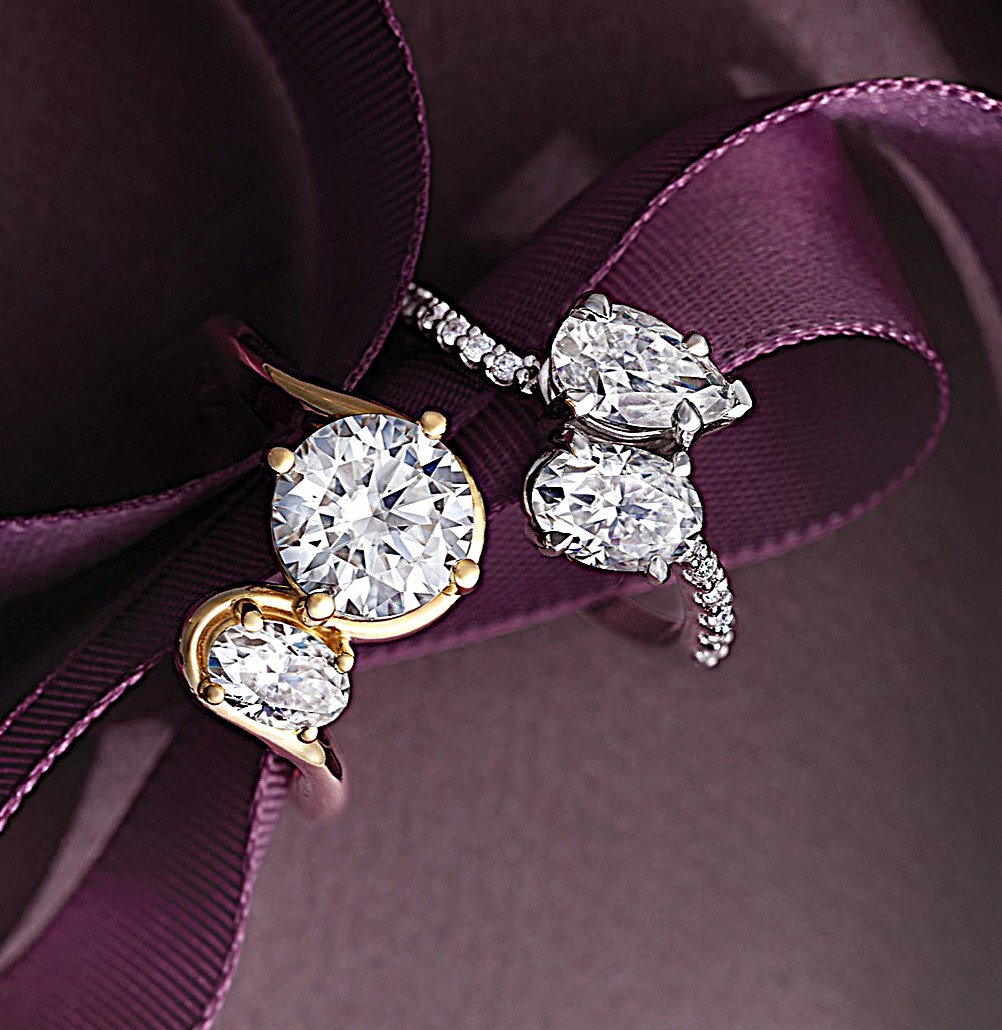
The gap between the stones is one of the most important decisions. Too much space can make the ring feel disconnected; too little can create cleaning traps or allow stone edges and settings to crowd each other. Angling one or both stones can create movement, but it also changes how the ring spans the finger and where prongs sit.
CAD is particularly useful for this style because small changes in rotation or spacing can transform the composition. Reviewing multiple top views is more informative than choosing the stones independently and assuming they will work together.
Each stone needs appropriate protection for its shape. Pear and marquise tips require secure coverage; emerald and radiant corners need thoughtful prong placement. At the same time, doubling the number of prongs and baskets can make the center of the ring visually busy. The goal is to share visual space without compromising either stone.
The shank must also support an asymmetrical head. Where the stones attach and how weight is distributed affects whether the ring wants to rotate on the finger.
Start with the relationship you want: complementary shapes, contrasting shapes, two diamonds, diamond plus colored gemstone, or two stones with personal meaning. Then compare actual dimensions and color appearance side by side. For diamonds, identical grades are not required if the pair looks harmonious in the intended lighting.
Finally, decide how a wedding band should interact with the asymmetrical top. A straight band may leave intentional negative space; a contoured band can follow the composition. That choice belongs in the original design conversation.
Build the two-stone composition around actual dimensions, not matching carat weights; balance comes from visual scale, orientation and how the pair shares space.
Explore Engagement RingsToi Et Moi Engagement Rings feature two center stones brought together in one composition.
Yes. Custom design is particularly useful because two center stones must be balanced for height, spacing, orientation and visual weight rather than simply placed beside one another.
Yes. A Toi et Moi ring can use natural diamonds, lab-grown diamonds, colored gemstones or a combination. The pair should be selected for visual harmony and appropriate durability.
Not always. Two-stone heads are often asymmetrical and can extend toward the band. A straight, contoured or intentionally spaced band should be considered during the original design.
Gold and platinum can both work. Metal choice should support the prong structure and the two-stone layout, especially when the stones differ significantly in shape or size.