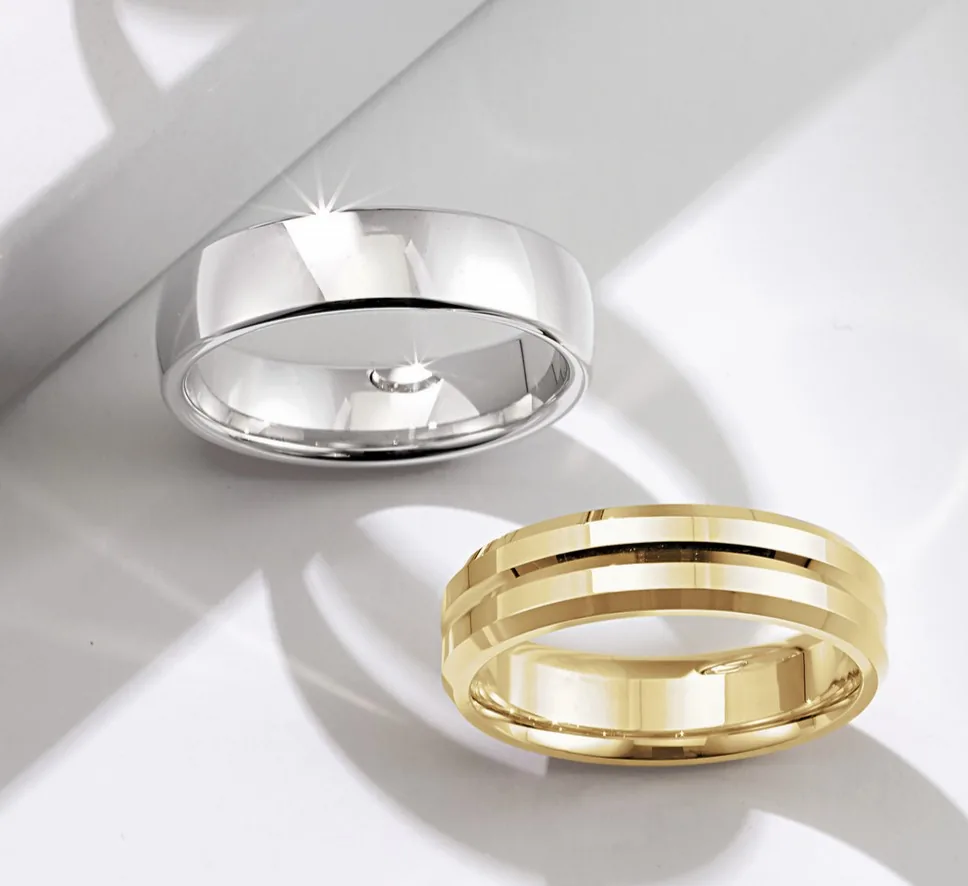
Daily wear is expected. Preventable damage is optional.
The simple care routine
- Clean away lotion, soap and oils regularly.
- Inspect stones, prongs and edges under good light.
- Remove the ring for heavy impact, lifting and harsh chemicals.
- Have diamond-set bands professionally inspected.
- Refinish only when the surface bothers you—not on an automatic schedule.
| Band type | Common maintenance | Watch for |
|---|---|---|
| Polished gold | Cleaning and occasional repolishing | Scratches and thinning edges |
| White gold | Cleaning, polishing and possible rhodium replating | Warm alloy showing through |
| Platinum | Cleaning and optional patina refinishing | Prong movement and surface wear |
| Satin or brushed | Professional texture restoration | Burnished shiny areas |
| Diamond-set | Cleaning and prong inspection | Loose stones and contact wear |
| Alternative metal | Cleaning according to material | Coating damage, cracks or nonrepairable wear |
Two rings can damage each other
Wedding bands and engagement rings may rub at prongs, galleries and diamond girdles. Regular inspection matters when rings are worn as a stack.
More polishing is not always better
Polishing removes a small amount of metal. Refinishing should preserve the ring rather than chase a permanently new appearance.
When to take it off
Remove the ring for heavy lifting, machine work, harsh chemicals and activities where swelling or impact could trap it.
Wear it often. Inspect it before a small problem becomes a rebuilding project.
Inspect settings before there is a problem
Diamond and gemstone bands should be checked for worn prongs, loose stones and changes in the way settings feel. Snagging, clicking or a stone that appears different from its neighbors can be a reason to stop wearing the ring until it is inspected.
Two rings can wear against each other
An engagement ring and wedding band that touch can slowly abrade one another. Exposed diamond girdles, prongs and sharp edges can accelerate wear. A well-planned set considers how the rings meet, and a spacer or contour adjustment may help when direct contact is problematic.
Polishing changes the surface
Professional refinishing can restore luster, but polishing removes a microscopic amount of metal and can soften crisp details over repeated cycles. Satin, brushed and hammered finishes also develop wear patterns, so maintenance should preserve the intended design rather than automatically making every ring high-polish.
Think in decades
A wedding band is expected to be worn for years. Diamond Consulate encourages Oklahoma City clients to think about inspection, cleaning, sizing and refinishing as part of ownership, especially for eternity bands, intricate custom work and rings worn beside other jewelry every day.
How often should a wedding band be cleaned?
Routine home cleaning can be done as needed, while professional inspection and cleaning are commonly recommended at least annually or more often for diamond-set rings.
Can wedding bands be polished?
Many gold and platinum bands can be polished, though repeated aggressive polishing removes small amounts of metal.
How do I care for a satin or brushed finish?
Avoid abrasive home methods. Professional refinishing can restore the intended texture.
Should I remove my wedding band for lifting?
Removing it is generally wise during weightlifting, heavy tools and activities that can crush, bend or trap the ring.
How often should prongs be checked?
Diamond-set bands should be inspected regularly, especially if worn daily or beside another ring.
Why discuss this during a private jewelry consultation?
Because proportions, fit, materials and long-term wear are easier to evaluate on the hand and alongside the jewelry you already own. Diamond Consulate offers private consultations in Oklahoma City for clients who want to compare these details before making a final decision.