Metal color is not a rule. It is part of the design language.
The fast answer
Choose yellow gold for warmth and tradition, white gold for a bright neutral look and rose gold for a softer pink tone.
| Factor | Yellow gold | White gold | Rose gold |
|---|---|---|---|
| Color | Warm gold | Bright white | Pink to coppery |
| Maintenance | Routine refinishing | May need rhodium replating | Routine refinishing |
| Style | Classic and vintage-friendly | Modern and versatile | Romantic and distinctive |
| Alloy influence | Silver/copper balance | White alloy metals plus optional plating | Higher copper influence |
| Best pairing | Warm diamonds and vintage details | White diamonds and cool-toned designs | Soft contrast and mixed-metal stacks |
White gold has a maintenance conversation
Many white-gold rings receive rhodium plating for a crisp white surface. As the plating wears, the underlying alloy may show warmth. Replating restores the bright finish.
Mixed metals can be intentional
A yellow-gold engagement ring and white-gold wedding band can work. So can rose and platinum. The relationship should feel designed rather than accidental.
Choose the color you want to see every day—and understand how it will be maintained.
Yellow gold: classic warmth
Yellow gold keeps the warm appearance associated with traditional fine jewelry and can create intentional contrast beside a white-metal engagement ring. Karat and alloy composition influence color, hardness and wear, so yellow gold is not one universal shade.
White gold: bright with a maintenance conversation
White gold combines gold with whitening alloys and is commonly rhodium-finished for a bright white surface. That finish can wear over time and may eventually be refreshed, which is one practical difference from naturally white platinum.
Rose gold and mixed-metal design
Rose gold gets its blush tone from its alloy mixture, commonly including copper. Wedding bands do not have to match an engagement ring or a partner’s ring exactly; mixed metals can look deliberate when proportions or repeated details connect the pieces.
Compare metal colors in person
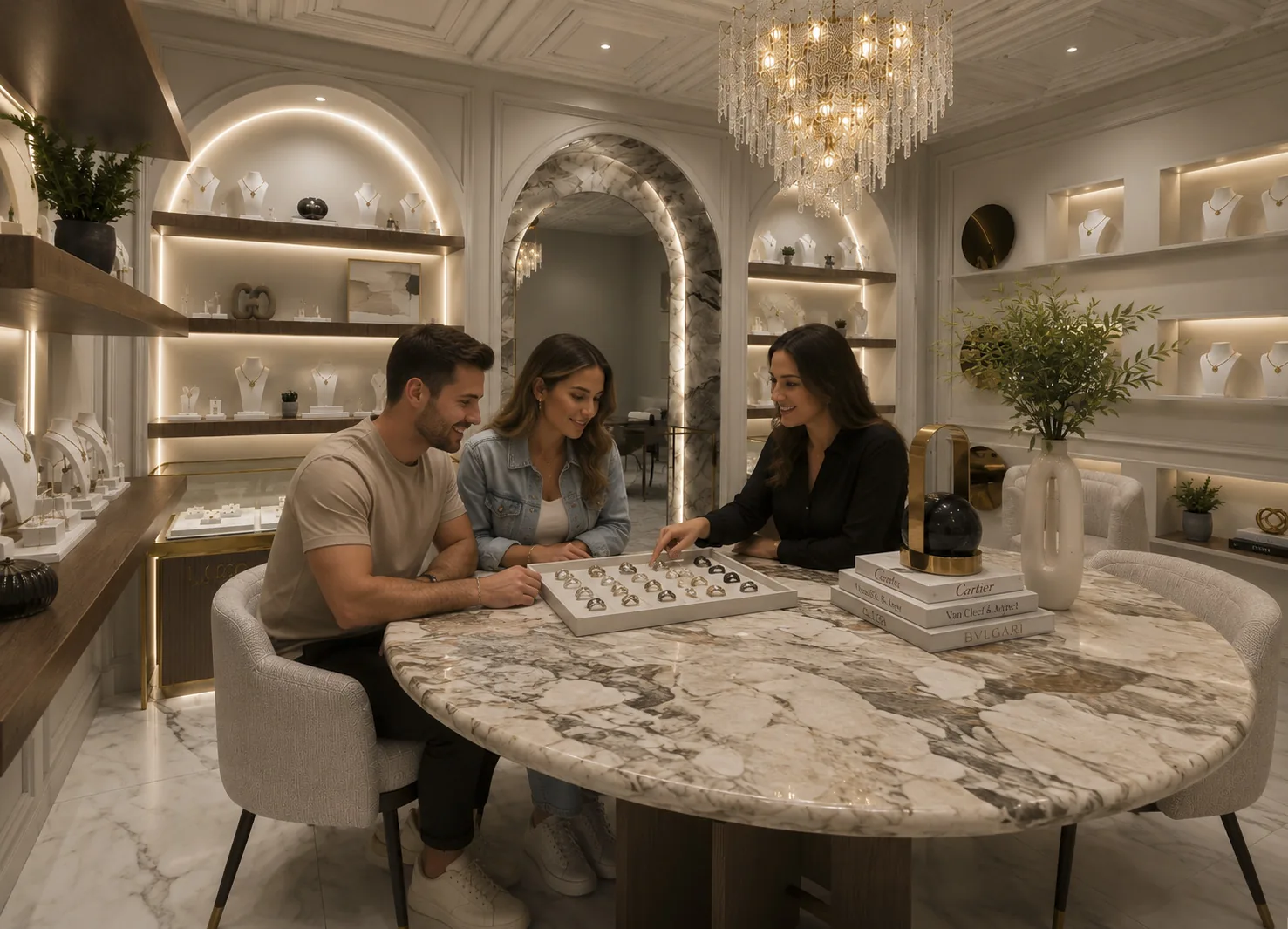
Photography and lighting can change how metal colors appear. Diamond Consulate clients in Oklahoma City can compare yellow, white and rose gold against their own skin tone and existing jewelry before choosing a custom wedding band.
Which gold color is best for a wedding band?
The best color depends on personal style, maintenance preference, skin tone and whether the band will sit beside another ring.
Does white gold stay white forever?
White gold is often rhodium plated for a bright white finish and may need periodic replating.
Is rose gold durable?
Rose gold can be durable, though exact hardness depends on karat and alloy composition.
Can I mix metal colors?
Yes. Mixed-metal wedding bands and ring stacks can look intentional when color and contact are planned.
Should my wedding band match my engagement ring metal?
Not necessarily. Matching simplifies coordination, but mixed metals can work beautifully.
Why discuss this during a private jewelry consultation?
Because proportions, fit, materials and long-term wear are easier to evaluate on the hand and alongside the jewelry you already own. Diamond Consulate offers private consultations in Oklahoma City for clients who want to compare these details before making a final decision.