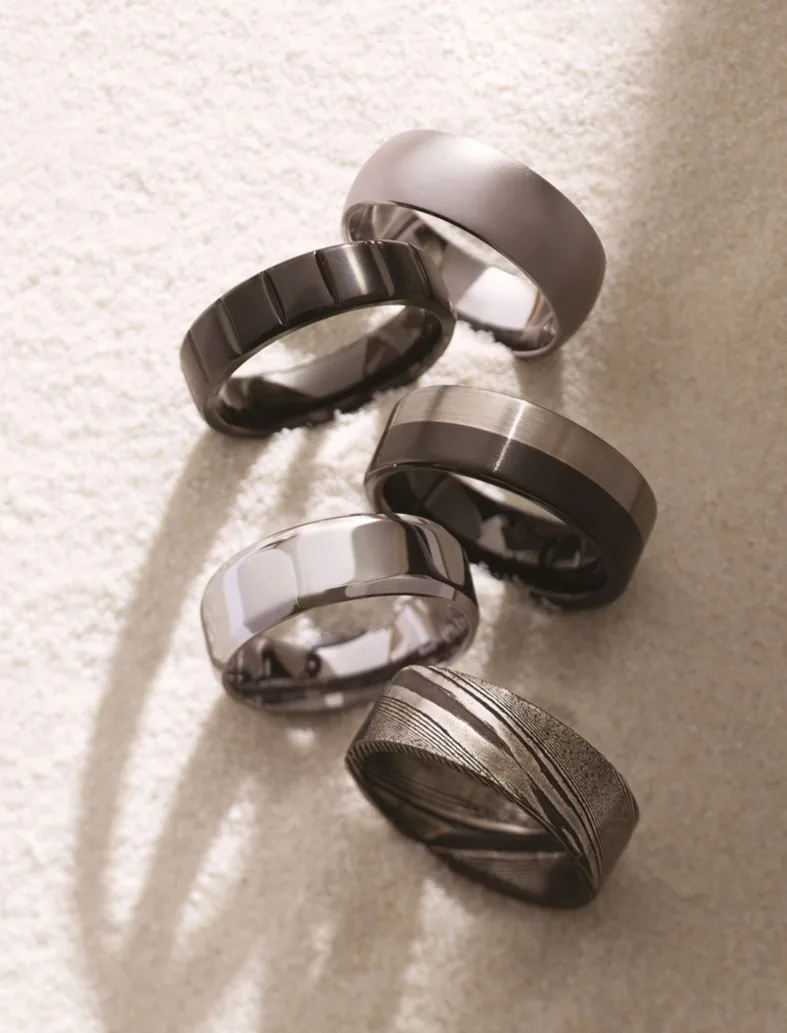
“Stronger” does not mean the same thing as harder, tougher or easier to repair.
The short answer
Choose tungsten for weight and scratch resistance, titanium for lightness and toughness, and cobalt for a bright white appearance with a more substantial feel.
| Factor | Tungsten carbide | Titanium | Cobalt alloy |
|---|---|---|---|
| Weight | Heavy | Very light | Medium |
| Scratch resistance | Very high | Moderate | High |
| Brittleness | Can crack under severe impact | Tough, less brittle | Generally tough |
| Resizing | Usually not practical | Often limited or unavailable | Often limited or unavailable |
| Color | Gray to gunmetal or plated finishes | Gray | Bright white |
| Best fit | Weight and scratch resistance | Lightweight comfort | White-metal look with durability |
The resizing issue matters
Finger size changes. Many alternative-metal bands cannot be resized like gold or platinum. Replacement policies can be useful, but replacement is not the same as resizing the original ring.
Emergency removal is different by metal
Removal methods vary. Tungsten can be fractured with appropriate tools. Titanium and cobalt may require specialized cutting equipment. Discuss workplace and safety concerns before choosing.
Choose the material whose limitations you understand—not the one with the most dramatic marketing adjective.
Tungsten, titanium and cobalt are alternative wedding-band materials with very different weight, hardness, color and resizing limitations. They should not be treated as interchangeable simply because all three are commonly marketed as durable.
How the materials feel
Tungsten is notably heavy and highly scratch resistant but can fracture under severe impact. Titanium is very light. Cobalt has a substantial feel and bright white appearance. Trying them on is useful because weight preference is personal.
Resizing and long-term ownership
Many alternative-metal bands cannot be resized using traditional bench methods. Before buying, ask what happens if finger size changes, whether the exact design can be replaced, and what the manufacturer or jeweler offers for size exchange.
For an Oklahoma City client, these decisions can be compared during a private consultation rather than made from specifications alone. Reserve a consultation or explore the related Diamond Consulate education library.
Which is strongest: tungsten, titanium or cobalt?
Strength depends on the property being measured. Tungsten carbide is extremely hard and scratch-resistant but brittle; titanium is lightweight and tough; cobalt offers a bright white look and good wear resistance.
Can alternative-metal wedding bands be resized?
Often no, or only in limited ways. Replacement is more common than traditional resizing.
Which is heaviest?
Tungsten is the heaviest. Titanium is very light. Cobalt falls between them.
Which is best for active lifestyles?
It depends on weight preference, scratch expectations, emergency-removal considerations and whether future resizing matters.
Are alternative metals hypoallergenic?
Many are well tolerated, but alloy composition varies. Confirm the exact material if sensitivities are a concern.
What should I compare before making a final decision?
Compare appearance, proportions, durability, maintenance, budget and how the choice fits the way the jewelry will actually be worn.
Can these details be customized?
Yes. Custom work allows dimensions, materials, finishes and design details to be adjusted together rather than chosen as isolated features.
Can I review options during a private consultation?
Yes. Diamond Consulate offers private, appointment-led consultations in Oklahoma City so relevant options can be compared side by side.