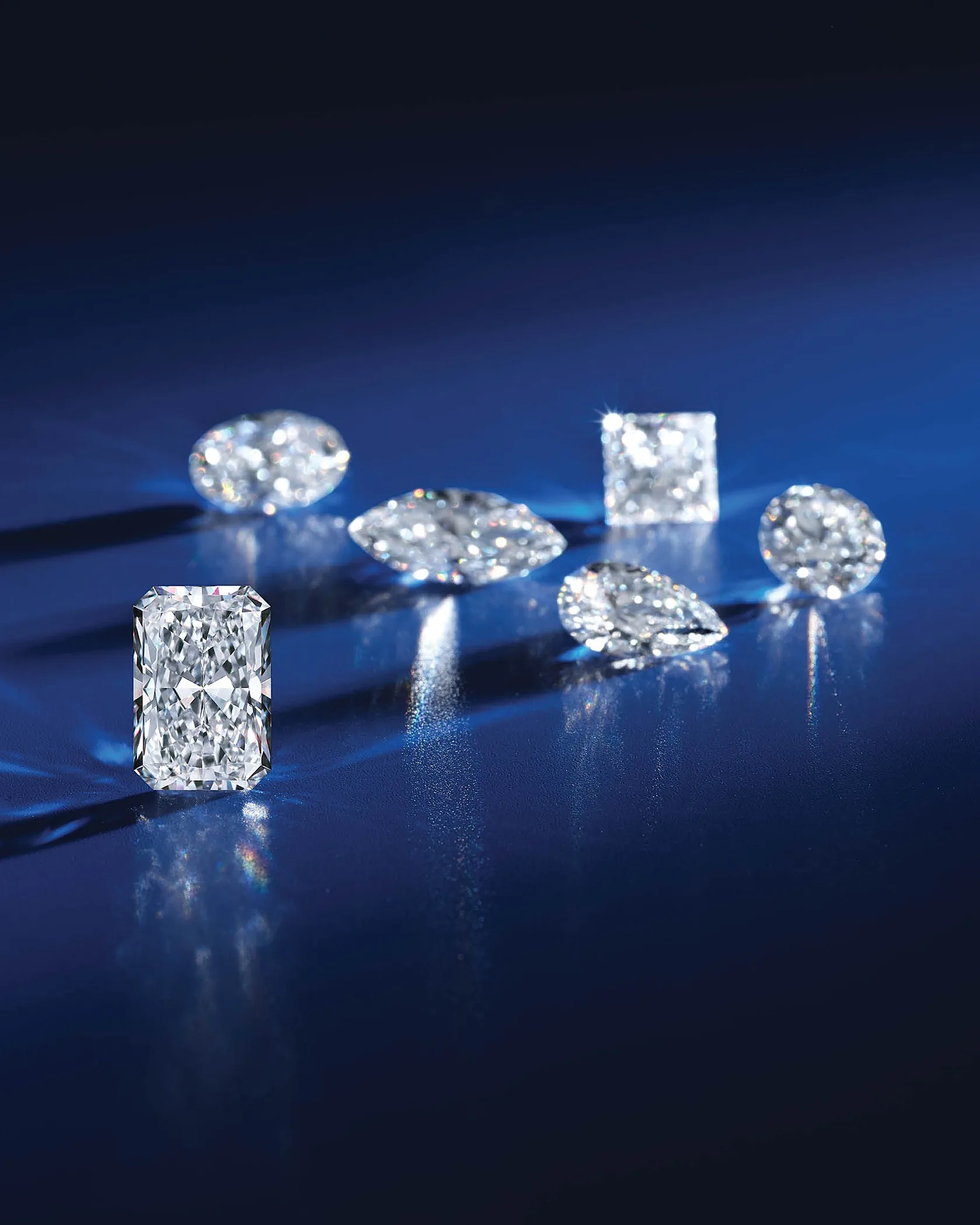
A laboratory report records identifying and quality characteristics such as carat weight, measurements, color, clarity, finish and fluorescence. It creates a common language for comparison. It cannot tell you which diamond you will find more beautiful, because matching headline grades can still hide differences in outline, transparency, inclusion placement, facet pattern, bow tie and spread.
GIA
The Gemological Institute of America is deeply established in natural-diamond grading and developed the modern D-to-Z color scale and Flawless-to-Included clarity terminology used throughout the trade. GIA reports are common in the natural-diamond market and widely recognized by consumers, jewelers, insurers and appraisers.
IGI
International Gemological Institute is also a major independent grading organization and has a particularly large presence in the laboratory-grown market. Many lab-grown diamonds encountered in retail carry IGI reports. Those reports provide the essential comparison information buyers need and can disclose growth method and detected post-growth treatment when applicable.
Are the grades interchangeable?
Do not assume that two diamonds with matching grades are interchangeable, regardless of laboratory. Borderline characteristics exist, but the larger issue is that grade labels do not capture every visual difference. If two stones are both G/VS1, compare dimensions, cut or facet pattern, inclusion location, transparency and price before deciding.
Natural versus lab-grown context
GIA is strongly associated with natural diamonds while IGI is highly visible in lab-grown, but the laboratory does not determine origin. Recognized labs use testing methods to identify laboratory-grown material and the report should clearly disclose origin. For lab-grown stones, report verification and laser-inscription matching are particularly useful when many candidates have similar specifications.
Verify the report, inscription and stone
Use the laboratory's report-check service. If the girdle is laser inscribed, inspect the inscription under magnification and confirm it matches the report. Then make sure the physical diamond's measurements and characteristics agree. The document, inscription and actual stone should tell the same story.
Which should you choose?
For many natural-diamond buyers, GIA is a comfortable default because of its market familiarity. For lab-grown diamonds, IGI is extremely common and practical. The more important question is whether the individual diamond is beautiful, correctly represented, appropriately priced and accompanied by a verifiable report from a recognized independent laboratory.
Why a one-grade difference can matter financially
Diamond pricing is built around grade combinations, so a borderline color or clarity call can affect asking price even when the visual difference is small. That is why comparing a G/VS1 from one laboratory with a G/VS1 from another should not begin and end with matching letters. Look at the actual stone, its measurements, transparency, cut performance and price. If one option costs materially more, identify what visible or market-recognized advantage the premium is buying.
For natural diamonds, GIA's long-standing market familiarity can matter to buyers who value consistency and future recognizability of the report. For lab-grown diamonds, IGI reports are extremely common, and the more practical concern is whether the report is authentic, the origin is clearly disclosed and the stone is competitively priced in today's market.
What a grading report does not grade for you
A report does not tell you whether an oval has a distracting bow tie, whether a cushion has the facet personality you prefer, whether an emerald cut's inclusions are visually acceptable, or whether two equal-carat stones have equal face-up presence. It also cannot choose between a technically higher grade and a lower-priced diamond that looks better to you.
Use the report to verify identity and narrow objective characteristics, then evaluate the diamond. If the report is being used to justify a large price jump, compare the alternatives directly. Our guides to diamond cut and diamond price breakpoints cover two areas where the headline grade can hide meaningful tradeoffs.
Is GIA better than IGI?
Both are established grading laboratories. The useful question is whether the report is authentic, appropriate to the diamond and understood in context. Diamond Consulate evaluates the diamond as well as the report.
Do GIA and IGI reports include the 4Cs?
For natural diamonds, yes. For lab-grown diamonds it depends on the laboratory and the report date. IGI lab-grown reports use color and clarity grades. Since October 1, 2025, GIA has given eligible D-to-Z lab-grown diamonds a Premium or Standard quality assessment instead of the color and clarity grades used for natural diamonds. Always read the actual report.
Can a grading report guarantee beauty?
No. A report records graded characteristics and measurements. It cannot fully communicate facet personality, transparency, bow tie, contrast pattern or how the diamond appears in motion.
Should lab-grown diamonds have reports?
Meaningful center stones should generally have reliable documentation clearly identifying laboratory-grown origin and the reported characteristics.
How do I verify a report?
Use the laboratory's official online report-verification system and confirm the report number and details match the diamond being offered.