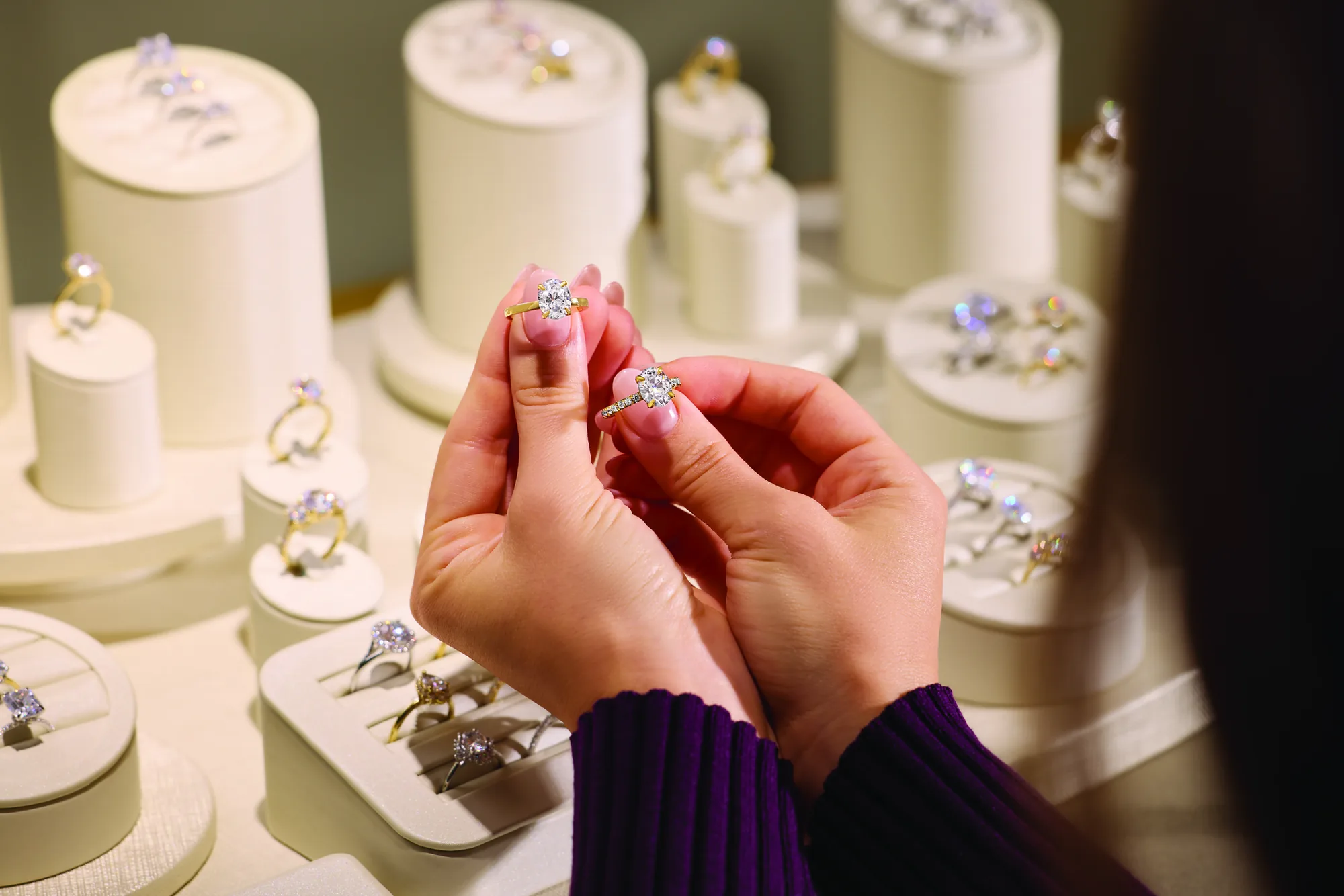
Do not ask which shape is better. Ask which tradeoffs the wearer actually prefers.
The fast answer
Choose round for maximum consistency, classic proportions and a highly standardized brilliant appearance. Choose oval for more finger coverage, an elongated silhouette and a shape that often appears larger at the same carat weight.
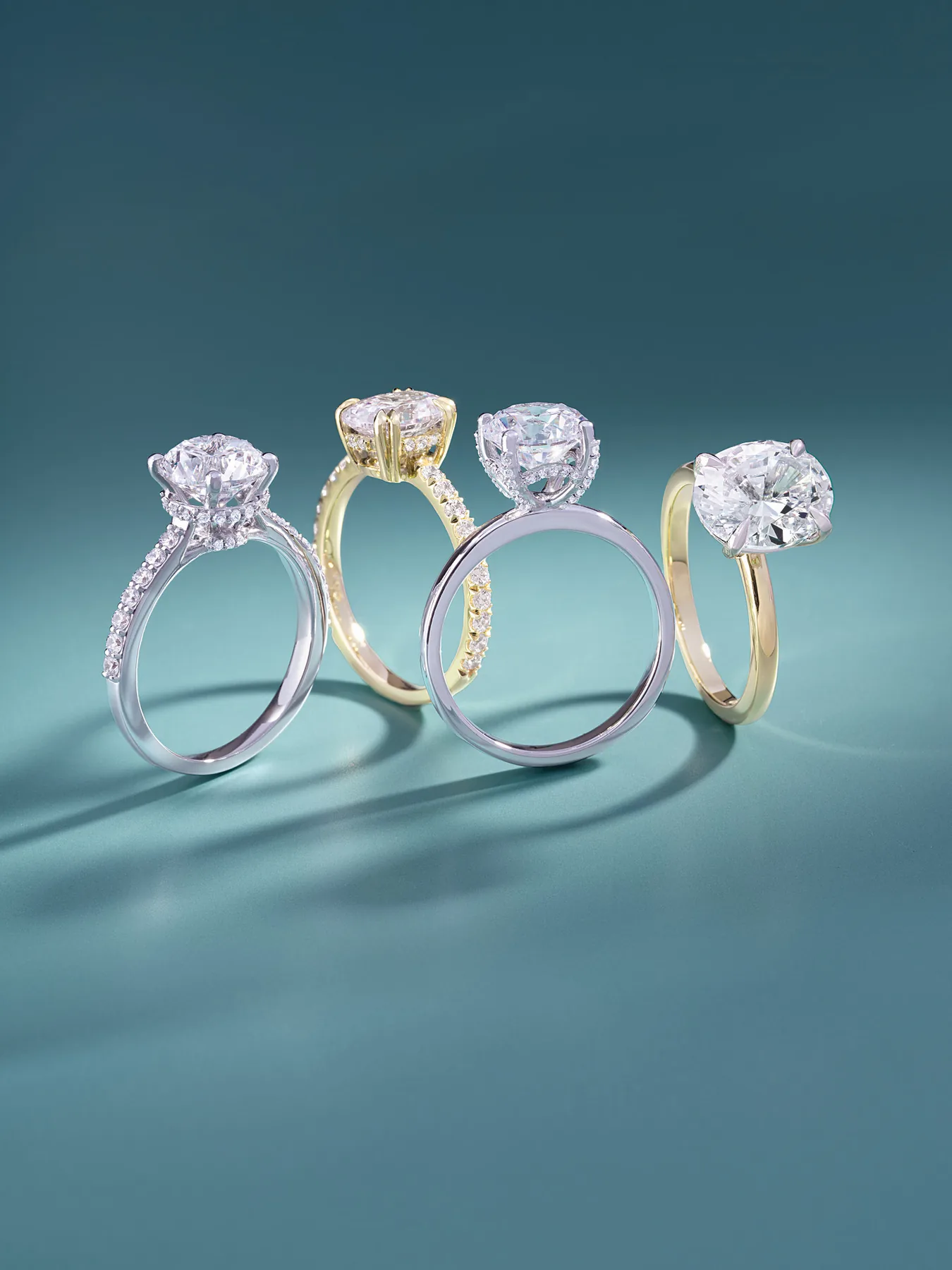
| Factor | Oval | Round |
|---|---|---|
| Visual profile | Elongated and graceful | Balanced and classic |
| Face-up coverage | Often greater at equal weight | More compact outline |
| Sparkle pattern | Brilliant, but more variable | Highly predictable round-brilliant pattern |
| Bow-tie risk | Yes | Generally not a shape-specific concern |
| Price tendency | Often below comparable rounds | Often carries a premium due to demand and rough usage |
| Setting flexibility | Excellent in solitaires, halos and east-west designs | Extremely versatile |
The oval advantage: coverage
Ovals often look larger than rounds of the same weight because the outline extends across more of the finger. That advantage depends on actual length, width and depth, not merely the word “oval.”
The round advantage: predictability
Rounds are the most standardized shape in diamond grading and cutting. That makes report-based screening more useful than it is for many fancy shapes, although the actual diamond still matters.
The bow tie is not automatically a defect
Most ovals show some central contrast. The useful question is whether the bow tie adds healthy contrast or becomes a dead, distracting band.
- More finger coverage
- An elongated silhouette
- East-west or modern settings
- Clients willing to compare stones carefully
- Classic styling
- Highly consistent sparkle expectations
- Maximum setting flexibility
- Clients who want simpler screening
For ovals, dimensions and bow tie deserve at least as much attention as the headline grades.
Editorial basis includes official GIA diamond-shape guidance reviewed August 2026.
Shape Comparison
Oval gives you spread; round gives you consistency
Round brilliant and oval brilliant diamonds use related brilliant-style faceting, but they solve different design goals. A round concentrates its weight into a symmetrical circle and benefits from a highly standardized cutting framework. An oval stretches visual area across the finger, often creating more apparent size at the same carat weight. The tradeoff is that oval appearance varies more from stone to stone.
Length-to-width ratio changes an oval dramatically
There is no single correct oval ratio. Around 1.30 can look fuller and wider; around 1.40 is a common balanced look; ratios around 1.45 to 1.50 create a noticeably longer silhouette. These are viewing references, not pass-fail rules. Shoulder shape, depth and facet pattern can make two ovals with the same ratio look different.
Why an oval can look larger at the same weight
An oval's elongated footprint distributes visible area over more of the finger. That can make an oval look more expansive than a round of equal weight. The advantage disappears if the oval is excessively deep, so length and width measurements matter, especially near popular carat thresholds.
Bow tie: look for balance, not perfection
Most elongated brilliant cuts show some central contrast. Contrast is part of scintillation; the concern is a bow tie that stays dark, wide and distracting as the diamond moves. Video can help screen candidates, but side-by-side viewing is more reliable because lighting can exaggerate or hide the effect.
Rounds are easier to screen from a report
Round brilliants have a more standardized cutting framework, so proportions and cut grades can narrow the field efficiently. Ovals do not reduce to one set of ideal numbers in the same way. Outline, bow tie, transparency, facet pattern and spread deserve direct visual inspection.
Setting and wedding-band fit
Both shapes work in solitaires, halos and three-stone designs. An oval can also be set east-west for a modern look. With either shape, gallery height determines whether a straight wedding band can sit flush. If flush fit matters, solve that geometry while designing the engagement ring.
Where the budget usually goes
Rounds often carry a premium because of demand and rough usage. Ovals can sometimes put more visible size on the finger for the same budget, but a poorly selected oval is not a bargain. Compare price only after eliminating stones with distracting bow ties, weak spread or an outline you do not love.
Do oval diamonds look larger than round diamonds?
Ovals often provide more face-up coverage at the same carat weight because their elongated outline spreads visual size across the finger.
Do oval diamonds sparkle as much as rounds?
Both are brilliant-style cuts, but rounds typically show a more uniform and predictable sparkle pattern. Ovals can be very lively but vary more from stone to stone.
What is the bow-tie effect in an oval?
It is a dark band across the center created by the way some elongated brilliant cuts handle light. A mild bow tie is common; a distracting one should be judged in person.
Are oval diamonds less expensive than rounds?
Ovals are often priced below comparable round brilliants, though actual pricing varies by quality, demand, dimensions and market conditions.
Which shape is more timeless?
Round is the most traditional and standardized. Oval is also established and versatile, but has a more elongated, fashion-forward profile.